
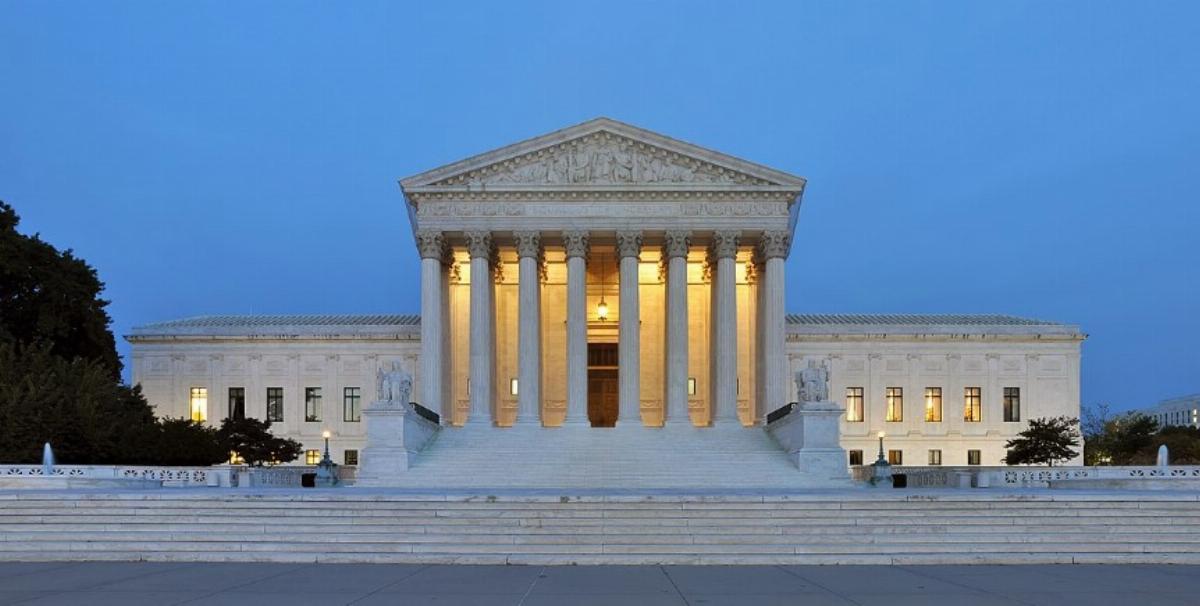
The Supreme Court ruled yesterday in Trump v. Barbara that the Constitution grants automatic citizenship to children born on American soil regardless of parents’ immigration status. Five justices signed on to that constitutional holding: Roberts, Sotomayor, Kagan, Barrett, and Jackson. A sixth, Kavanaugh, agreed that the order had to fall, but on statutory grounds alone, declining to join the majority’s constitutional reasoning. Three justices dissented outright. Between them, Thomas and Kavanaugh offered the two paths the Court should have taken instead of the one it chose.
Read more Congress should keep America sweet for another 250 years
The industry the ruling protects
This was never abstract. In 2019, federal agents busted three Southern California “maternity hotel” operations; one bragged it had served 8,000 pregnant women, 4,000 flown in from China, at $40,000 to $80,000 a head, and pulled in $3.4 million in wire transfers in two years. In the Northern Mariana Islands, more babies were once born to Chinese tourists than to island residents, until a crackdown got the number under 50 a year. A Long Island ring billed taxpayers $2 million in fraudulent Medicaid claims for 119 births. Honest estimates put birth tourism at somewhere between the high teens of thousands and over 30,000 births a year, and there are upwards of 500 companies in China alone whose only product is a U.S. birth certificate. That is the industry today’s ruling just told to reopen.
The majority’s sleight of hand
Roberts’s opinion leans almost entirely on Wong Kim Ark (1898), treating that case as though it already answered the question before the Court. It did not. Wong Kim Ark’s parents were lawfully domiciled in the United States, permanently settled and running a business in San Francisco, subject to the ongoing jurisdiction of American law in every sense that mattered in 1898. The majority papers over that distinction, insisting that the domicile language was incidental rather than load-bearing. That is picking the holding you want and discarding the facts that produced it.
The Citizenship Clause reads: born in the United States “and subject to the jurisdiction thereof.” That phrase was not decorative. The framers used it to exclude classes of people who owed allegiance elsewhere, foreign diplomats being the obvious example but not the only one. Someone unlawfully present, or present only temporarily on an expiring visa, has not placed himself under the full and permanent jurisdiction of the United States the way domicile implies. The majority never seriously engages this, asserting that “jurisdiction” means merely being subject to arrest while physically present, as though that reading were self-evident.
Kavanaugh’s better instinct
Justice Kavanaugh’s opinion behaves like judicial restraint. He agreed that the executive order could not stand but got there without touching the Fourteenth Amendment. His view: The order conflicts with 8 USC §1401(a), the existing statutory codification of birthright citizenship, and that resolves the case. He was explicit that the constitutional question is not straightforward, and that Congress remains free to legislate exceptions for children born to parents here unlawfully or temporarily.
That is the more honest opinion in the building. It resolves the case without foreclosing the constitutional question for a future case, and puts the decision back where it belongs: in Congress. Kavanaugh didn’t need to decide whether Thomas is right about domicile. He just declined to let the majority decide it by fiat, five votes to four, on a question the Court didn’t have to reach.
Read more The Knicks championship run: Sports remains the greatest unifier
Thomas and the honest reading
Justice Thomas’s dissent, joined by Justice Gorsuch, does the work the majority skipped. It takes “subject to the jurisdiction” seriously as a substantive limitation, not a formality, and does not pretend Wong Kim Ark resolved a question its facts never presented. Alito’s and Gorsuch’s separate dissents reinforce the point from different angles: This case could have been decided narrowly, on illegal and temporary presence specifically, without the sweeping rule the majority chose to issue instead.
What the majority actually did
Roberts had a narrower path available and declined to take it, the same path Kavanaugh took instead. Five votes was enough to win the case. It was not enough to settle a constitutional question this consequential for the next century. Instead, the chief justice chose maximalism, foreclosing any legislative fix and any future case from revisiting the question on cleaner facts, using a bare five-justice majority to do it.
The dissenters did not argue for stripping citizenship from anyone currently holding it. Thomas argued for reading a hundred-and-thirty-year-old case for what it actually held. Kavanaugh argued for deciding this case narrowly and leaving the rest to the people’s elected representatives. Both are more modest positions than the one that carried the day. They unfortunately lost, but they were the more careful ones.
Josh Kantrow is a lawyer in Chicago, where he focuses on technology, privacy, and complex commercial litigation. He writes on law, politics, and culture at his Facebook page: facebook.com/share/1BLwcus4PR.
Read more If you like your air conditioner, can you keep it?
Image: Joe Ravi via Wikimedia Commons, CC BY-SA 3.0.