
The Federalist Papers were op-eds. Alexander Hamilton, James Madison, and John Jay wrote 85 of them for New York newspapers over a single year, publishing under a pseudonym, addressed to ordinary citizens who had a vote and needed a reason to use it wisely. Hamilton wrote 51 of the 85 himself, often finishing a piece the night before it ran while practicing law and sitting in the Continental Congress. None of them were writing for a law review. They were writing for New York voters being asked to authorize a government unlike any that had existed before, on a deadline that didn’t care whether the argument was polished.
Read more How the WNBA cancelled itself
A democracy, strictly defined, is a system where the people hold power directly, and a majority can enact or repeal law on its own say-so. A constitutional republic is representative: Citizens elect officials to govern, but a written constitution limits what those officials, and the majority behind them, are allowed to do. A pure democracy settles every question with a head count. A constitutional republic settles most questions that way and draws a hard line around the ones a majority rule doesn’t get to touch.
Madison made that distinction on purpose. In Federalist No. 10, he separated a “pure democracy,” where citizens assemble and govern in person, from a republic, where representatives do the governing, and argued the republic is the better design because it can refine public opinion through representation while controlling what he called the “mischiefs of faction.” He wasn’t hedging on majority rule. He was warning that an unconstrained majority is just a faction that happens to be winning at the moment, and that a constitution stops today’s winning faction from writing rules the next one can’t undo.
Madison’s warning isn’t abstract this cycle. On July 14, the Democratic Socialists of America launched “Workers Deserve More,” the platform document candidates seeking the organization’s national endorsement will be expected to run on. Its final section doesn’t stop at higher taxes or Medicare for All. It calls for abolishing the Senate in favor of an expanded, proportionally elected House, and for replacing the president and the Supreme Court with an Executive and Judiciary “chosen by and subordinate to Congress.”
DSA hit 120,000 dues-paying members on the Fourth of July, holds the mayoralty of the nation’s largest city after Zohran Mamdani’s swearing-in this January, and by its own leadership’s count is on track to hold at least five seats in Congress after a primary season its organizers called a “shockwave” moving through American politics.
I don’t begrudge any faction its ambition, and neither did Madison. What he warned against was a faction mistaking momentum for a mandate to rewrite the rules meant to outlast it. Proposing to subordinate the presidency and the Supreme Court to Congress the same season you’re expanding your own seats in it is the scenario Federalist No. 10 was written to head off, and it would earn the same scrutiny from me if the faction moving this fast wore a red jersey instead of a red rose.
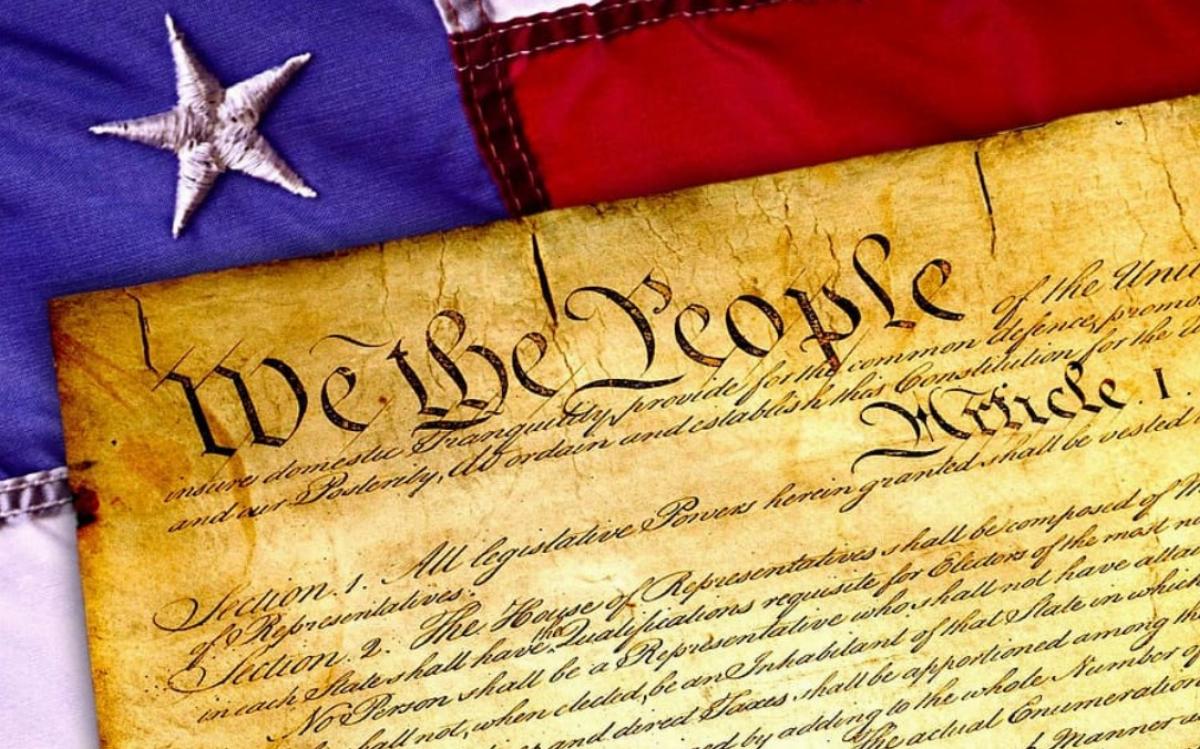
The United States, in that framework, is a constitutional republic with democratic features. Citizens vote for the people who govern them. The Constitution and the Bill of Rights place some questions permanently outside what any vote, however lopsided, gets to decide.
That’s a different job from the one the Declaration of Independence performs. The Declaration isn’t law; no litigant wins a case by citing it directly. It supplies the argument for why the government that followed had any claim to legitimacy: that certain rights don’t originate with government, and that a government turning against those rights forfeits its claim on the people’s obedience. The Constitution, ratified eleven years later, builds the actual machinery — branches, enumerated powers, an amendment process, and it binds courts and officials whether or not they find its premises persuasive.
Read more Dealing with Democrat refugees
American education has largely stopped teaching this distinction. A civics teacher juggling identity curricula alongside test prep, for a subject where 12th-graders just posted the lowest reading and math scores on record, doesn’t have much room left for Federalist No. 10. The system has drifted toward teaching constitutional rights as a catalogue of personal entitlements rather than as the architecture of a self-governing republic.
Entitlements invite one question: What am I owed? Architecture invites a different one: What does this structure require of me to keep it working? The second question is harder and far more important. Its absence from the classroom produces exactly the civic culture we have: a population that argues about the Constitution constantly and understands it rarely.
Edmund Burke described the family, the church, the local community, and voluntary association as the foundation of society, the institutions that precede any government and give a republic its character before the law gives its structure. The Founders were reading Burke. They understood that the Constitution they were drafting wasn’t creating civil society, but protecting it, holding federal power back from the institutions that shape citizens before government ever encounters them. Burke’s “little platoons,” his phrase for the networks of local associations that form the connective tissue of a free society, express that self-governance at the scale of families and communities produces results centralized authority can’t replicate and tends to destroy when it tries.
I spend my working life advising families on how to build structures meant to outlast the people who fund them. Trusts, family offices, and governance charters all collapse for the same reason when they fail: Someone assumed that good intentions would substitute for a binding document, and the next generation didn’t share the intentions. A republic runs on the same logic, just at a larger scale. Sentiment doesn’t bind anybody 20 years out. Structure does.
This is an argument for re-teaching the difference between a right you’re owed and a structure you’re responsible for maintaining. Citizens who can name that difference are harder to mislead about what the Constitution actually does; harder for any faction, left or right, to sweep past on a good election night; and considerably more useful to a republic that depends on them to keep it running.
The Federalist authors understood that the survival of their design depended on ordinary readers grasping it well enough to defend it.
Read more How illegals plunder American billions, in broad daylight
Image via Pxfuel.