
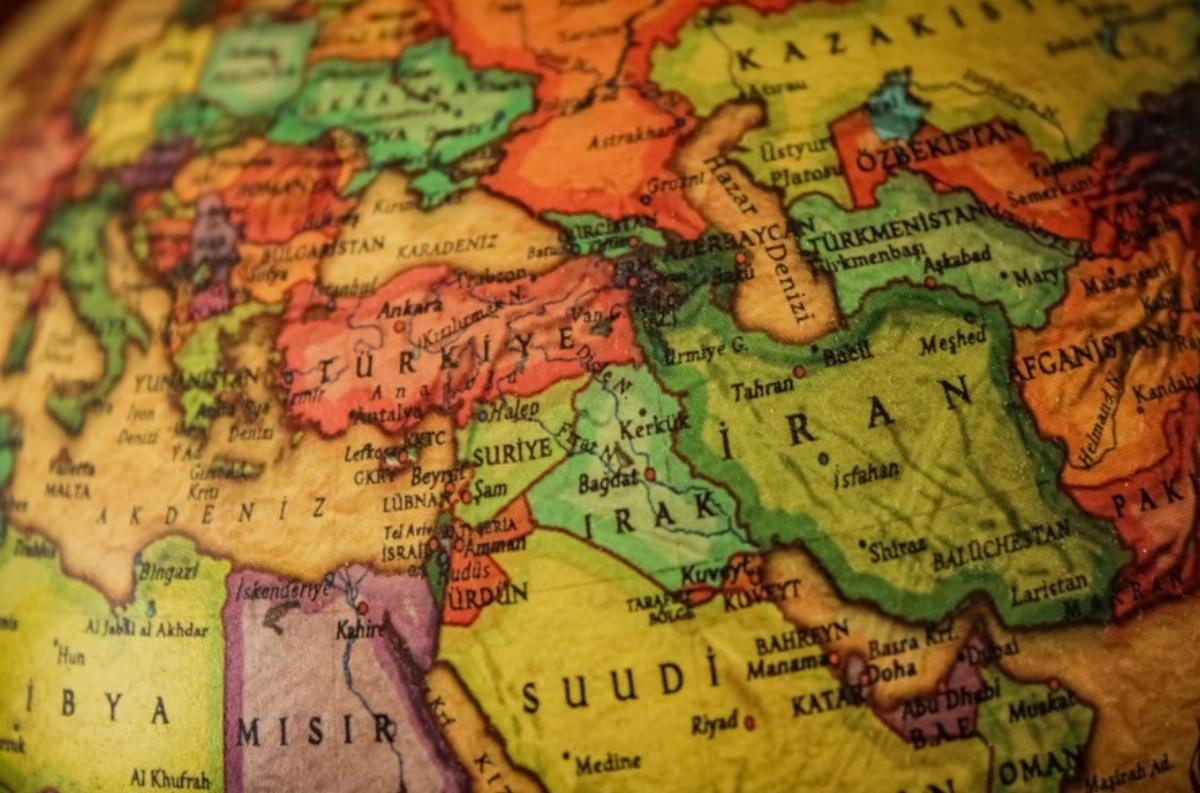
Since its beginning, the Iran War has served as a platform for isolationists to criticize U.S. interventions and their attempts at state-building abroad. What many isolationists miss is that projection of American might abroad, in places like Venezuela and Iran, is necessary to guarantee the stability of global commerce, deter belligerent actors, and enforce a rules-based order that is in the interest of the United States and its people.
Read more The Perpetual Death of the Balanced Budget Amendment
Firstly, American prosperity is highly contingent on the stability of the global economy. Such stability is directly dependent on the free passage of goods and services through chokepoints like the Strait of Hormuz. When such chokepoints are controlled by state sponsors of terrorism like Iran, American economic security is directly jeopardized.
Economic security means national security, which is why the Strait of Hormuz cannot be controlled by Iran, which on its end has friendly relations with America’s chief adversary in the world, the Chinese Communist Party. An Iran-dominated Strait of Hormuz would significantly increase Chinese leverage over one of the world’s most important energy chokepoints.
A chokepoint of similar importance is the Bab el-Mandab Strait, in between Yemen and Eritrea. An Iran-backed Islamist militia called the Houthis has disrupted shipping through the strait as a means of punishing the United States for the support of their adversary, Saudi Arabia.
That is why the United States has had to repeatedly conduct strikes against Houthi positions in Yemen, joined by Saudi Arabia, who has been fighting the Houthis for over a decade now, like how Israel has been fighting the terrorists of Hamas in Gaza.
Secondly, American power in the world is necessary to deter foreign adversaries who seek to harm the United States and its allies in the world. An Iran with nuclear weapons would mean economic extortion through direct control of the Strait of Hormuz and extortion against petrostate allies of the U.S. in the GCC — the likes of Saudi Arabia, Qatar, Bahrain, and the UAE — as well as the encirclement of Israel with terrorist militias like Hamas in Gaza, Hezb’allah in Lebanon, and the Houthis in Yemen.
If Iran has done all of these without nukes, imagine what it could do with nukes. The Iranians would likely feel far more emboldened in supporting their regional proxies and coercing neighboring states because of their possession of nuclear weapons. Think of what that would do to global oil prices and supply chains. Should the United States retreat its forces from the Middle East and allow this to happen? I would argue not.
Another example that comes to mind is Operation Absolute Resolve, during which the United States arrested and indicted Venezuela’s socialist leader, Nicolás Maduro. Under the leadership of Hugo Chávez and then Maduro, Venezuela had turned itself into a safe base for Russian and Chinese influence in the Western Hemisphere.
In addition, Venezuela’s narco-terrorist activity, at the direction of Maduro, was responsible for hundreds of thousands of American lives lost due to fentanyl and other drugs flowing into U.S. soil.
If the U.S. were to listen to isolationists, Venezuela could well serve as a base for Russian and Chinese missiles, like how Cuba was used by the Soviet Union to position nuclear missiles in the Western Hemisphere, which led to the Cuban Missile Crisis.
The U.S. did not embrace such isolationist arguments and instead acted decisively to topple Maduro to protect U.S. national security, just like how it toppled Manuel Noriega in 1989 for a similar reason.
Read more Back in the Spotlight: Anthony Fauci
Lastly, the rules-based order led by the United States, deemed by some geopoliticians “Pax Americana,” has been of tremendous benefit for the United States. The hegemonic posture of the United States at the end of the Cold War has allowed it to gain unlimited access for military bases in allied countries; secure cheaper products for its consumers due to free trade agreements; and directly benefit from the free flow of the world’s talented people, who viewed the U.S. as the “Promised Land” for their dreams and aspirations.
One of those people was America’s wealthiest businessman and simultaneously the world’s first trillionaire, Elon Musk, who left South Africa and then Canada to build his companies in the United States.
The benefits of Pax Americana extend beyond military alliances and geopolitical influence. The United States became the center of the global economy because international trade routes remained secure, foreign capital viewed America as a safe destination for investment, and the U.S. dollar became the world’s reserve currency. American consumers benefited from lower prices; American businesses gained access to global markets; and American workers benefited from an economy strengthened by innovation, entrepreneurship, and global competition.
The withdrawal of the United States from its commitment as the world’s policeman would automatically give rise to the expansionist ambitions of Russia, China, Iran, and North Korea, shifting the world’s order from American unipolarity centered around respect for democracy, human rights, international law, and free trade to multipolar sovereigntist and regionalist sharing of global influence.
The latter spells higher prices for American consumers due to disruption of trade routes, national security concerns due to control of critical infrastructure like semiconductors by foreign adversaries (in the event of a potential Chinese invasion of Taiwan), as well as economic decline due to loss of global talent, now more incentivized to explore other options like China, India, Canada, Brazil, etc.
To counter all these arguments, isolationists will point to the trillions of dollars spent in Afghanistan and Iraq, the defeat in Vietnam, and thousands of American casualties during the “War on Terror.”
However, failed interventions do not and should not mean American withdrawal from global security commitments and world leadership. If the latter is to happen, the United States will pay much more than it did with failed interventions in Iraq or elsewhere.
Isolationists are correct to point out that Iraq, Afghanistan, and Vietnam were costly mistakes. However, failed interventions do not invalidate the broader case for American leadership any more than a failed business venture invalidates capitalism itself. The lesson of those conflicts is not that America should retreat from the world, but that it should exercise leadership more prudently and with clearer objectives.
All in all, America has much to lose if it listens to failed isolationist policy prescriptions. At a time of global competition against China and an ever unstable world, the United States stands to benefit and protect its interests on the global stage by projecting power outside of its hemisphere.
The lesson of the twenty-first century is not that American leadership has been flawless. It is that the alternatives to American leadership are far worse.
Read more U.S. media aggressively ignore the UK’s Rape Report and Henry Nowak’s death
Image via Pexels.