
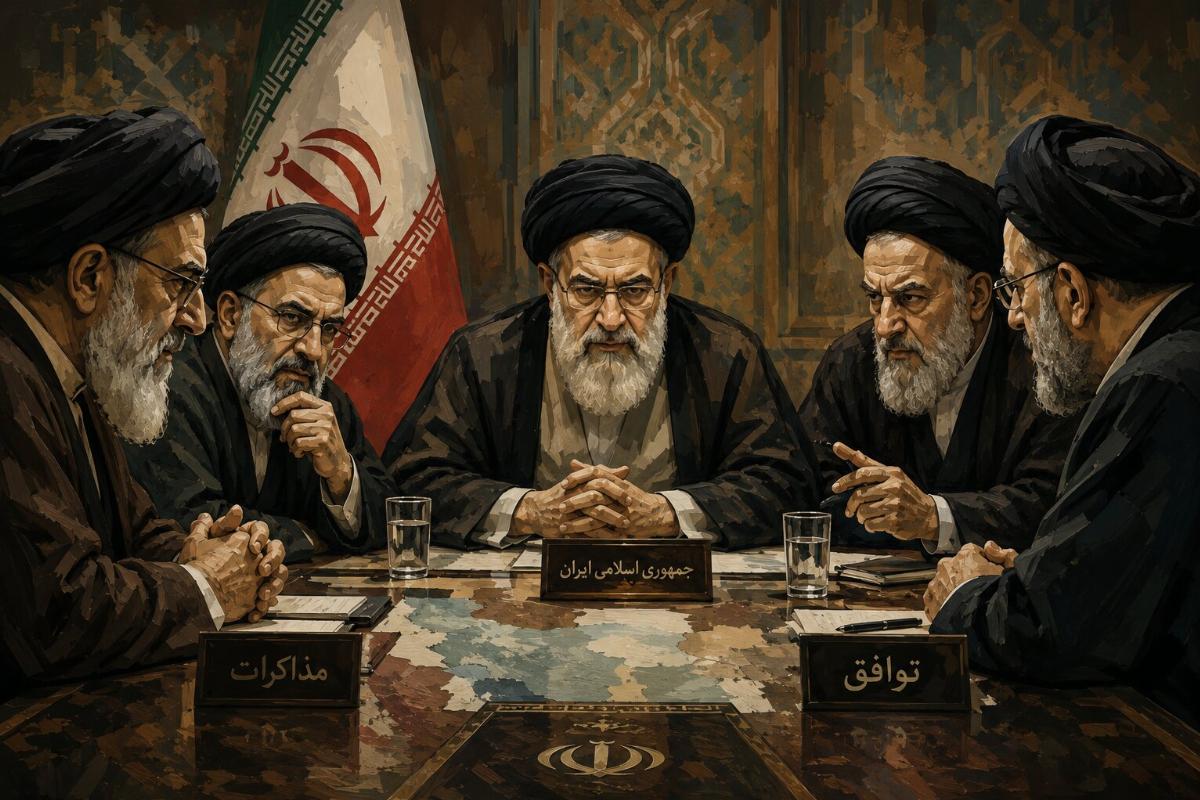
From the Iranian negotiations, a strong pattern has emerged: anything the U.S. says that they’ve agreed to, they deny. This has happened repeatedly, to the point where we have to ask ourselves why they reject our statements? Are our government officials misunderstanding them? Do Trump and Vance purposely misstate what has been agreed to? Or does Iran think that their defiance and disagreement give a picture of strength and victory for their side?
Read more Baseball getting a little too prideful
To demonstrate the frequency of these denials, let’s take them one at a time:
Vance confirmed yesterday in a press statement that the United States had agreed to release some Iranian funds, provided there is progress in negotiations between the two sides. He added that the move would benefit American farmers and noted that the funds would be used to purchase American agricultural products. U.S. President Donald Trump likewise emphasized that Tehran would use the released funds to buy American goods.
Both Mohammad Bagher Ghalibafa and Iranian Central Bank Governor Abdolnaser Hemmat denied this agreement, and said that the MOU does not require them to buy American products. Hemmati stated that funds only needed to be spent on basic goods and services, adding that Iran would only buy products from the U.S. if the Americans gave them a better deal than others.
A second incident occurred when Trump threatened the Iranians, and the representatives walked out of the meeting. Vance claimed that they did not leave the meeting, but they claimed that they did, since the MOU prohibited threats being issued from either side.
The third example is regarding Trump’s claim that the Iranians would allow visits by the International Atomic Energy Agency:
‘Despite their protests and false and contradictory statements, Iran has fully and absolutely agreed to the highest level of nuclear oversight both in the future, forever,’ Trump wrote in a statement posted to social media. The president warned that if Iran fails to comply, ‘there will be no further negotiations.’
Hours earlier, Iranian Foreign Minister Esmaeil Baghaei told journalists in Tehran that no visit by International Atomic Energy Agency inspectors has been scheduled to examine nuclear sites struck during the recent U.S.-Iran conflict. The statement directly contradicted claims made by Vice President JD Vance, who called IAEA access ‘a major milestone’ just 24 hours prior.
It’s also questionable whether the IAEA will demonstrate the fortitude to insist on visiting the sites if Iran denies them access. Only American inspectors should be allowed on these sites.
Read more George, Michael, Trayvon (and Emmett, too)
Regarding the actual amount of financial relief that might be allowed, there could be some sanctions relief, lifting the blockade, which would allow Iran to recoup the $14 million it’s losing per day, and the return of billions in frozen assets—an unidentified amount. In other words, no one actually knows the amount of a reprieve Iran would receive.
Ghalibaf said on Tuesday that Tehran obtained the immediate release of $12 billion in frozen Iranian assets in two separate $6 billion tranches through Qatar’s mediation.
Iran also stated on Tuesday that it will decide how to use the unfrozen funds “with no restrictions on how they can be spent.”
Trump contradicted these statements, saying the funds would go into an escrow account. But Iran insists that they are under no obligation to buy agricultural products from the U.S.
One last disagreement between Iran and the U.S. is whether or not the Strait of Hormuz is open or not at any given time. The U.S. insists that it is open, and it will continue to have ships in place to monitor the waters. The Iranians have repeatedly said they have closed down the strait, in spite of the U.S. claims.
What is going on, while these machinations are taking place? It’s possible, even likely, that both Iran and the U.S. are posturing for their respective audiences; we have no idea what is really happening behind the scenes. When the final agreement is negotiated, we have to be prepared to see points that we like and some that we don’t like; some items from the MOU may be addressed and others may not, and completely new terms may be included. It’s also possible that the U.S. is training the Iran civilian population behind the scenes and supplying them with arms; ultimately that could lead to regime change.
Meanwhile, these discrepancies and differences at some point could have a significant effect on the negotiations and ending the war. Will Trump be prepared to take military action if they continue to reverse their decisions? Or will he continue to threaten military action and hope it’s sufficient to deter them? Or do we continue to watch this tennis match indefinitely, both sides taking their turn to lob the ball back and forth?
Read more America Is a Young Country
It’s likely to be a long, difficult slog, and maximum patience is called for.
Image generated by ChatGPT.