
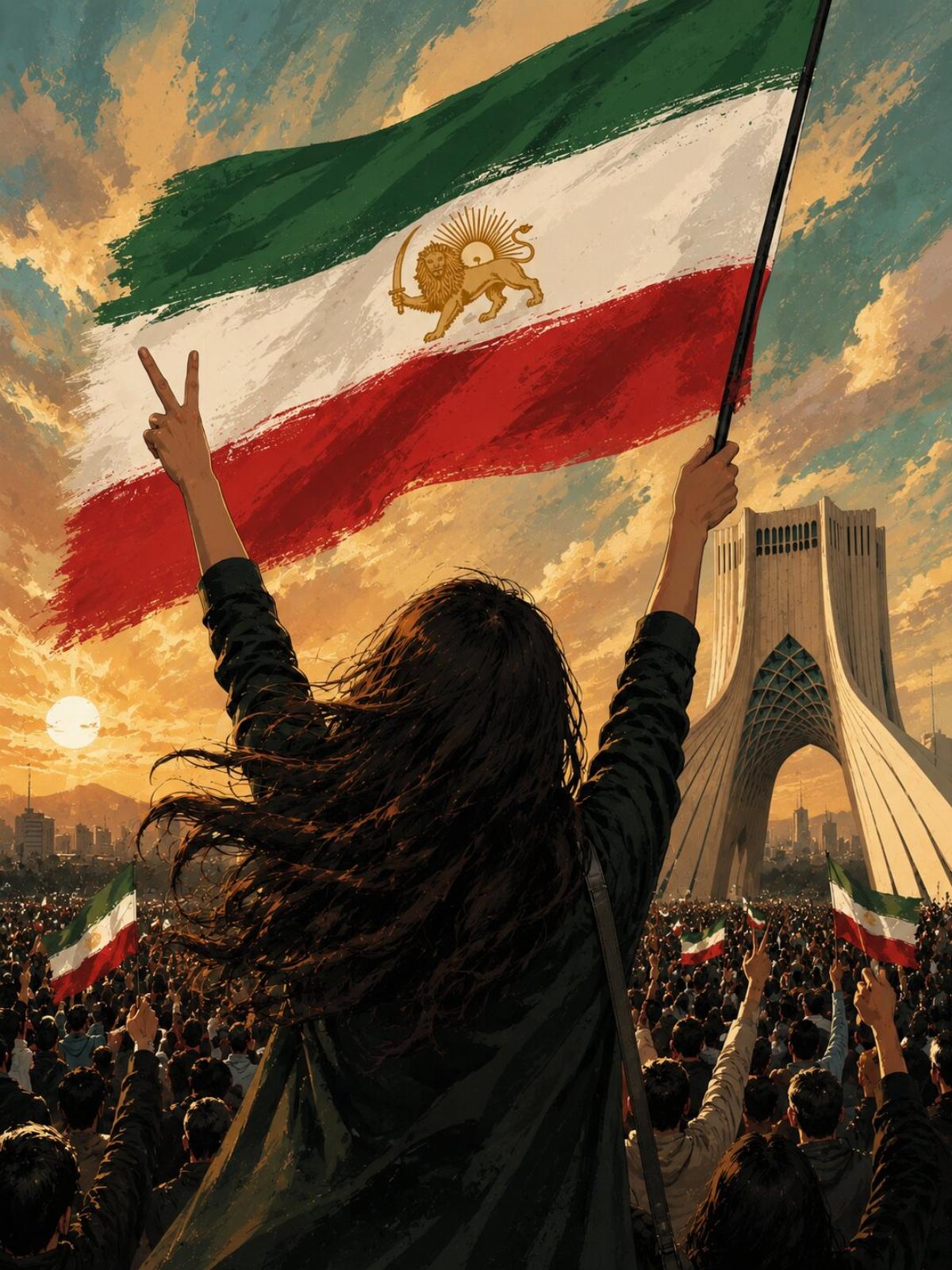
As the future of Iran returns to the center of global attention amid debates over nuclear negotiations, the Free Iran 2026 gathering in Paris and Auvers-sur-Oise on June 20–21 highlighted the growing momentum for democratic change and the vital role of organized Iranian opposition.
Read more The other problem with socialism
The timing could not have been more significant. While Washington explores a possible new nuclear agreement with Tehran, hundreds of lawmakers, former ministers, senior military leaders, and human rights advocates from Europe and North America gathered to call for a secular, democratic, and non-nuclear Iran — one defined by the Iranian people themselves.
What stood out was the sharp contrast between the event’s international weight and the French authorities’ last-minute ban on a large outdoor rally. Organizers had expected tens of thousands of participants. The scale of mobilization was remarkable: more than 800 buses carrying Iranians from across Europe began arriving the previous day and continued streaming in from early morning until late afternoon on June 20.
Right on!
— SK (@ShanazRx) June 24, 2026
Thanks for highlighting this shameful act of appeasement by the @EmmanuelMacron administration.
🔷 The huge rally was planned months ago with all permissions in place.
🔷 The Free Iran rally was banned with one day’s notice when thousands were already in Paris.
🔷… pic.twitter.com/GLzka13CAA
Retired U.S. Lieutenant General Keith Kellogg, former Special Envoy for Ukraine and a senior national security figure in previous administrations, delivered one of the strongest speeches. He argued that Iran’s ruling regime is weaker today than at any point in recent decades, citing internal fractures and eroding control. “The window is open wider than at any moment in a generation, and windows do not stay open forever,” Kellogg said. He stressed that any nuclear deal must not be an end in itself, but the beginning of a broader process leading to fundamental political change in Iran.
The French ban quickly became the dominant controversy. Authorities cited intelligence reports of potential violence. The Paris administrative court upheld the prohibition, referencing risks of a major attack involving Iranian regime agents as well as monarchist groups (with some reports mentioning alleged threats linked to a network referred to as SAVAK in Europe, including possible bombings). Critics saw the decision as a troubling capitulation that effectively rewarded those seeking to block any strong, organized challenge to the regime’s human rights abuses and mass executions.
Former British Prime Minister Boris Johnson called the ban a “tragic mistake.” He warned that if the West truly wants to support freedom in Iran, it must allow those voices to be heard in Western capitals without interference.
Read more Dealing With Islamic Extremism: How The Soviets Did It
Former Ukrainian Foreign Minister Dmytro Kuleba expressed solidarity, drawing parallels between Ukraine’s fight for sovereignty and the Iranian people’s struggle for democratic rights.
Despite the ban, smaller demonstrations took place in Paris. Police dispersed several gatherings and detained around twenty people. The scenes only reinforced perceptions of Western hesitation in the face of Tehran’s pressure.
The event generated significant media impact: more than 210 reports across over 30 countries and in at least 12 languages, including Reuters, AFP, Fox News, France 24, Le Monde, Le Figaro, and Voice of America. Hundreds of photographs were also distributed globally by major agencies.
Free Iran 2026 was more than a conference or a thwarted rally. It demonstrated tangible international support for a democratic alternative to the current regime at a critical moment of geopolitical uncertainty. The gathering made one reality impossible to ignore: Iran’s future remains unresolved and calls for genuine change by the Iranian people through organized resistance continue to resonate worldwide.
The central message from Paris was clear — the destiny of Iran should be decided by Iranians themselves and their aspiration for freedom, democracy, popular sovereignty, and a non-nuclear republic. As General Kellogg reminded participants, windows of opportunity do not stay open forever.
Read more Democrats board the crazy train in New York
Image generated by ChatGPT.