
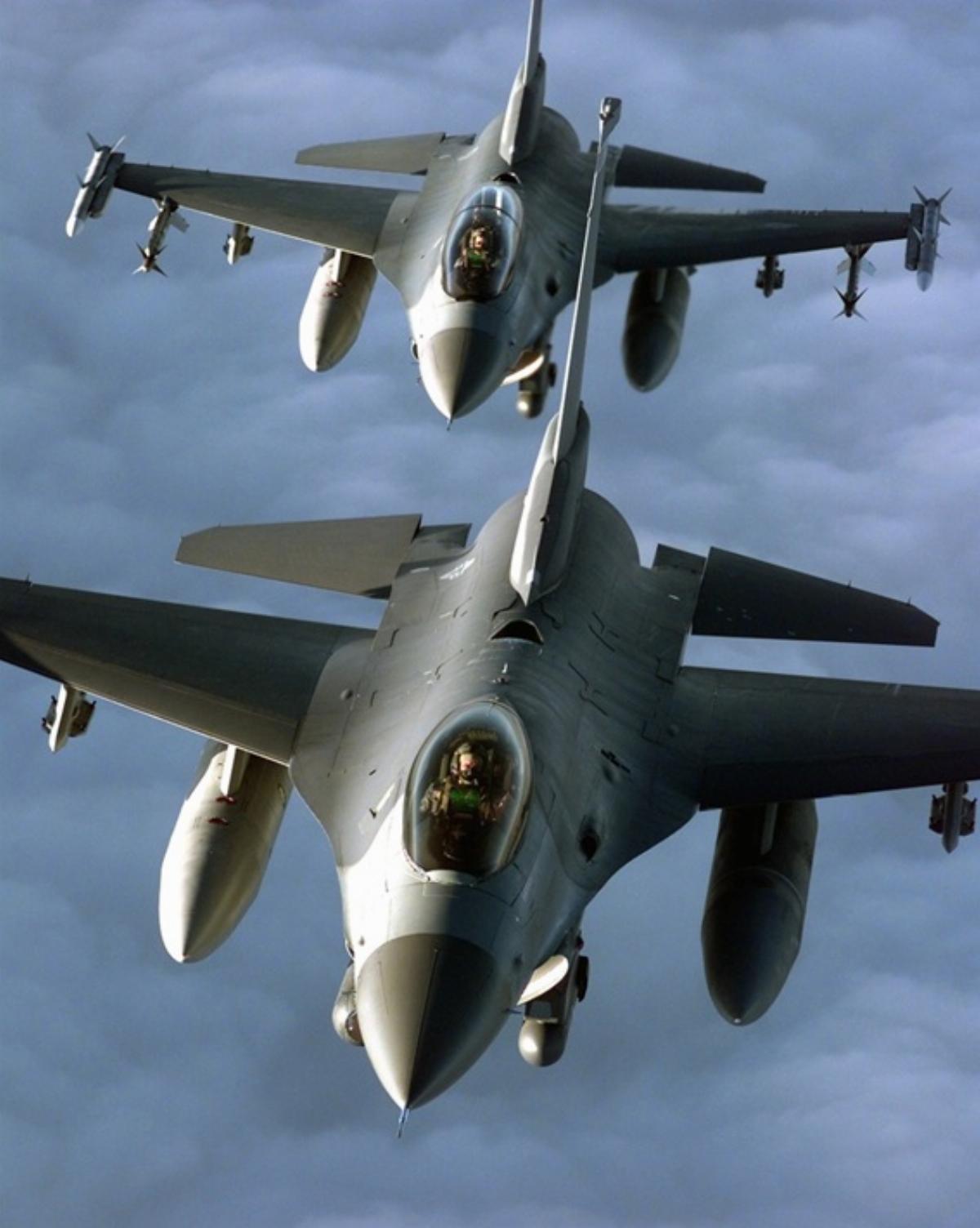
One thing we’re hearing from a lot of armchair generals out there concerning the air campaign against Iran is the phrase “boots on the ground.” This is said in support of the contention that you require ground troops to truly defeat an adversary. An air campaign, no matter how effective, just isn’t enough. Nope — you need your infantry, your artillery, your armor. You need your landings, you need your advances, you need your ground engagements. You need your casualties.
Read more Justice for mutilated ‘transgender’ patients
This is usually said with an air of absolute certainty, as if it were a military dictum the status of Sun Tsu’s “Know yourself and your enemy,” or Monty’s “Never invade China, never invade Russia.”
Well, it is and it isn’t. Because there is, in fact, a case in which an air campaign defeated an adversary nation: NATO’s 1999 campaign against Serbia.
Serbia had been merrily slaughtering its way around the Balkans since 1991 after Croatia and Slovenia split off from Yugoslavia. A series of protracted campaigns were fought as Yugoslavia broke up into various peapatch states, marked by atrocities, massacres, and war crimes. These involved all sides, although it’s unquestionable that Serbia had the worst record by far. This was the period in which the phrase “ethnic cleansing” entered the public consciousness.
Europe sat back, expecting that Uncle Sam would swoop in to the rescue no matter what the cost. They were more than willing to fight to the last Nebraskan PFC. This didn’t happen, and things dragged on for the rest of the decade.
Finally, Serbia invaded Kosovo, and the brutality of the fighting mounted even higher. Some kind of intervention appeared inevitable, but instead of throwing U.S. troops into the meat grinder, a limited air campaign was planned in hopes of wrecking Serbian capabilities and bringing down war criminal Slobodan Milosevic.
Read more The FBI turbocharged the Trump-Russia hoax. Do GOP voters care?
The campaign, code-named Allied Force, was launched on March 24, 1999 and continued until June 10. Over a thousand aircraft, most of them from the U.S. but also including other NATO countries, targeted Serbian military, command, and air defense infrastructure. Over 10,400 strikes were flown.
As the campaign continued, targeting was expanded to include dual-use civilian infrastructure such as rail lines and bridges, along with some strikes in urban areas such as Belgrade. (Which also resulted in the accidental bombing of the Chinese embassy.)
And it worked. An agreement was signed on June 9, and Serbian forces began withdrawing from Kosovo the next day. Milosevic was overthrown the next year in October after a fraudulent election. (This is starting to sound familiar…) He was arrested six months later and died in a jail cell at the Hague under mysterious circumstances.
So, while a successful air-only campaign is unusual, it’s not impossible. I’m sure that Pres. Trump knows all about this history and has worked it into his own calculations. Iran is not Serbia, but the capabilities we have today are not those of 1999 either.
And, as much as it hurts my soul to write this, we all know who was president back then. So hats off to Bill.
Read more The State Department shames itself with a disastrous AI-created map
Image: National Archives