
The European Union is widely seen as an energy policy wasteland. The entire EU? Not quite — in Romania, a massive new gas field will enter production within months. And in the face of Europe’s energy crisis, Brussels’ moral guardians remain conspicuously silent.
Read more Iran’s ayatollah makes new claims, revealing new fears
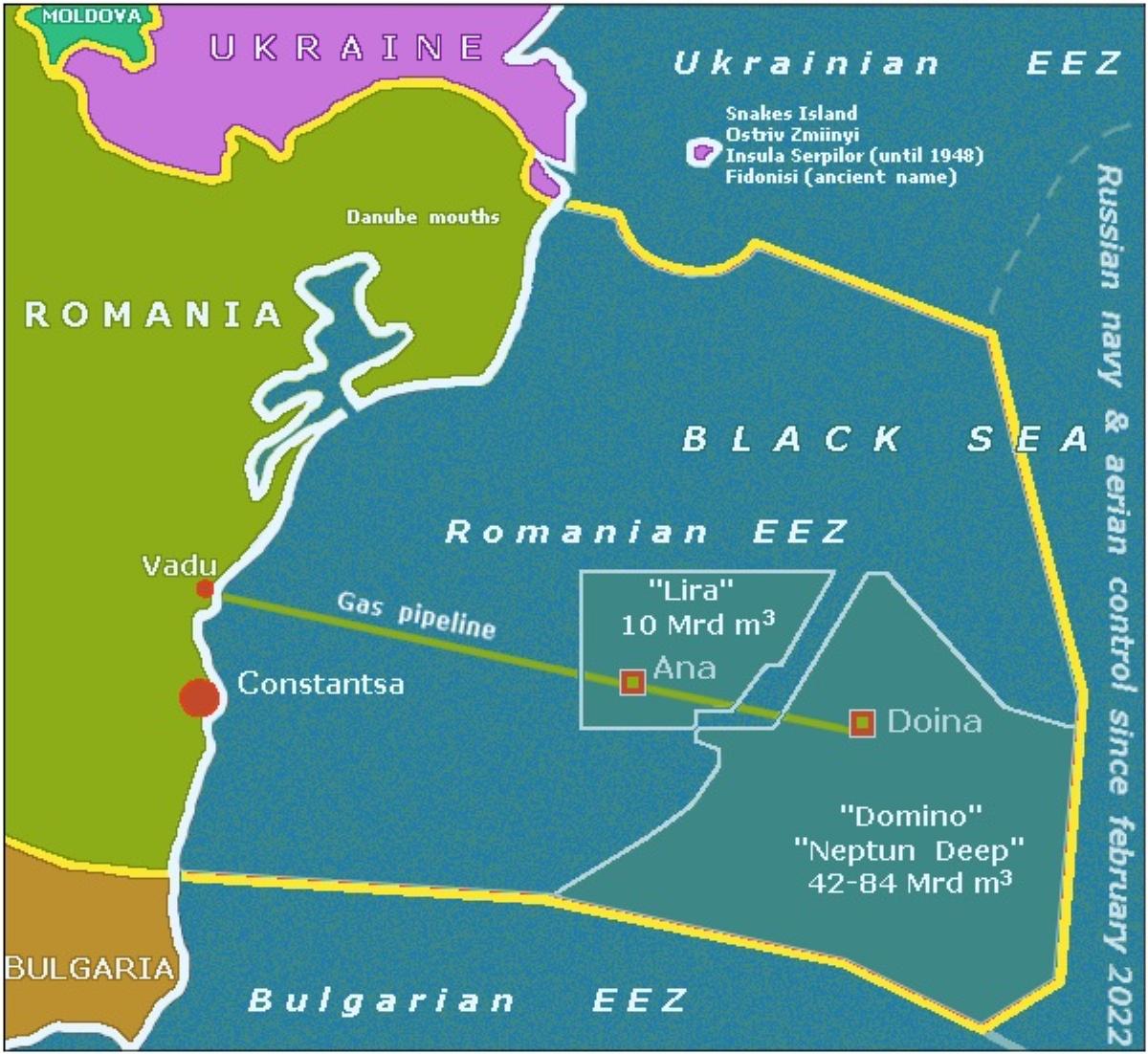
In Romania, one of Europe’s largest gas projects is currently taking shape. Located around 160 kilometers off the Romanian coast in the Black Sea, the Neptun Deep gas field is expected to hold reserves of approximately 100 billion cubic meters. A joint venture between OMV Petrom (majority-owned by Austria’s OMV AG) and Romania’s state-controlled Romgaz is developing the project, with both partners holding equal 50 percent stakes. The vast gas reserves have been known since 1989, but remained untapped for decades due to political instability and lack of investment security.
In recent years, the increasingly hostile political climate within the EU — effectively branding fossil fuels as a moral evil — has further delayed development. Yet Brussels ultimately failed to stop the project. Faced with Europe’s energy shortages, one suspects that officials may now be quietly relieved. While Neptun Deep will not solve all structural problems, it could serve as a model for countries seeking to break free from ideological constraints: Europe is still capable of executing large-scale projects — and the world does not end when nations defy Brussels’ line and return to rational energy policy.
The project carries an investment volume of roughly €4 billion, with production expected to begin next year. Infrastructure is currently under construction to connect the offshore field to the continental pipeline network, positioning Romania as a future net gas exporter. Annual output of around eight billion cubic meters will turn the country into a significant player in Europe’s energy market. Romania could potentially double its already substantial share of EU gas production to as much as 60 percent.
Neptun Deep is not the only major gas field within Europe’s reach. The long-running debate over restarting gas production in the jointly shared Dutch-German North Sea fields offers further opportunities. Yet Germany shows no ambition to exploit them — blocked by the renewable energy lobby and its legal auxiliaries, including Deutsche Umwelthilfe and Greenpeace, which continue to obstruct any meaningful expansion. Even proposing fracking remains political suicide.
Merz should learn: when he points one finger at Trump’s alleged incompetence, three fingers point back at himself. In the meantime, citizens are being quietly expropriated — through taxes and climate levies — to sustain the elite project known as the Green Deal, arguably the largest redistribution scheme in modern history, carried through an ongoing economic crisis.
As Robert Habeck, the chancellor’s intellectual lodestar, once put it with disarming clarity: “We are going all in.” What this means is evident: the entire state apparatus is being transformed into a vast redistribution machine — ecologist in name, militarized in structure, but in reality, a massive transfer of wealth from the middle class to a political-bureaucratic complex of subsidized industries, NGOs, and pseudo-scientific institutions. Inevitably, this requires an ever-expanding bureaucracy.
If you ever wondered what 80,000 EU officials actually do all day, the current energy crisis offers an answer: they manage the status quo of their own power. Their questionable utility was on full display in an April recommendation paper urging member states to conserve energy while floating the possibility of rationing oil and gas. A banal bureaucratic document — something a basic AI could produce in seconds — dressed up as policy. What was predictably missing were calls for the rapid expansion of European gas production or continued coal usage in Germany.
In reality, Brussels, Berlin, and Paris remain largely silent about the rising costs and shortages of the essential lifeblood of modern economies: oil and gas. A serious public debate would expose the failure of the green transformation — this trillion-euro capital destruction project — and bring it to the surface of the shallow political discourse that has accompanied it for years.
For Brussels’ net-zero ideologues, it is deeply inconvenient that people are beginning to focus on reality. What happens next with inflation? What will become of energy prices? A growing number of citizens will connect the dots between the Green Deal, the climate narrative, and their shrinking disposable income.
A classic conflict of interest emerges: whenever national governments return to a rational, scientifically grounded energy policy — as Viktor Orbán did in Hungary — Brussels loses its grip on member states and, with it, its power base. This power rests on the systematic penetration of national legislation through an expansive regulatory framework, built almost entirely on the climate narrative. Put differently: with every national energy project that is not financed by redistributed or debt-created EU funds, Europe regains a piece of its sovereignty. And as the IPCC retreats from its apocalyptic “burning planet” narrative, the days of EU climate policy are numbered.
Read more Is Iran’s claim about having a nuclear weapon just false bravado?
Image: Trecătorul răcit