
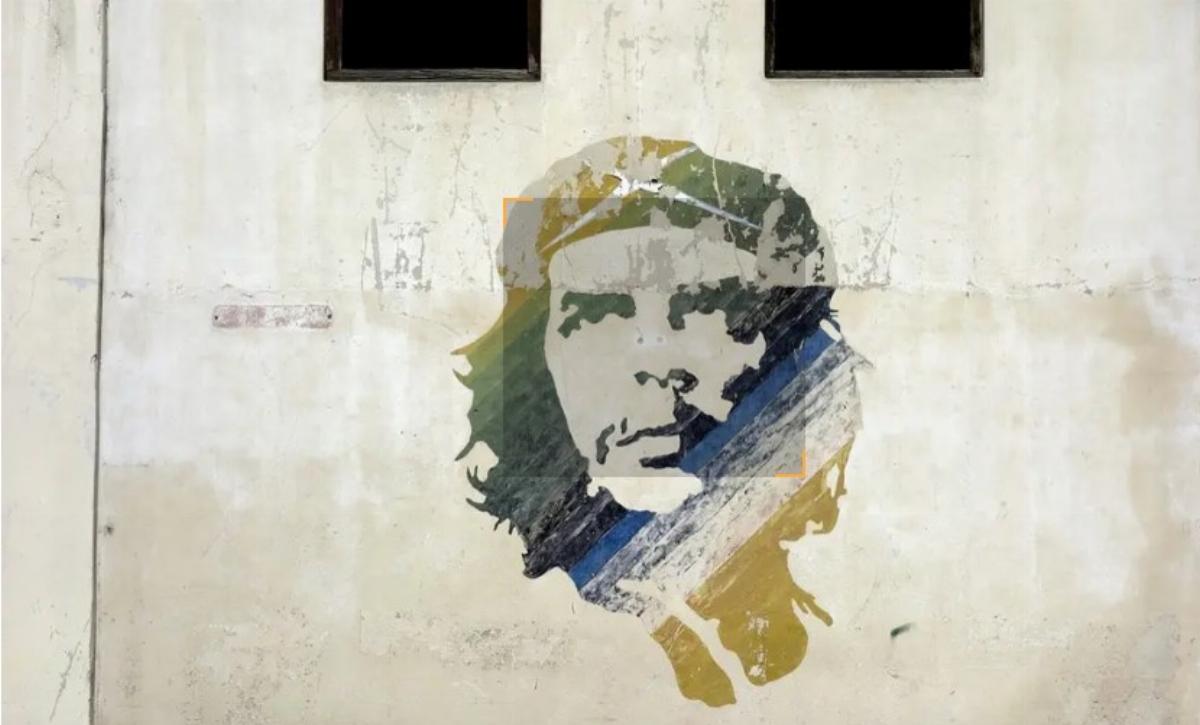
In the wake of Secretary of State Marco Rubio’s stellar speech on terrorism as virtually always the work of the poisonously resentful far-left, now the State Department has issued a report laying out the case against Cuba’s communist military dictatorship as one animated solely on hatred and destruction of the U.S., and effectively laying out the case for ending the regime.
Read more Putting oil prices in perspective
The Castroite regime, the report notes, has trained, succored, indoctrinated, harbored, and sent out terrorists as a means of destroying the U.S. and its interests by any means necessary. They have ties with every terrorist group on Earth, and serve as a nexus of terrorist activity. They’ve embedded spies inside the U.S. government. They’ve sown racial discord and unrest and riots in the U.S., helping create the Black Panthers of the ’60s, and through a proxy, and helped foster the emergence of Black Lives Matter and Antifa today.
(Although the report didn’t go into it, it’s also worth noting that terrorism is closely linked to narcoterrorism, so sure enough Cuba was right there in the middle of that, too. Cuba forged the first ties with Pablo Escobar who globalized the cocaine trade into the U.S. and Europe with Cuba’s sponsorship, taking that evil trade to another level.)
A few of the , this one on page 5:
But the most successful and enduring sphere of Cuba’s campaign against America has taken place on the ideological battlefront. Since the 1960s, the regime has served as the beating heart of a new and distinct kind of Marxism, forged around an overriding resentment and fundamental hatred of the United States and the broader West. The Cubans devoted themselves to recruiting, cultivating and mobilizing a global coalition of activists, intellectuals, and political groups around this cause, building a sprawling revolutionary network that shaped a disproportionate share of America’s most famous and influential extremist movements, from the Black Panthers and the Weather Underground through to Antifa. Today, that network continues to maintain ties to powerful leftist nonprofits, anti-ICE collectives, socialist groups, and Marxist militant organizations across the United States. From its earliest years in power, the Cuban regime has believed that its own survival and strategic interests were inextricably linked to the advance of the revolutionary left inside the United States. This conviction has been one of the animating principles of Cuban foreign policy through to the present day. But unlike most other hostile states, Cuba’s efforts to shape American politics are not solely driven by material geopolitical interests. The Cubans have always seen 6 revolution in America as an end unto itself. It is impossible to understand modern Cuba without first understanding this unique and distinctive character. Since its founding in 1959, the raison d’être of the regime in Havana has been the violent export of communism abroad. But its true target – above any other momentary enemy – has always been the United States.
Page 6:
The specific and peculiar form of Marxism that the Cuban government helped to develop and seed was uniquely fitted for this purpose. While Soviet communism was frequently driven by more practical great-power concerns – the preservation of the Soviet empire and the defense of its material interests around the globe – its Cuban successor was built around a near-singular obsession with the “liberation” of the Global South from its Western colonial oppressors. In the minds of the Cubans, there was only one path to this goal: the destruction of the Yankee imperialist regime. The common depiction of Cuba as a former client state of the Soviet Union is at best incomplete. While Havana maintained a close partnership with Moscow throughout the Cold War and relied on Russian patronage for essential material needs, the Cubans were never just a Soviet proxy. In fact, over the course of the latter half of the twentieth century, Cuba and the Soviet Union came to represent substantially different poles in the global Marxist movement. Cuban communism helped shape a distinct and uniquely dangerous form of revolutionary leftism – built around racial, social and even civilizational grievances rather than economic class conflict – which would go on to instantiate itself as the dominant genre of left-wing radicalism around the globe.
Page 25:
The result was a new model for the post-Soviet Cuban network – one that had perfected the art of cultivating ideological allies, embedding personnel inside state institutions, converting social organizations into revolutionary infrastructure, hollowing out both state and non-state organizations from within, and transforming democratic institutions into regime beachheads. Venezuela became a second revolutionary capital – larger and richer than Cuba itself – while Cuba retained operational control. Together, Havana and Caracas built a regional bloc that could subsidize allies, contest American influence and power, and shape multilateral institutions on behalf of their anti-imperialist coalition.
Read more Glenn Beck Challenge accepted: Words to fight the selling of socialism
Page 98:
Today, Cuban agents and operatives maintain a foothold in hundreds of front groups, activist organizations, solidarity centers, and ideological NGO and nonprofit networks. These groups collectively represent one of the single largest, most sophisticated and dangerous vectors for hostile foreign influence in modern American history. Many of the most significant upheavals in recent American political history – from the George Floyd riots to the rise of Antifa to the explosion of pro-terrorist activism on American college campuses – can be linked, in some way, shape, or form, to Cuban influence.
The conclusion, on page 99, is powerful:
Cuba’s assault on the United States was never, at root, a quarrel over economic policy or sovereignty or even ownership of a particular territory. It was a revolution against Western civilization itself – waged, in part, via the novel and insidious method of persuading the children of the West to turn against their own inheritance. That is the campaign Castro launched in 1959, and it is the campaign his heirs are waging still. And in the institutions of the modern American left – in its universities and its nonprofits, its street movements and its media – that campaign has enjoyed a success its founders could scarcely have imagined. The regime’s method was never primarily premised on kinetic warfare, although it was not above utilizing violence and terror when it suited its interests. It was subtler, and far more dangerous: to attack the United States not from without but from within — to turn Americans into instruments of their own nation’s undoing. To mistake Cuba’s poverty for harmlessness is to misunderstand the threat entirely. Its material weakness was never the measure of its danger. Its power was always ideological, subversive, and parasitic – and it has proven remarkably durable, outlasting the Soviet empire that helped build it and grafting itself onto every new enemy of the United States that has arisen since. Today it serves as the connective tissue of a broader anti-American coalition, a staging ground where the ambitions of Moscow, Beijing, and Tehran converge with the radical movements operating inside our own borders.
If this isn’t an argument for getting rid of the Cuban regime, whose rulers are not focused on being a country, but destroying the United States, what is? There are reports out there that that is coming.
Read more The painful truth about why America meeds a military
Image: Pixabay, via Picryl // CC0 1.0 universal public domain