
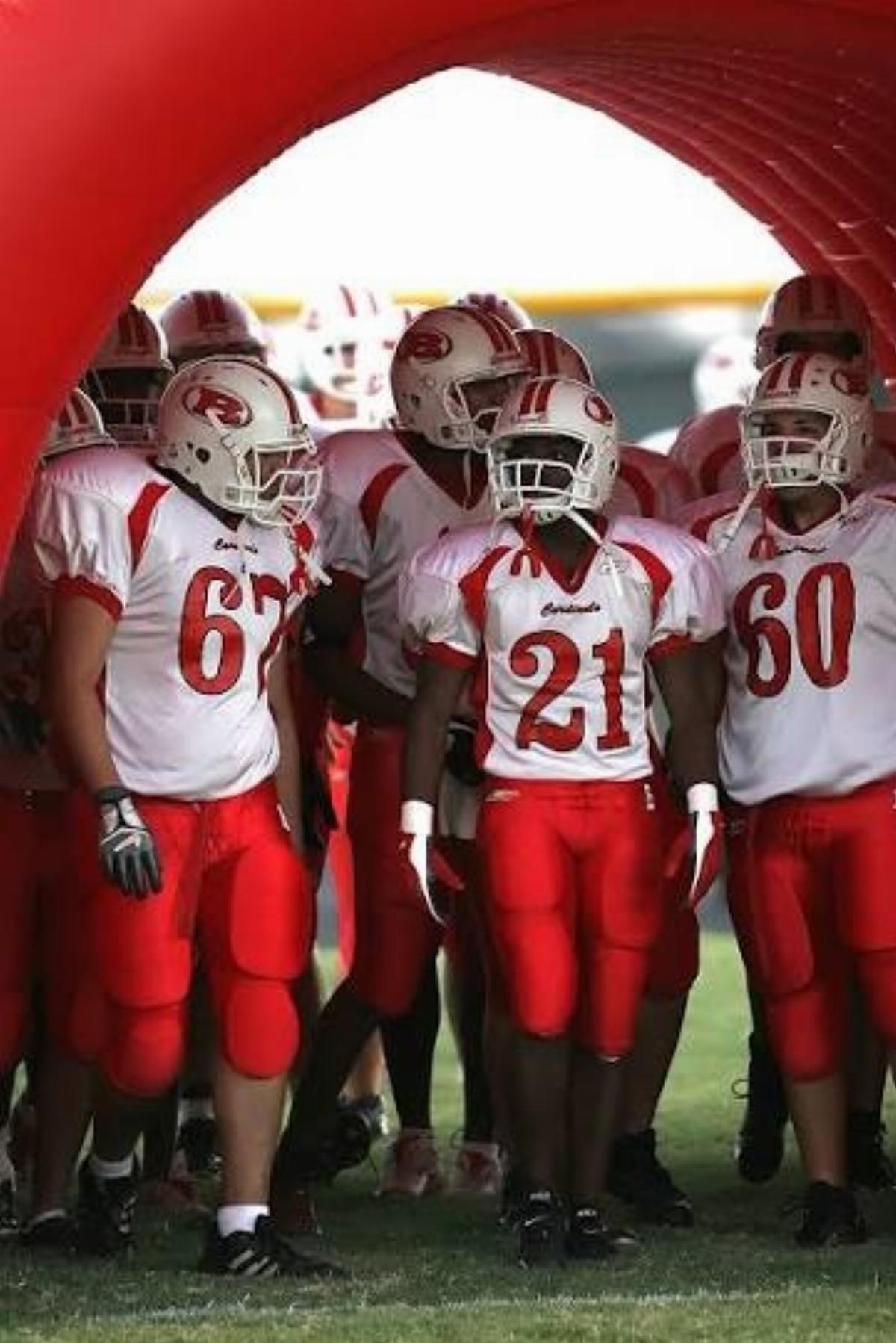
Americans typically think of sports as entertainment. But sports also have a social function that makes sports part of that reservoir of communal affection called social wealth.
Read more An Argument For TIME’s 2026 ‘Person Of The Year’
That’s because sports give young people relationships, identity, and a place in school. They also give people something to talk about. But the students who might benefit most are often left on the sidelines.
A on “Sports Fandom” from More in Common finds that 71 percent of the most passionate sports fans use sports to connect with someone new, compared with 50 percent of moderately engaged fans, 28 percent of less engaged fans, and 13 percent of nonfans. More passionate fans also report more frequent contact with friends and family and less loneliness.
At a moment when Americans worry about isolation and social division, sports is a shared ritual and language that can cross differences of age, background, and politics.
One access point to this shared language is school, where sports connect young people to teammates, coaches, classmates, and the wider community. But a new report on “Making the Varsity Cut” from the American Enterprise Institute suggests that access to those benefits is distributed unevenly.
Researchers examined varsity-sports participation among approximately 273,000 Indiana high-school students. They found large differences in family income, special education status, school size, disciplinary record, and academic performance.
After adjusting for school size, 28 percent of students who didn’t receive subsidized meals played a varsity sport, compared with 14 percent of students receiving free or reduced-price meals. Students in special education participated at less than half the rate of other students. Students with a disciplinary incident were also much less likely to play.
The most striking finding involved academic achievement. Thirty-five percent of students whose eighth-grade math scores placed them in the top twenty percent played varsity sports, compared with 12 percent of students in the bottom twenty percent. At nearly every level, students with stronger math scores were more likely to participate.
That finding punctures the dumb jock stereotype. It also reveals something more troubling. Academic and athletic engagement are concentrated among many of the same students. So some young people are all in. They do well academically, participate in school activities, form relationships with adults, and build identities as contributing members of an institution. Others are connected to none of these things.
That’s not merely an athletics gap. It’s a belonging gap, a lack of social wealth.
Neither research team uses the phrases “belonging gap” or “social wealth.” That’s my synthesis from reading the reports together. But they both raise a question neither answers. Are some young people missing access to an institution that can help them form relationships and identity, what I call social wealth?
High-school sports are often treated as an addition to the real work of school. Yet teams can provide young people with assets that classrooms may not supply as readily.
T
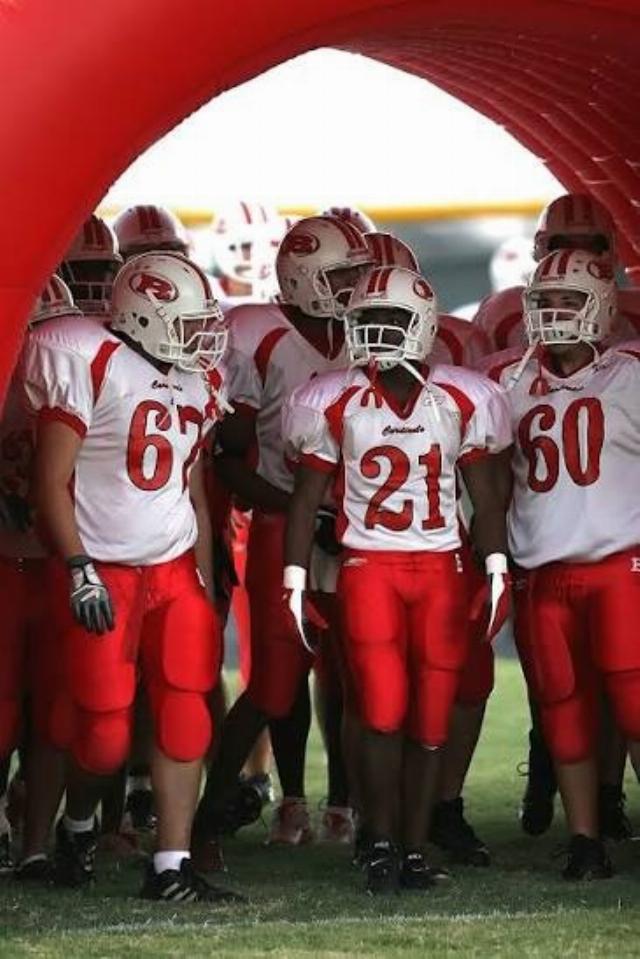
In previous AEI research on Indiana students, researchers found that the absentee rate for varsity athletes was roughly 20 percent lower than for nonathletes. By comparing students’ attendance during and outside their playing seasons, the researchers also found evidence that at least part of the relationship was causal.
Read more The Left Is A Cult
The authors’ review of earlier research describes associations between athletics and college enrollment, degree completion, employment, academic performance, and attendance, although the size and cause of those effects remain uncertain.
That uncertainty matters. Students who are already engaged may be more inclined to join a team. Families with more money can afford equipment, transportation, private instruction, and years of youth-sports experience. Their children may arrive at high school better prepared to win scarce varsity positions.
Whatever the causal direction, the findings deserve attention. Extracurricular participation may be functioning less as a second chance for disconnected students than as another advantage going to those already doing well.
Formal participation fees are not the whole explanation. Indiana schools rarely have official pay-to-play policies, according to the AEI report. Yet low-income students remain only half as likely to participate.
The barriers may accumulate over many years. They include equipment costs, transportation problems, family work schedules, limited recreational opportunities, and the expense of youth and travel sports that can prepare children to compete for varsity positions.
School size matters, too. Students in Indiana’s smallest high schools were nearly three times as likely to play varsity sports as students in the largest. Smaller schools offered somewhat fewer sports, but they had more roster positions relative to enrollment. At large schools, a program can offer a long menu of teams but still leave many students without an opportunity to play.
Read together, the studies point toward a possibility worth investigating. Sports may be part of America’s social infrastructure, its social wealth. They create common experiences, recurring rituals, relationships across generations, and identities rooted in place. If those benefits matter, schools should pay closer attention to who receives them.
The answer is not to put every student on a varsity team. Varsity sports are competitive by design. Schools should instead adopt a broader participation strategy. They can begin closing the participation, and potentially the social wealth gap with four practical steps.
- Identify the students who take part in nothing. Schools should track participation in sports, music, theater, clubs, career organizations, service projects, and work-based learning. Attendance and test data show whether students are present and progressing. Participation data can reveal whether they have formed a meaningful attachment to the school community.
- Create more ways to join. Junior-varsity and freshman teams, intramural leagues, no-cut sports, and partnerships with recreation departments can extend the benefits of athletics beyond varsity rosters. Late-entry programs are especially important for students whose families can’t afford private training.
- Guarantee every student a sustained activity. Each student should have access to an activity involving an adult who knows the student, a group that depends on the student, and a purpose that a student claims as their own. That could be a team, arts ensemble, robotics club, apprenticeship, or career and technical student organization.
- Make coaches and advisers part of the student-engagement strategy. These adults may notice when a young person begins missing school or withdrawing academically before the change appears in an early-warning dashboard. Unlike a data system, they have a relationship with the student.
For decades, education reform has concentrated primarily on what students should know. That work remains essential. But opportunity also depends on whom students know and who they understand themselves to be. Knowledge matters. So do networks and identity. Together, knowledge, networks, and identity expand a young person’s opportunities.
Sports cannot repair every weakness in American education or cure the country’s loneliness. But they demonstrate how institutions can create belonging. That happens by giving people something to do together, someone who expects them to show up, and a place where their presence matters.
The value of high school sports is clear. The pressing question is who gets the chance to play.
Bruno V. Manno is a senior advisor at the Progressive Policy Institute and a former U.S. Assistant Secretary of Education for Policy. He can be reached on LinkedIn.
Read more The West Hasn’t Even Entered The OODA Loop
Image: PxHere