
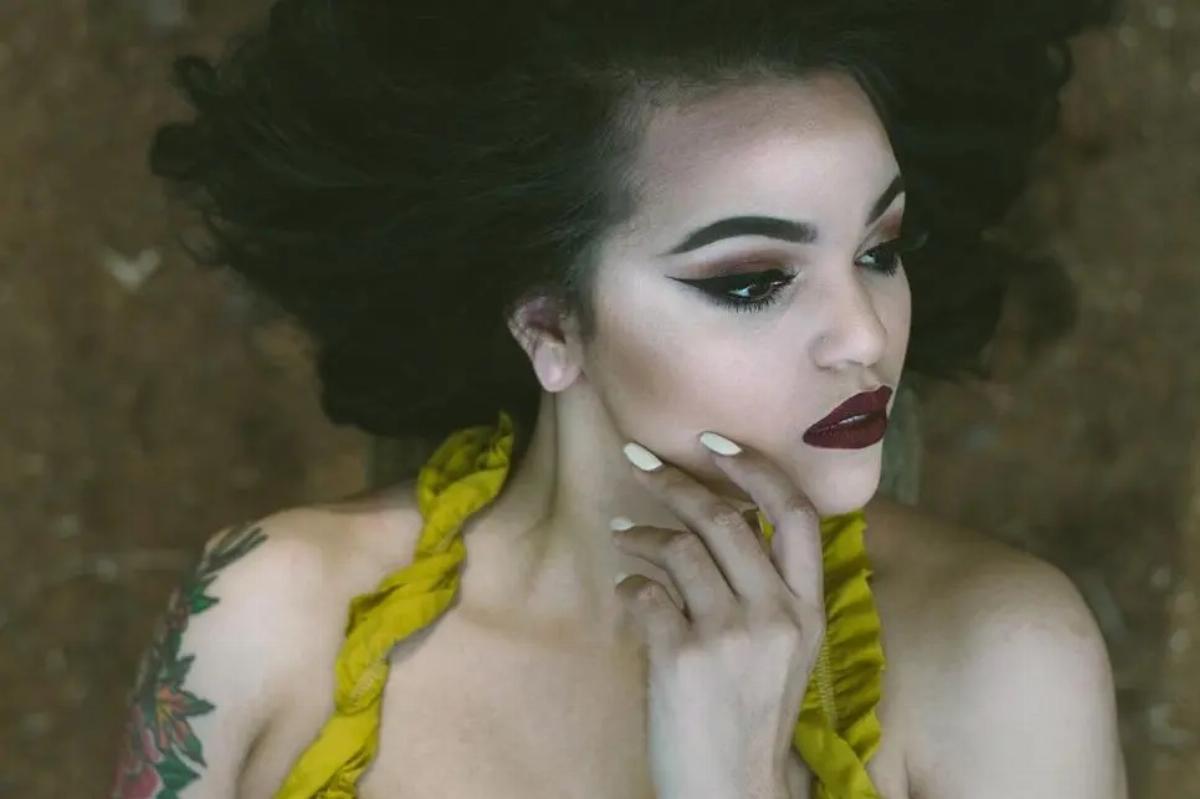
Gen Z women seem to be sabotaging their sex appeal — at least toward young men. A hint of this can be seen in the relative performance of beauty stock companies versus an iconic brand specializing in tantalizing intimate wear that elicits warm and fuzzy feelings.
Read more The Great Tariff Mystery
Even as misbehaving young women become uglier (inside and outside), sales of beauty products have been robust. Top beauty stocks like e.l.f. Beauty and Ulta Beauty have been beating analyst estimates and raising guidance; shareholders have been rewarded commensurately.
Upon reflection, this may not be as incongruous as first seems. After all, hair coloring products “make up” a large percentage of beauty products sales. And empirical evidence abounds that misbehaving and misguided young women are dying their hair in gaudy colors. It’s emblematic of their descent into leftist madness.
The stock charts of the aforementioned companies continue to trend upwards.
Contrast their performance to that of Victoria’s Secret. While the stock has also performed well this year, it is now dropping precipitously following its quarterly earnings report (down over 13% as I type). A big reason is that management’s Q3 operating income forecast is viewed as soft.
By contrast, e.l.f. Beauty’s stock jumped after it reported its quarterly earnings on August 5, 2026. Ulta Beauty’s shares popped after reporting earnings in June, and remain buoyant despite some interim choppiness.
Admittedly, Victoria’s Secret has experienced a turnaround over the last year, and expectations were high in anticipation of its latest earnings report. Nevertheless, its sales growth in the latest quarter (10.4% year-over-year) drastically lags that of e.l.f. Beauty (36% YOY). Perhaps more troubling is that Victoria’s Secret is showing a slowing pace of growth compared to its own metrics.
Read more Illiterate illlegals driving semis: Biden’s Handlers did it on purpose
Beyond specific companies, the market for beauty products is predicted to expand faster than that of intimate apparel. That’s impressive given the law of large numbers — it’s a much larger sector. Whichever way one slices and dices the numbers, it’s clear that beauty product sales are outperforming sexy lingerie and intimate apparel by wide margins.
Here’s the upshot of it all: too many of the misguided and misbehaving Gen Z women don’t want to be lovely and sexy because they’ve been taught that it is submissive (they reject the power of God-endowed femininity). So, they are spending on beauty products to, in part, turn off young men; conversely, they are not spending as much on sexy undergarments to turn them on.
It is part of their futile efforts to assert “independence” from male dominance (which nature has deemed nonnegotiable, and is partly why they suffer high levels of madness). However, if they finally succumb to the overpowering male pheromones and retire to the boudoir for intimacy, it is unlikely they’ll be adorned in provocative scanties from Victoria’s Secret. It is more likely they’ll emanate more of a grungy and disheveled visage lest they appear too feminine.
Then there is the LTQBTX crowd. Though they like to be titillated, they likely also spend more on “beauty” products than on the soft, tantalizing, and gentle offerings from Victoria’s Secret.
Read more Let’s hear it for the Second

Image: Unsplash