
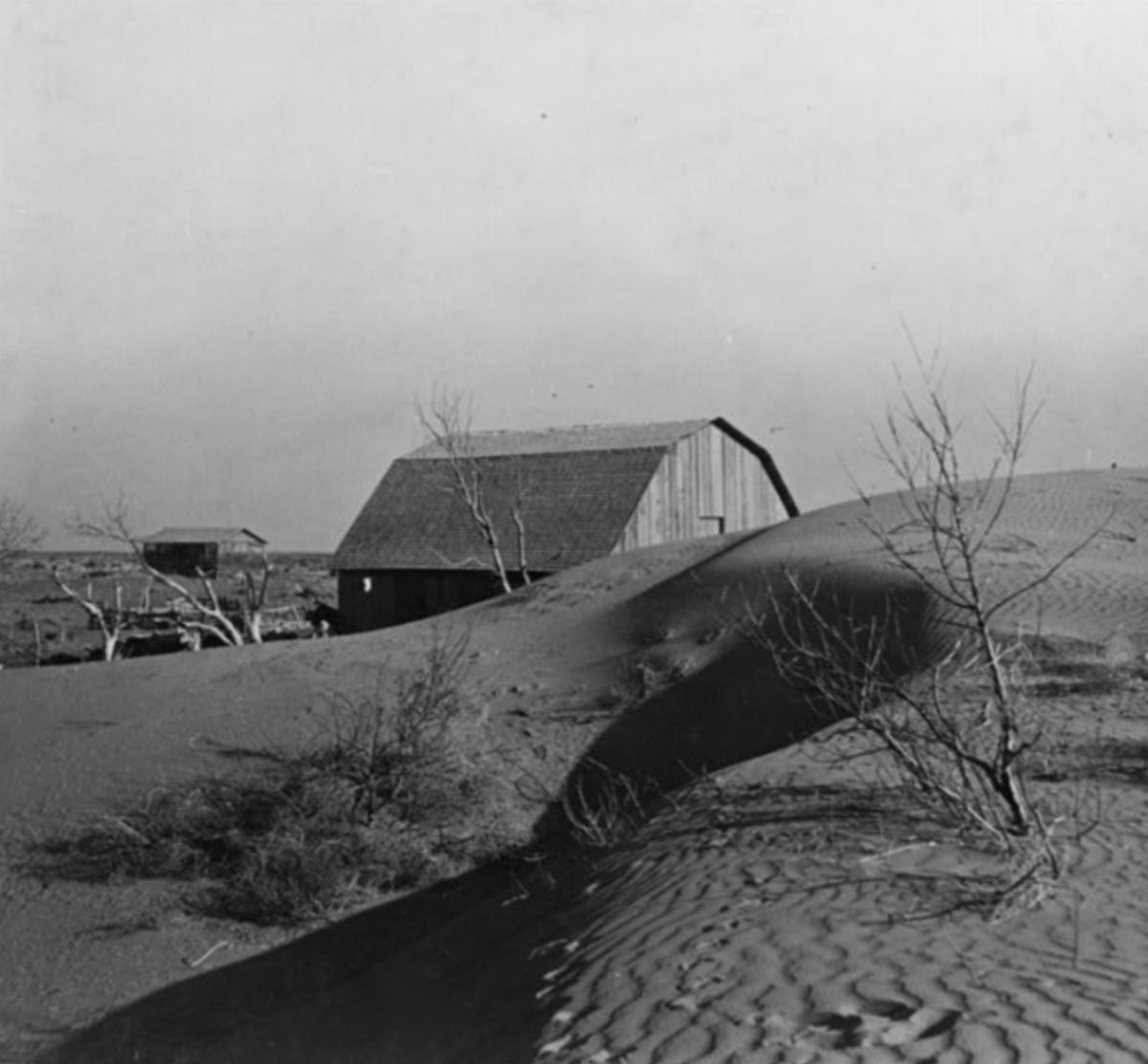
Heat waves come and go. But we, as a nation, need an occasional reminder that none has been as hot as the one in 1936.
Read more Dana Nessel is no Queen Esther
In the gritty Dust Bowl days, several of the lower 48 states suffered through their all-time granddaddy of heat waves. The worst of them came in July 1936.
During that unprecedented month, La Crosse, Wisconsin, endured 10 consecutive days when the thermometer topped 100 deg F (not the “feels-like” variety, but actual, true thermometer readings). The thermometer read a scorching 114 at Wisconsin Dells on July 13, 1936. That Midwest state’s all-time record persists to this day.
Additional all-time high records went into the books for the other 13 states involved. They were not the more common daily records that court media attention and angst today.
What’s more, every one of the 48 all-time state records on the books dates to years before 1950. In these intervening 75 years, no additional all-time record has been established. That’s a curious fact, in the face of the catastrophic warming alleged to be going on around us since 1988.
The world’s highest temperature was recorded in Death Valley, 134°F (56.7°C) at Furnace Creek, California, on July 10, 1913. This is recognized as the hottest air temperature ever reliably measured on Earth. It should be noted that this is a datum taken on a single day at a single site on the planet.
Statistical analysis almost certainly demands that higher temperatures (otherwise going unrecorded) have occurred many times before at uncertain times and undetermined locations. The Sahara Desert, the Arabian Peninsula and the interior deserts of Central Asia, in addition to Death Valley, come to mind as possible candidate locations where higher temperatures have occurred and were left unrecorded.
Now, as during the infamous Senate hearings on the pending “runaway greenhouse” in 1988, proper comparison of older data with more recent temperature measurements remains a difficult task left open to dispute among climate experts.
As Anthony Watts (long-time Los Angeles meteorologist) points out, the urban heat-island effect and land use changes (progressive urbanization) are key factors generally being ignored or not properly accounted for in the brand of climate-change analysis championed by the AP and its sister media-distribution agencies.
Read more The Clancy trial needs a foreman
July 2026 and July 1936 cannot be directly compared for yet another important reason. A majority of the monitoring stations that were once abundantly distributed across the entire United States (stations then numbered in the thousands) have since been closed, leaving an upward bias in temperature data derived from the remaining and newer stations. This arrangement tilts the data in favor of urban over the rural stations, now fewer in number or no longer in existence. Subsequent attempts to manipulate data that never existed in the first place are not helpful.
Methods and protocols for recording temperatures have also changed, making it tedious, if not impossible, to reach meaningful direct comparisons, after-the-fact, between the data acquired decades before and recently.
Yet, John Christy (co-founder of the satellite temperature measurement system) has just published a peer-reviewed paper revealing that extreme summer heat, e.g., hottest values, number of heatwave days, etc., show a modest negative trend within the contiguous United States since 1899. Extreme cold temperatures also have declined in occurrence, especially since the 1990s.
If anthropogenic climate change were causing a continued rise in global temperatures as the result of fossil fuel burning, then at least one state should have recorded a new all-time record by 2026. But there are no new record holders.
There is little or no mention of the importance of the urban heat island to be found throughout the legions of alarmist-oriented publications. The UHI is a major factor contributing to both elevated daily highs and the observed elevation of the night-time low temperatures in our cities.
The AP quotes Jeff Masters, former head of the University of Michigan’s Weather Underground, to bolster his arguments for a new record-setting July. Masters himself is a leading climate-change alarmist.
We are in no real danger of a runaway climate either now or in the foreseeable future. With more than several billion years of Earth’s geological history behind us without the dreaded runaway greenhouse ever happening, even when carbon dioxide levels were many times greater than at present, we can all sleep peacefully in the knowledge.
The AP, the Weather Underground, and little Greta each need to take a time out.
William D. Balgord, Environmental & Resources Technology, Inc., Middleton, Wisc., is a contributor to the Cornwall Alliance for the Stewardship of Creation.
Read more The difference between rights and entitlements in American political life
Image: Library of Congress