
In today’s political environment, the term “rights” is used so casually and so often that its original meaning has almost vanished. Politicians talk about having a “right to housing”, a “right to affordable food”, a “right to free healthcare”, a “right to childcare”, a “right to transportation”, and even a “right to a livable wage”. Since these expressions are so constantly repeated, they have become familiar and even seem moral. However, familiarity does not mean that they are true, and repetition does not make them align with the American founding.
Read more Why won’t Democrats repudiate trans madness?
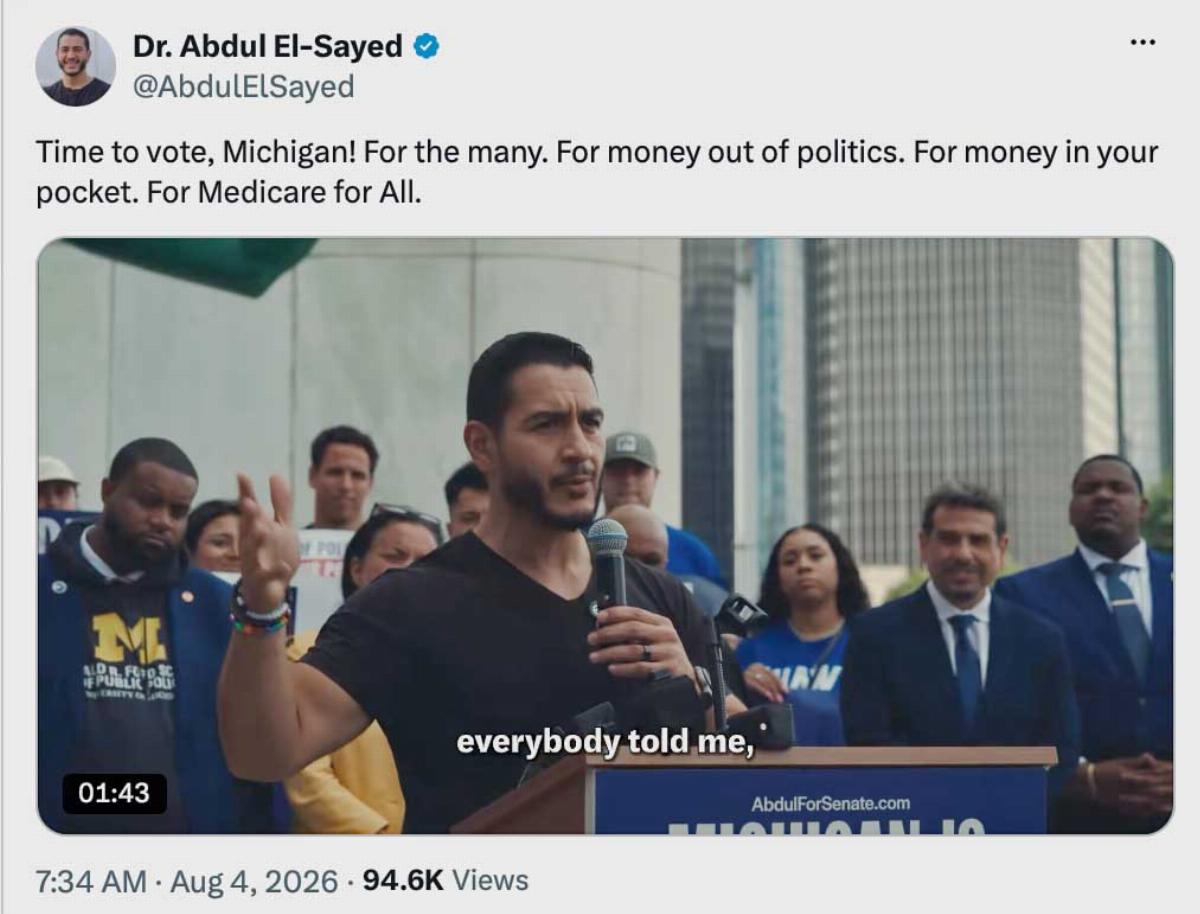
Graphic: X Post
The Founders made it plain that rights originate from the Creator, not from the government or from other citizens. A right is one that you have simply because you are a human being; it is inherent, natural, and entirely self-contained. It does not necessitate anyone else giving up their labor, their money, their skills, or their property if you are to exercise it. What is a real right is something that you can enjoy without making anyone else take any action.
The core of natural rights is the list of rights set out in the Declaration of Independence: the right to life, the right to liberty, and the right to pursue happiness. The Bill of Rights follows the same pattern. Every amendment protects a freedom that does not require another person’s involvement. Freedom of speech does not require anyone to listen. Freedom of religion does not require anyone to fund your church. Freedom of the press does not require anyone to buy your newspaper. The right to bear arms does not require anyone to purchase a firearm for you. Due process does not require another citizen to sacrifice their property or time. This distinction is not a minor detail. It is the foundation of American liberty.
Yet modern politics often blurs this line. When politicians declare that citizens have a “right” to free healthcare, free housing, free childcare, or free transportation, they are not describing rights. They are describing entitlements — benefits that require government to take from one group and give to another. These entitlements may be debated, supported, opposed, expanded, or limited. But they are not rights in the Founders’ philosophical sense.
A right that requires someone else’s labor is not a right. It is a claim on another person. It is a demand that someone else must work, must pay, must provide, or must sacrifice so that you may receive. And if government enforces that claim, it must do so by confiscation — taking the fruits of one person’s labor and transferring them to someone else.
Read more ‘Lake America’ leaves Democrats sputtering, flailing, drowning
This is not the American understanding of rights. It is a different philosophy entirely, one rooted in the idea that government exists to manage society, allocate resources, and guarantee outcomes. The Founders believed the opposite: that government exists to protect individual liberty, secure property, and prevent coercion.
The American vision is simple and profound. Rights come from God. Property comes from labor. Charity comes from choice. Government’s role is not to provide for citizens but to protect their freedom to provide for themselves. When government begins to guarantee goods and services under the banner of “rights,” it transforms citizens from free individuals into recipients of state-managed benefits. It replaces personal responsibility with political dependency. And it replaces natural rights with political entitlements.
The language of rights matters because it shapes citizens’ expectations and the power of government. When everything becomes a “right,” nothing remains a right in the original sense. The word loses its meaning. And the government gains authority to redistribute, regulate, and control in the name of fulfilling these newly invented “rights.”
The Founders understood that freedom requires limits — not on citizens, but on government. They built a system where individuals could pursue their own happiness without forcing others to surrender theirs. That is the American promise. And it remains true today: a right that requires another person’s labor is not a right. It is a political entitlement, and it must never be confused with the God‑given rights that define American liberty.
Read more Russia’s Canaries Are Singing
Christian Vezilj
Make It A Great Day, The Choice Is Yours
Christian’s Publications – Substack