
The Judeo-Christian ethos, often cited as the foundation of Western civilization and a core element of American identity, holds that humans are superior to animals. It holds that while animals act on instinct, we possess consciousness, a conscience, and free will to choose our actions and face the consequences.
Read more A measured response on the Lindsay Clancy case
While recognizing human superiority and hegemony, its moral code obligates us to treat animals with compassion. Animal rights activists do not think this is enough: they view the elevation of humans as speciesism, a form of discrimination as harmful as racism, sexism, or other biases.
British psychologist Richard Ryder coined the term, and Australian moral philosopher Peter Singer popularized it in his 1975 book Animal Liberation. Ryder believes that human exploitation of less intelligent species is fascist. Singer argues for species equality, contending that privileging humans is arbitrary and discriminatory because animals suffer pain as much as we do.
Species egalitarianism assigns the same moral weight to animals’ interests as to those of humans. The implications are that meat eating is morally wrong; saving animals is equal to saving humans; and ecosystems must be protected from human activity.
This preposterous ideology gained traction in the 1990s with the concept of “rewilding,” coined by Earth First! and contextualized by conservationists Michael Soulé and Reed Noss. Rewilding seeks to restore ecosystems by reintroducing large predators near human settlements and by creating wildlife corridors through those settlements.
To translate the ideology into action, Soulé and others founded the Wildlands Network (formerly the Wildlands Project) in 1991. It envisioned a network of “wildways,” or corridors connecting protected wildlife areas across the country. Wildlife would have the right of way. Maps on the network’s website show corridors for lions, wolves, bears, and other animals near residential areas, prompting people to move out.
The NGO’s goals align with Agenda 21 and the U.N. Convention on Biological Diversity (CBD), both outcomes of the 1992 Earth Summit, which called for 50% of the U.S. to be designated as wildlands. To “protect endangered species,” these wildlands would be off-limits to humans. Obviously, this will restrict property rights.
Surprisingly, these ideas have resonated not only with our unaccountable army of bureaucrats but also with elected representatives. Grand programs to “reverse America’s wildlife crisis” have been established by ordinance in Los Angeles, Evanston, Minneapolis, Austin, and Albuquerque. Their impact on sovereignty, personal freedom, and property rights has been ignored.
Consider the Los Angeles program, initiated in 2023 and targeting a 36-square-mile area in the Santa Monica Mountains and foothills within the city’s hillside communities. It established regulations and standards for private developments, limiting building height, area, and grading angles. Tinted windows were mandated to prevent bird collisions, landscaping was required to follow native standards, and fences had to be passable to small animals. The plan was intended to extend to other areas as well.
The program was halted in 2025 due to budget cuts and opposition from real estate developers and property owners. However, the Los Angeles region will soon be home to the Wallis Annenberg Wildlife Crossing, billed as the world’s largest. It will span 10 lanes of the busy U.S. Route 101 between Agoura Hills and Calabasas, just outside Los Angeles, and is scheduled to open in December.
Read more Dolly Parton versus the Democratic Socialists
The $114 million project is funded by state, federal, and private sources: $77 million from the state, $2.5 million from the federal government, and $25 million from the Annenberg Foundation, plus contributions from the California Wildlife Conservation Board and the Santa Monica Mountains Conservancy. In addition to building the crossing, the project will restore 14 acres around the freeway.
What is alarming is that, while prioritizing animals and ecology, programs like these ignore the dangers wildlife poses to humans: disease transmission, unpredictable behavior, property damage, and attacks. Previously, wildlife agencies would relocate or euthanize bears, lions, coyotes, and other species when human settlements expanded. Now, focusing on human safety is anathema.
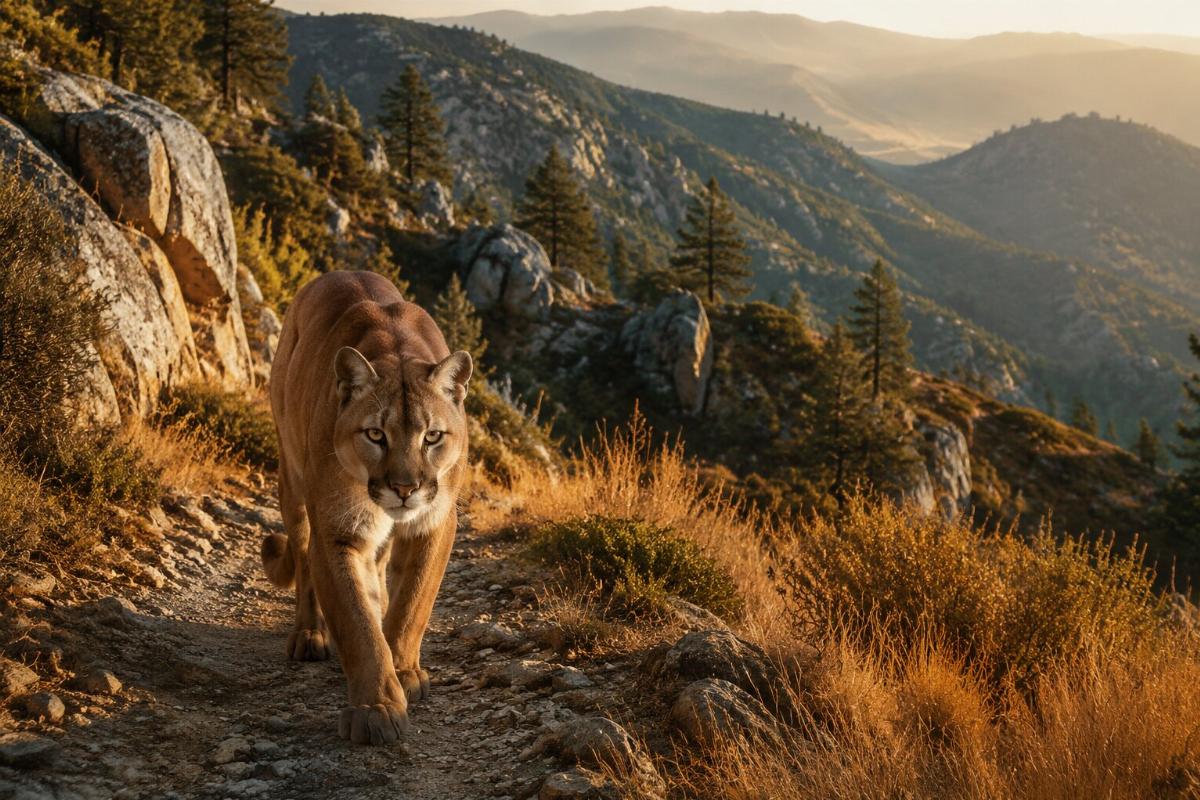
Risks vary elsewhere, but in the Los Angeles hillside communities, the primary risk is attacks by mountain lions (or cougars) and coyotes. Of all states, California has the most attacks by wild carnivores. Cougar attacks are considered rare, yet four of the nine nationwide since 1994 have occurred in California. Wildlife managers have raised concerns since the 1980s, and wilding projects are likely to result in more human-animal encounters.
The following is a list of attacks by cougars and coyotes in California:
- In 2024, a five-year-old boy was attacked by a cougar while playing at a picnic table in a state park near Calabasas. Fortunately, family members scared the animal away, and rangers euthanized it.
- In 2021, another boy, also five, was dragged 45 yards by a cougar in his front yard. This occurred again between Calabasas and Malibu. The boy was saved by his mother, who struck the cat with her bare hands. The cat was later shot dead by rangers.
- In 1994, a marathoner and mother of two was killed when a cougar pounced on her from behind while she was trail-running near the El Dorado National Park. That year, a school counselor on a hike was dragged off.
- In 2004, a mountain biker was killed in Whiting Ranch Wilderness Park near Irvine. His body was found after a cougar attacked two other bikers at the same location.
- Two brothers, Taylen and Wyatt Brooks, were hunting for shed antlers in the El Dorado National Forest when a cougar charged them. Taylen was killed in the attack. The family is fighting for protective legislation (SB 818), known as Taylen and Wyatt’s Law.
- In 1981, a coyote dragged a three-year-old girl from her Glendale home. Her father rescued her and rushed her to the hospital, but she died of blood loss and a broken neck.
- A four-year-old boy sustained puncture wounds after a coyote attacked him while he stood in his grandparents’ driveway. His mother scared the coyote off by screaming, grabbing her son, and running indoors.
In West Hollywood, coyotes have taken up residence in an unfinished condominium, now dubbed “Coyote Condo.” There have been several sightings of coyotes in the neighborhood, and nights are disturbed by their howling. Officials say they are working with the property owner to resolve the issue in a “humane manner, consistent with the city’s expectations.”
The city follows a coyote “management and coexistence” plan that prioritizes non-lethal interventions. No timeline has been set to resolve the issue. Those who come to complain are told to file a report with the Department of Agriculture.
What policymakers seem unwilling to accept is that these animals are not victims of human oppression but predators. If they are not confined to wildlife habitats far from residential areas, they will attack humans and, over time, become habituated to such attacks.
But ignoring common sense, proponents of wilding projects and wildlife crossings are bent on granting animals free access to human habitations. Activists and policymakers espousing anti-speciesism are driven by a cultish zeal to accord sanctity to animals and to elevate them above humans.
This is antithetical to our Biblical foundations. Alongside the gender-identity madness, the aggressive pursuit of DEI over merit, and the replacement of critical thinking with Critical Theory at our universities, anti-speciesism is another salient feature of the attack on Western civilization and its values. It must be resisted.
Read more Trump’s helped Texas, but it still seems to be heading left
Image generated by ChatGPT.