

The apparent facts of the Lindsay Clancy case are disturbing on their face: a mother who allegedly strangled her three young children and then attempted suicide. We are not required to soften that reality or treat it as anything less than a profound human tragedy; the case, nonetheless, raises legitimate questions about the systems that treated her and the prosecution’s approach. Those questions deserve examination, not reflexive dismissal from either side of the aisle.
Read more Dolly Parton versus the Democratic Socialists
Clancy undeniably sought care for worsening postpartum symptoms in the months before the killings, was placed on numerous psychiatric medications, and hospitalized when her condition did not improve. She allegedly killed her children nineteen days after discharge. At trial, her defense argues she was in the grip of postpartum psychosis and lacked criminal responsibility; prosecutors argue premeditation and full accountability. No outsider can settle that question. What can be examined is the institutional pattern surrounding it.
American mental health care has spent years organized around awareness campaigns, destigmatization, pharmaceuticals as the default tools of treatment, and contrived narratives regarding complex realities. In an earlier piece for this site, I looked at how that same awareness apparatus can manufacture illness in one direction, by lowering the threshold for what counts as pathology until ordinary distress gets self-diagnosed into something clinical.
The Clancy case shows the failure running the other way. A woman moved through twelve powerful psychoactive medications and an inpatient stay without the diagnosis that mattered ever being caught. The acknowledged clinical risks of these medications, their interactions, their effects, and their role in this tragedy is troubling. Because they alter brain chemistry, these medications are dangerous, especially when someone is already expressing violent ideations.
Both failures come from the same root: a system built to sort people into categories (construct and support a narrative) quickly rather than to sit with a harder differential diagnosis. Sometimes that produces patients who are medicated for conditions they don’t have. Sometimes it produces psychosis that gets missed entirely. Either way, it obviously isn’t care.
Read more Trump’s helped Texas, but it still seems to be heading left
A parallel problem showed up this week in the courtroom itself, and it’s worth being precise about what actually happened. During cross-examination, defense attorney Kevin Reddington got the prosecution’s forensic psychologist, Dr. Kirk Heilbrun, to admit he had never listened to the 911 call in which Patrick Clancy found his wife badly injured in the yard. Reddington then raised the possibility that Clancy’s spinal and throat injuries left her able to make only grunting sounds during that call, complicating the account, built largely on Patrick’s later testimony, that she calmly told him the children were in the basement. Heilbrun said he’d be surprised if that were true. He hadn’t checked.
That’s not a claim that Patrick Clancy lied, and it shouldn’t be treated as one. His statement about the basement is corroborated by his own contemporaneous 911 call and has been part of the record since the arraignment. What the cross-examination exposed is narrower and more damning in its own way: an expert reached a clinical conclusion relying on someone else’s account of a conversation, without ever checking that account against the primary evidence sitting in the file. Nobody caught that gap until an adversarial lawyer went looking for it. That is the failure mode worth naming; not a conspiracy, but an institution that will accept a coherent secondhand story supporting a convenient narrative, rather than do the slower work of confirming it, right up until cross-examination forces the question.
No one outside that courtroom can know with certainty whether Clancy was criminally responsible, whether her treatment caught what it should have, or whether every piece of evidence in this case has been checked as carefully as it should be. What conservatives and liberals who still care about institutional competence ought to be able to agree on is narrower than the culture war version of this story: our systems, medical and legal alike, too often settle for a constructed or contrived narrative, instead of doing the harder work of confirming it against the facts in front of them.
I pray justice is done. I pray for a woman who may have been failed by the very systems meant to treat and protect her. And I pray for the Clancys and their families in the loss of their children. I pray, too, that conservatives and liberals who disagree about mechanisms but largely share the same underlying commitments to evidence, to accountability, to justice, and to the dignity of the people caught inside these systems, can recognize that those who share none of those commitments are the ones who benefit every time we turn a case like this into a front in a war we’re fighting with each other.
Read more Trump is bringing back privateers to stop smuggled Iranian oil
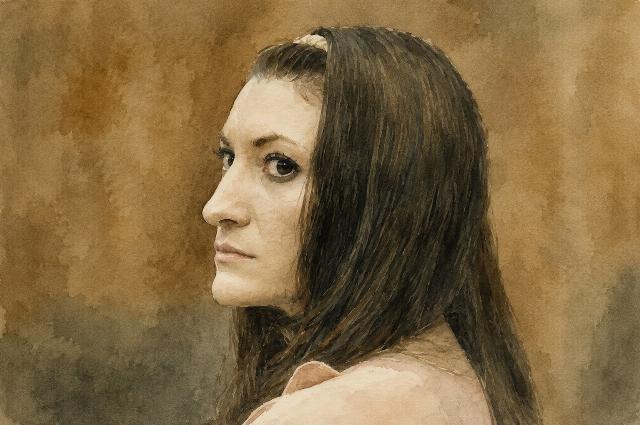
Image generated by ChatGPT.