
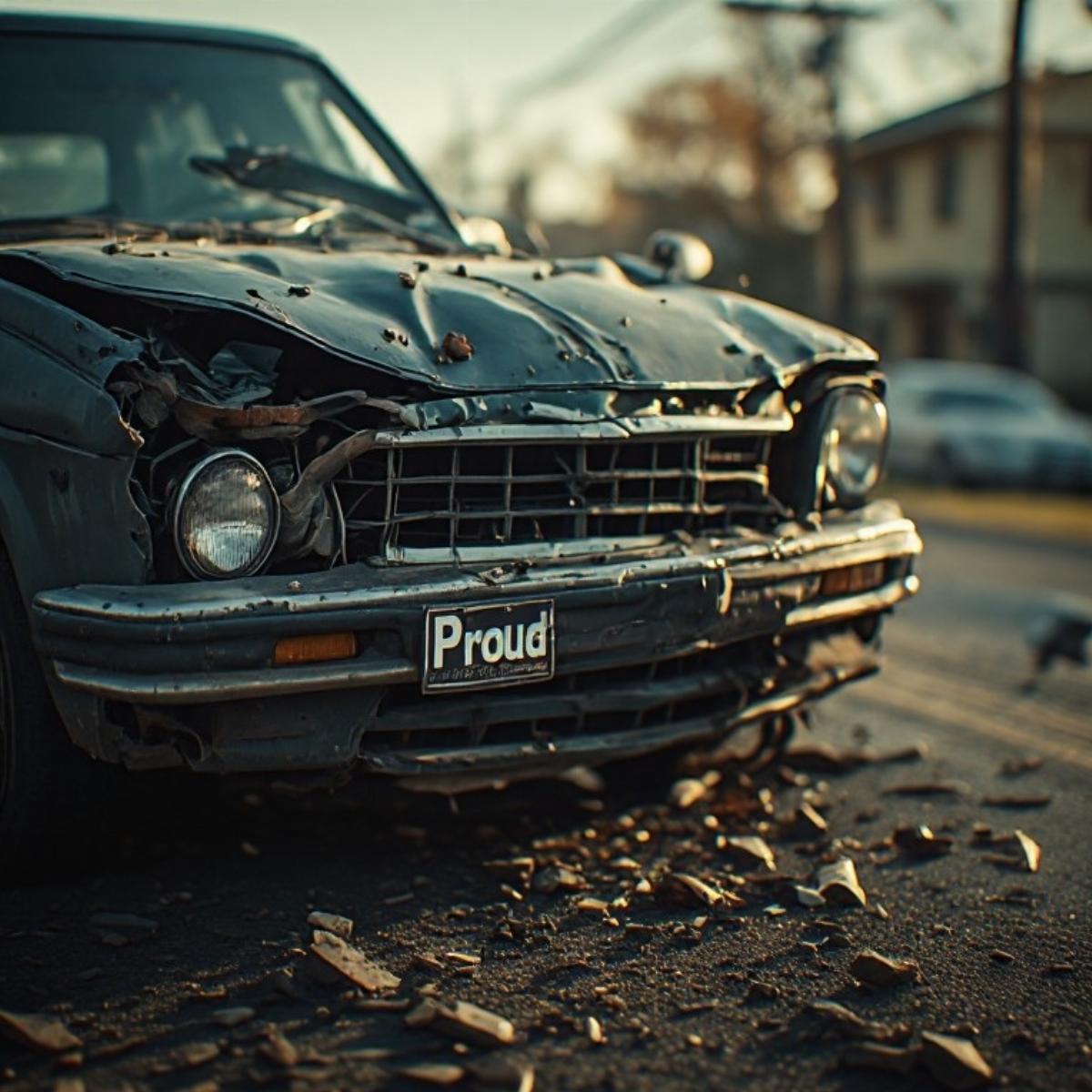
One of our culture’s dispiriting trends since the 1960s has been a growing insistence that one be proud of this or that superficial quality or demographic label. I recall the 1968 Olympics, when Tommie Smith and John Carlos stood at the podium, having won the Gold and Bronze, respectively, in the men’s 200-meter sprint. As an American 10-year-old, I was proud of my countrymen for the feat. But the athletes had a statement to make and will be forever remembered for the “Black Power salute” on the Olympic podium, and not their tremendous athletic prowess. I remember something else, though: when Howard Cosell later asked Smith if he was proud to be an American, the elite runner responded that he was proud to be a black American. Both, question and answer, bothered me.
Read more Socialism and New York City’s Housing Crisis
At times, my memory is too good. Finishing up my 68th trip around the sun, I nonetheless recall my potty training. It was then that I learned what it meant to be proud. “Are you proud of me?” I would ask when it came time for my mom or dad to attend to the necessary hygienic details. It never failed to elicit an affirmative reply. And it, in turn, made me proud of… ahem… my accomplishment.
As I grew, my parents instructed me on the finer points of both hygiene and pride. The former took care of itself without much fanfare, as you might imagine. I found the latter, though, to be far more complicated. They told me, for example, that it was not at all a bad thing to be proud of my big brother when he was elected president of his high school student body. And it was admirable to be proud of my remarkably athletic sister when she excelled on the softball field. But neither my brother nor my sister, they told me, should express pride in themselves for those accomplishments.
By the time I reached the 1st grade, I was a thoroughly confused five-year-old when it came to pride. It didn’t help that I was big for my age and excelled at tetherball. I recall a night when I felt awfully proud of myself and eagerly shared my schoolyard exploits at the dinner table. My bragging flopped with my big brother, as we were raised by the same people. For my first true lesson in humility, he led me to the backyard tetherball set. My brother was in college by then and stood 6’2”. In retrospect, it was more a lesson in humiliation than humility. But he made his point. Unless you’re the future King David, it’s pretty easy to get over yourself when you face an opponent who’s two feet taller.
The lesson has stayed with me.
In my suburban, public high school in the 1970s, I scratched my head when we would cry out at rallies before football games that we were proud to be Trojans — and my class was particularly proud to be “The Spirit of [19]76.” In college, a dear friend had a “Proud to Be Danish” bumper sticker, which I would have confronted her over if I hadn’t been soft on her. A local car wash sold similar bumper stickers for just about every imaginable nationality. On the freeway to work a few years later, I would see a veritable United Nations of commuters crawling to Los Angeles each morning. Years later, for several months after 9/11, “Proud American” became a popular message to proclaim on the roadways. Caught up in the protective and aggressive feelings of the day, I would genially look upon those drivers as fellow travelers, so to speak. But I never bought the sticker.
Back to 1968, why did Cosell’s question to Smith bother me?
Glad to be an American? We should be giddy. Fortunate to be American? Blessed beyond measure. Grateful? When not taking it for granted, tearfully so. Love America? Zealously! But proud? It sounds somehow impertinent, but I am proud of our founders. I am proud of countless American heroes, military, civic, and some unsung. But I had absolutely nothing to do with the circumstances or geography of my birth, so no.
Read more The British Nanny State: No Guns Allowed
One might assume a case is made here for the non-native citizen, for at least they often worked like dogs for their good fortune. But like the rest of us, they had nothing to do with creating the system — a miraculously-crafted interweaving of federalism and separation of powers, recognizing that inherent rights cannot be withheld by a government that did not create them. In this, native and immigrant are co-heirs, beneficiaries of a trust that has now lasted a quarter of a millennium.
My misgivings were reawakened recently, upon hearing Lee Greenwood’s “Proud to Be an American” — a song that always assures me I’m with kindred spirits, but leaves me hollow. How about “Humbled to be an American”? I know the meter is wrong and all, but it is so much more in keeping with the spirit of [17]76.
In today’s conversation, we have “pride flags,” “pride month,” “pride marches,” and “pride parades.” There’s a Pride Library and “pride/proud” cable channels. Except for the Texas Rangers, every team in Major League Baseball has a “pride night” each summer. A certain subculture is absolutely lousy with pride.
In response to these ubiquitous displays, an entrepreneur in my town, Mark Fitzpatrick, tried to fight fire with fire. A couple of Junes ago, the Old State Street Saloon began a tongue-in-cheek “Heterosexual Awesomeness Month.” Had he used “Pride” instead of “Awesomeness,” I might not have patronized his establishment, but the word choice — not to mention a free beer on Mondays in June for those of us who aren’t… well… too proud — worked as an invitation I couldn’t resist. Sadly, Fitzpatrick is now selling the saloon. The opposition has made it too cumbersome — between what he describes as “regulatory pressure, lawfare, legal threats, and worse” — he doesn’t want the business to be used against him as “leverage.” I am sure his foes are proud.
In Mere Christianity, C.S. Lewis wrote, “The essential vice, the utmost evil, is pride. Unchastity, anger, greed, drunkenness, and all that, are mere fleabites in comparison. It was through pride that the devil became the devil. Pride leads to every other vice; it is the complete anti-God state of mind.”
Lewis was, as usual, absolutely spot on.
Some readers who have made it this far may already be composing rebuttals, urging that my argument takes this anti-pride thing too far. Maybe they had one of the bumper stickers. Maybe they love Lee Greenwood’s anthem. Maybe they think it’s all just semantics.
And some are likely blaming my potty training.
Paul O’Brien, a retired California lawyer, lives in Eagle, Idaho.