
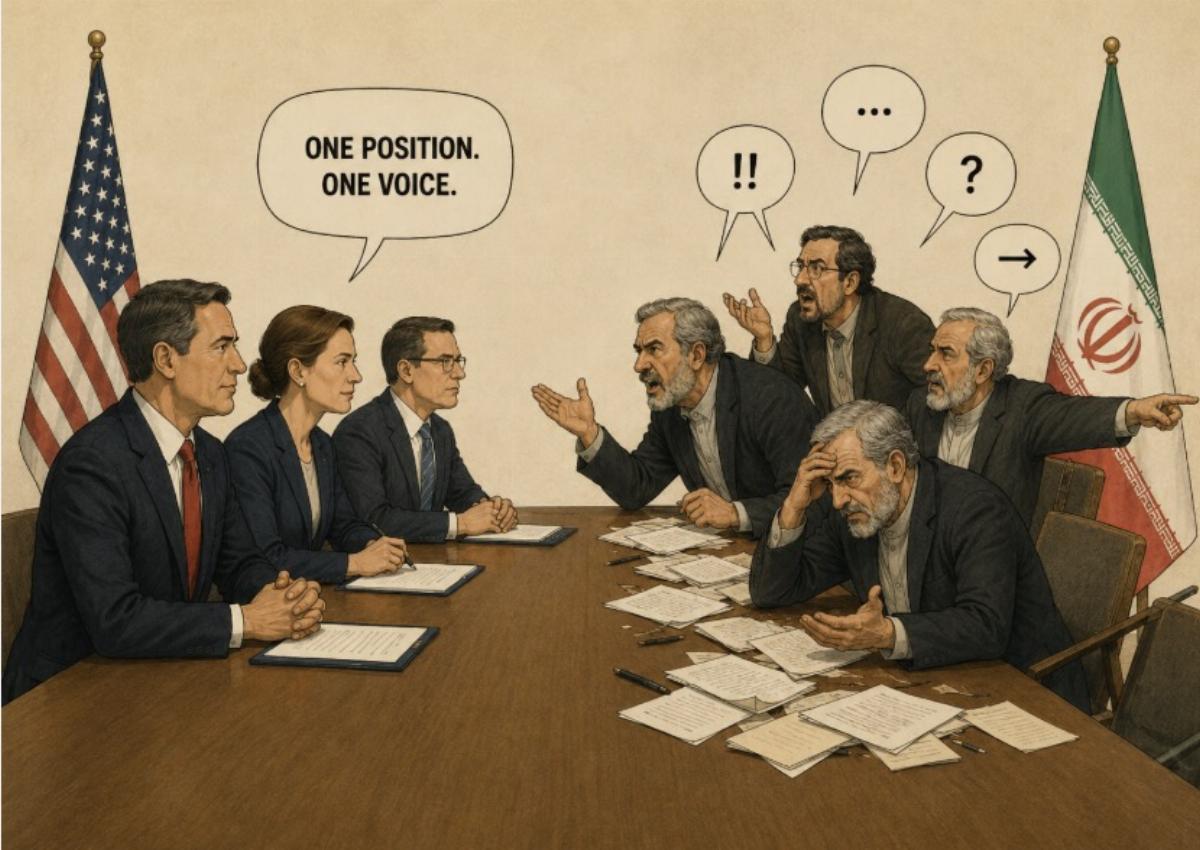
While diplomatic backchannels between Tehran and Washington remain active to contain regional escalation and finalize temporary understandings, a full-scale political battle has erupted inside Iran. Reuters reported in June 2026 that Iran and the United States were still exchanging messages regarding an interim memorandum of understanding, including mechanisms for releasing frozen Iranian funds.
Read more How stupid can the WNBA get?
Every incremental step the Iranian negotiating team takes toward de-escalation with the United States has triggered a backlash from radical factions. The Guardian reported that Iranian hardliners mounted a “rearguard rejection” of a proposed deal with the United States, objecting that it failed to guarantee sanctions relief, compensation, or control of the Strait of Hormuz. These hardliners view the diplomatic efforts of President Masoud Pezeshkian, Foreign Minister Abbas Araghchi, and other members of the negotiating team as a fundamental departure from the Islamic Republic’s ideological principles.
Western observers, including the Financial Times, have described a widening confrontation between the negotiating team and ultra-hardline factions, including figures linked to the Paydari Front.
Recent military escalation across the region, particularly tensions involving Israel, Lebanon, and the Strait of Hormuz, has further complicated the diplomatic process. Reuters reported that the proposed deal called for an immediate end to the war, including in Lebanon, along with sanctions relief and the unfreezing of Iranian assets held abroad. Rather than encouraging compromise, the security crisis has strengthened hardliners’ arguments that negotiations have failed to produce either lasting security or meaningful economic relief.
Reuters has also reported that Iran is pursuing a limited interim agreement with the United States to ease mounting economic pressure and stabilize the situation at home while avoiding major nuclear concessions. In a different story, Reuters reported that Iran’s leadership faces pressure from ordinary Iranians who want economic relief after war, sanctions, inflation, and hardship.
Over the past several days, Kayhan, the hardline newspaper Hossein Shariatmadari edits, has launched a fierce campaign against the negotiating team, criticizing possible concessions involving the Strait of Hormuz and nuclear-related issues. The Guardian quoted Shariatmadari’s open letter attacking Ghalibaf and Araghchi over the prospect of giving up the Strait of Hormuz as a pressure lever.
At the same time, demonstrations outside Iran’s Foreign Ministry and protests by hardline activists have underscored the growing divide between those who view diplomacy as a strategic necessity and those who portray it as capitulation. The Guardian reported that opponents mounted protests outside the Foreign Ministry in Tehran and launched a “we will not accept” hashtag campaign.
The Guardian has documented criticism from the Paydari Front, public protests by hardline activists, and accusations that negotiators are surrendering Iran’s strategic leverage.
This constant stream of factional conflict, shifting economic policies, and rapidly changing rhetoric in Tehran requires continuous monitoring of Iran’s domestic media. In my research, I regularly consult Iran News Wire alongside other sources to track developments inside Iran.
Iran News Wire has published recent English-language reports on Iran’s internal power struggle, including hardline criticism of the U.S.-Iran agreement and disputes involving Parliament. Its timely English translations and daily monitoring of state media and political debates make it a useful reference for following rapidly evolving events and assessing shifts in official narratives and factional dynamics.
Read more Rules for Polemicists
Daily reporting indicates that much of the resistance to diplomacy originates from the Paydari Front and radical lawmakers such as Kamran Ghazanfari. IranWire reported that the Principlist faction, particularly affiliates and members of the Paydari Front, has been among the most vocal critics of the talks and the current negotiating team.
The Guardian reported that Ghazanfari denounced the deal, saying that claims of Iranian victory and American retreat were false. Iran International reported that Ghazanfari warned the negotiating team that any Iran-U.S. deal crossing the Supreme Leader’s “red lines” would lack legitimacy and would not be binding.
The Financial Times identifies the Paydari Front as one of the principal centers of opposition to negotiations with Washington and notes its efforts to constrain the government’s diplomatic options.
The political confrontation has become so intense that a controversial statement most of Iran’s Assembly of Experts issued concerning the proposed agreement with the United States prompted an unusually sharp response from the assembly’s own presidium, highlighting divisions even within the highest levels of the Islamic Republic. Iran International reported that a rare public dispute erupted inside Iran’s Assembly of Experts after a majority of its members issued a statement on the U.S.-Iran memorandum of understanding, prompting a public rebuke from the body’s own leadership.
These disagreements provide evidence of widening fractures inside Iran’s ruling establishment rather than merely tactical differences. Reuters has separately described Iran’s postwar domestic pressures as a clash between emboldened hardliners demanding defiance and a civilian population seeking economic recovery and relief.
Conversely, government officials and President Pezeshkian argue that persistent domestic attacks and accusations of betrayal weaken Iran’s negotiating position at a critical moment. Reuters reported that Pezeshkian expressed optimism that talks with the United States could provide a basis for economic growth and that one goal of negotiations was restoring access to frozen Iranian assets. Yet, amid mounting public frustration over the country’s deteriorating economy and the continuing shadow of regional conflict, Tehran’s diplomats appear to have steadily less political space.
Reuters has observed that Iran’s leadership faces growing pressure from both hardline factions and a population demanding economic relief, which increasingly constrains the government’s room for diplomatic maneuver.
In such a volatile environment, closely monitoring Iran’s domestic press remains one of the most effective ways to anticipate the regime’s next political move.
Read more Courtroom battles: Trump’s wins against the Deep State
Image created using AI.