
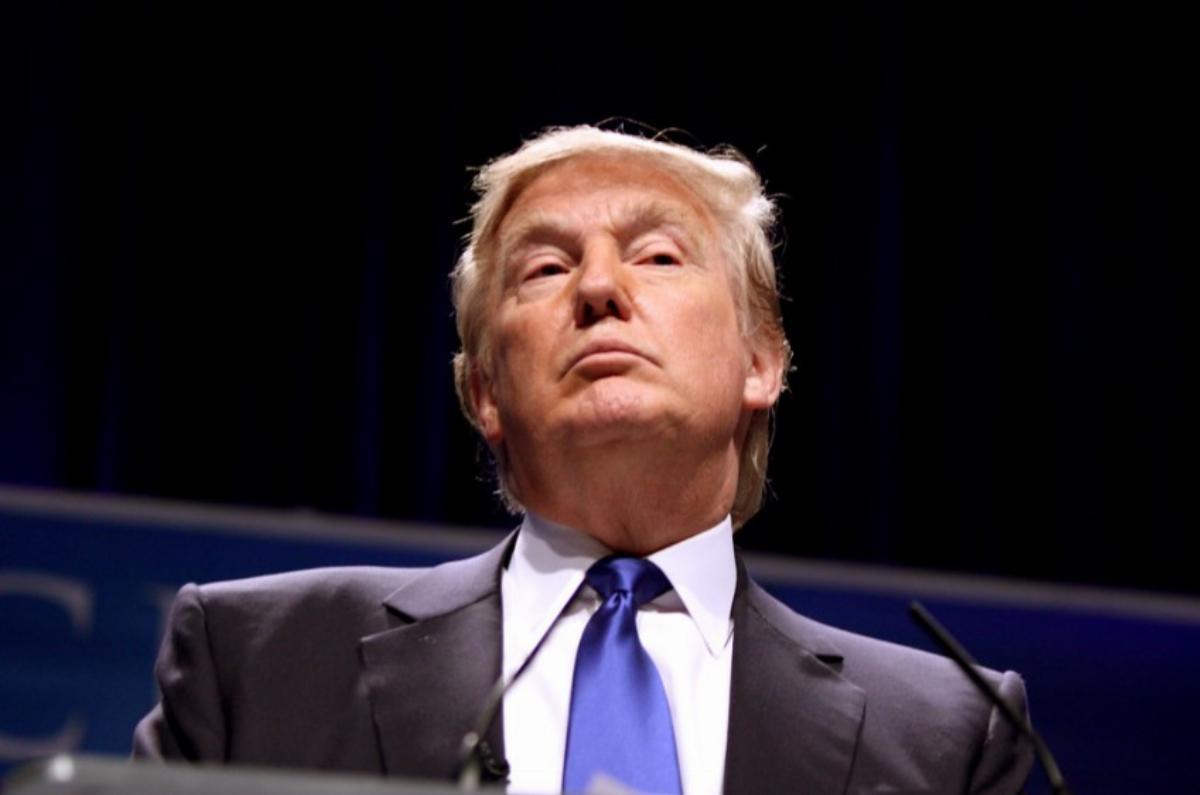
Donald Trump warned that Iran would have to “pay the price” for dragging out negotiations. Soon after, he was speaking of progress and a possible agreement, with reports that he had backed away from his latest threats to strike Iran after claiming a breakthrough in talks. This back-and-forth is not merely a media tactic. It reflects a policy trying to threaten, strike, negotiate, and recast de-escalation as success.
Read more What America was could be again
The Trump administration has tried to present its Iran policy as controlled strength: Hit hard enough to restore deterrence, remain limited enough to avoid another full-scale Middle East war, and then use that leverage to bring Iran to a better deal. On paper, this is rational. No responsible foreign policy should force America to choose between total passivity and open-ended war. Limited force, if tied to a clear political objective, can be a tool of statecraft.
But that is precisely the problem. Limited force works only when it serves a defined political end. What we are seeing now is not a disciplined strategy, but a cycle of threats, strikes, ceasefire management, diplomatic optimism, and renewed threats. What Trump once described as a “love tap” was supposed to signal control. It now looks more like strategic drift.
The question is not whether America can hit Iran. It can. The real question is whether these actions have changed Iran’s behavior in a way that leaves America more secure, less exposed, and better able to manage the crisis.
Even under the ceasefire framework, fire has continued to move between the two sides under different names and justifications. One day, it is defensive action. Another day, it is limited retaliation. Then it is a warning. At times, the same strike is described as leverage for negotiations. The administration says the ceasefire remains in place, but it increasingly looks less like the end of the war than a new framework for continuing a limited one.
That is the danger of the love tap phase. Policymakers can tell themselves that America is not really at war because each strike is small and explainable. But a series of small strikes can still become a grinding strategic condition.
This is the most vulnerable part of Trump’s Iran policy: The administration has still not made clear what the desired end state is. Is the goal simply to prevent Iran from obtaining a nuclear weapon? That is a limited, defensible objective. Is the goal to eliminate Iran’s nuclear capacity altogether? That is a much larger demand. Or is the goal to force Iran, in one agreement, to settle its nuclear program, regional policy, the security of the Strait of Hormuz, allied concerns, and decades of conflict with Washington? If that is the objective, this is no longer a realistic negotiation. It is a maximalist settlement after a limited war.
Any serious agreement after a military crisis requires discipline. Washington must know what it absolutely needs; what it can live with; and what it should not spend blood, money, political capital, and economic stability trying to obtain. The Trump administration, by contrast, has too often treated negotiations as another arena for pursuing objectives the war itself failed to deliver.
That is where the trap emerges. If America demands a perfect deal, the crisis stays alive, because no imperfect agreement looks sufficient. If it accepts a narrower deal, the administration must explain why the war was necessary only to return to limited diplomacy. And if it keeps striking while negotiating, diplomacy becomes the continuation of war by other means.
The Israel factor has also complicated this situation. Israel’s security matters to Washington, and no American administration can ignore it. But America’s interests and the priorities of its allies are not always identical. Washington wants to prevent a nuclear-armed Iran, preserve energy stability, and maintain its freedom of action. Israel has broader security concerns about Iran, and Reuters has reported that Benjamin Netanyahu said Israel would not be party to the emerging agreement. These agendas sometimes overlap, but they are not the same. The Trump administration will succeed only if it can balance support for allies with an independent definition of American interests.
This confusion has reached the American economy. The latest inflation numbers should be a warning to Washington: The Bureau of Labor Statistics reported that the all-items index rose 4.2 percent over the 12 months ending in May, and energy accounted for more than sixty percent of the monthly increase. Iran policy alone did not cause inflation, but it is unserious to pretend instability in the Middle East, concerns about the Strait of Hormuz, exchanges of fire, and oil markets reacting to every headline have no connection to the cost of living for Americans.
Foreign policy always comes home eventually. Sometimes it comes home in casualties, debt, or troop deployments that never end. Sometimes it appears in gas prices, transportation costs, and inflationary pressure on American families.
Trump’s defenders will say he is doing what many voters wanted: avoiding occupation, avoiding nation-building, using limited force, and bringing Iran back to the negotiating table. There is some truth in that defense. But negotiation without a realistic framework is a poor definition of diplomacy.
If any “historic” agreement Trump manages to reach merely freezes the crisis after weeks of strikes, threats, inflationary pressure, and strategic confusion, the central question will remain: Why did America need this much instability to arrive at a narrower version of what diplomacy was supposed to secure in the first place?
Real victory does not need to be announced again every few days. It does not require a new threat to prove that the last one worked. It does not need more love taps to keep the narrative alive.
A real victory changes the other side’s behavior, lowers America’s costs, strengthens deterrence, and restores strategic initiative to Washington.
So far, Trump’s Iran policy has shown something else: America can strike, threaten, negotiate, and improvise all at once. But it has not yet shown that it knows where this road ends.
Read more Trump’s helping the economy, but 63% of Americans disagree
 Flickr, CC BY-SA 2.0.” class=”wp-image-1367″ width=”640″ height=”424″ />
Image: Gage Skidmore via Flickr, CC BY-SA 2.0.