
A country’s mood is telling. With brief interruptions, we can see America’s positivity reaching a high-water mark on September 2nd, 1945, with the formal end of WWII. Except for the widows and orphans created in that just war, and perhaps even a goodly number of them, an entire country rejoiced with the prevailing belief that there was no better place on Earth to live or that had as much sheer opportunity.
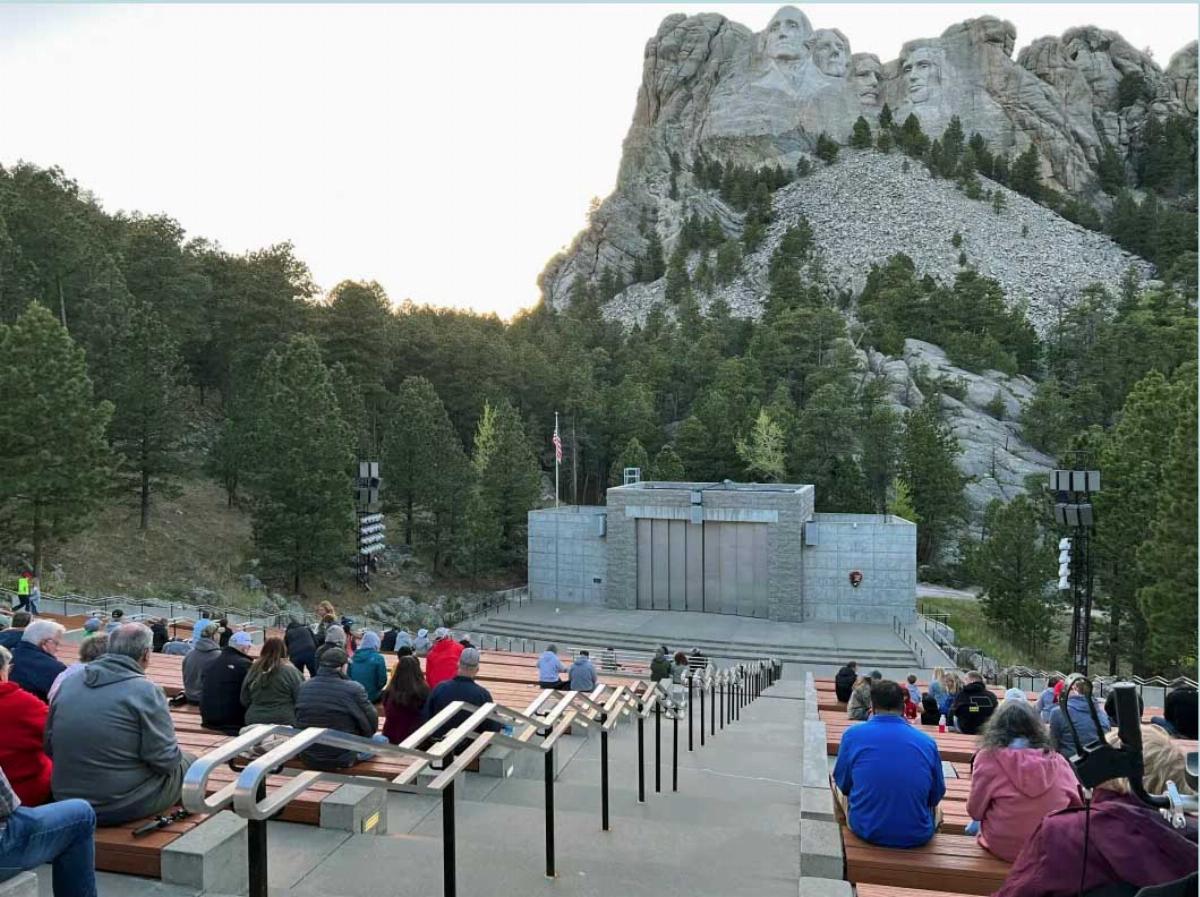
Graphic: Mt. Rushmore, Editor
In the next 30 years, America was “the” country in the world, with no peer, the only superpower. America’s unmatched industrial base, democratic legitimacy, and moral clarity made it the only nation capable of rebuilding a shattered world. Much of the world admired, loved, and tried to be like America. Our enemies pretended our success was a lie and that we were wolves in sheep’s clothing, intent on ruling the world.
At that time, we represented the best chance for world prosperity, if only the rest of the world followed our example of democracy, individual rights, and the importance of a moral life. Only later did we find out that a significant slice of that world wanted the goodies we could offer without the duties and responsibilities required.
Over those thirty years, the list of accomplishments was so long that it would take a book to list them all. Here are the top ten world-shaking things we accomplished, most of them still operative and the bedrock of the free world:
Read more Trump’s helping the economy, but 63% of Americans disagree
- Creation of the Postwar International Order (UN, Bretton Woods, IMF, World Bank) created and led by the United States
The U.S. created and shaped the institutions that structured global diplomacy, finance, and trade after WWII, helping stabilize a devastated world economy and preventing another global conflict, having learned from the failed European “revenge” strategy after the Great Patriotic War.
- The Marshall Plan (1948–1952)
A massive U.S. economic aid program that rebuilt Western Europe, prevented economic and societal collapse, and was essential in containing Soviet influence. It remains the most successful foreign aid program in history.
- Formation of NATO (1949)
The first peacetime military alliance in U.S. history, creating a collective‑security framework that shaped the Cold War and still anchors global security today. Far from anachronistic, it is held in jealous envy by China and Russia, who seek to divide us for their strategic benefit and realize its existence checkmates their territorial and political dreams. China and Russia devote enormous resources to weakening NATO because it remains the single greatest obstacle to their territorial and political ambitions.
- Leadership in the Early Cold War (Containment, Korean War, Nuclear Deterrence)
The U.S. emerged as the first and still most important superpower and architect of the Western bloc, shaping global geopolitics through containment, military commitments, and nuclear strategy.
- The U.S. Civil Rights Revolution (1954–1968)
Landmark Supreme Court decisions (e.g., Brown v. Board of Education), the Civil Rights Act, and the Voting Rights Act transformed American democracy and inspired global human‑rights movements. Arguably, the Civil Rights movement culminated in a culture of dependency; subsequent actions went too far, creating future entitlement classes and undermining the movement’s “equal start” intent.
- The Space Program and the Moon Landing (1969)
The Apollo program demonstrated unmatched technological capability, reshaped global perceptions of U.S. scientific leadership, and accelerated advances in computing, materials science, and telecommunications (Supported by the broader Cold War technological context). Wide adoption of computing, the invention of the laser, integrated circuits, and the transistor; the majority of basic patents we all benefit from today, all flowed from that period.
- Unleashing the Postwar Entrepreneurial Boom
A culture of individual initiative, risk‑taking, and private‑sector innovation turned the United States into the world’s engine of technological and economic progress. From Silicon Valley’s birth to breakthroughs in computing, medicine, aviation, and consumer technology, millions of Americans—founders, inventors, engineers, and small‑business builders—drove a wave of prosperity that reshaped global markets and set the standard for modern economic dynamism. America’s middle class was created during the postwar period (courtesy of the GI Bill) and saw more Americans own homes and start companies than in any comparable period. America’s wealth today was built on the seeds planted back then.
- Desegregation of the U.S. Military and Public Institutions
Beginning with Truman’s 1948 order and culminating in the 1950s–60s civil‑rights decisions, U.S. desegregation had global symbolic power during the Cold War competition for moral legitimacy.
- Reconstruction of Japan and Support for the Creation of the State of Israel
The U.S. played a decisive role in shaping postwar Japan into a democratic ally and was the first to recognize Israel, influencing Middle Eastern and Pacific geopolitics for decades. Had Israel’s recognition not been recognized when it was, chances are that Jews in the region would have been annihilated. It is worth noting that there were many in the U.S. government, in particular, our State Department, not in accord with Truman’s decision, preferring to back the very Arab countries that would quickly attempt to annihilate the world’s first Jewish state.
- Expansion of Global Trade and U.S. Economic Dominance
With unmatched industrial capacity after WWII (the U.S. possessed half the world’s manufacturing capacity), the U.S. drove global economic growth and set standards for international commerce. It exported technologies and business models that continue to shape the world economy to this day and have lifted billions out of extreme poverty.
From the end of WWII to today, America remains not only the most powerful nation on Earth but also the one whose strength consistently bent the arc of events toward greater freedom, prosperity, and human possibility despite our imperfections and sometimes rancorous internal discord. Our postwar achievements were not accidents of geography or luck; they were the product of a significant subset of confident people who believed in duty, sacrifice, and the moral purpose of a free society.
The world we inhabit today—its institutions, its stability, its technological miracles, its very notion of individual rights—was built on that foundation. And if America is to reclaim the optimism and unity that once defined us, it will not come from nostalgia but from remembering what made that era possible: a nation certain of its values, proud of its role, and willing to shoulder the responsibilities that intrinsically attach to a country strong enough to lead the free world. There is no other nation on Earth that is even close to our ability, and with the mandate with which only our Constitution endowed us.
Author, Businessman, Thinker, and Strategist. Read more about Allan, his background, and his ideas to create a better tomorrow at 1plus1equals2.com
Read more America at 250: Why Have So Many Lost Faith in America?