
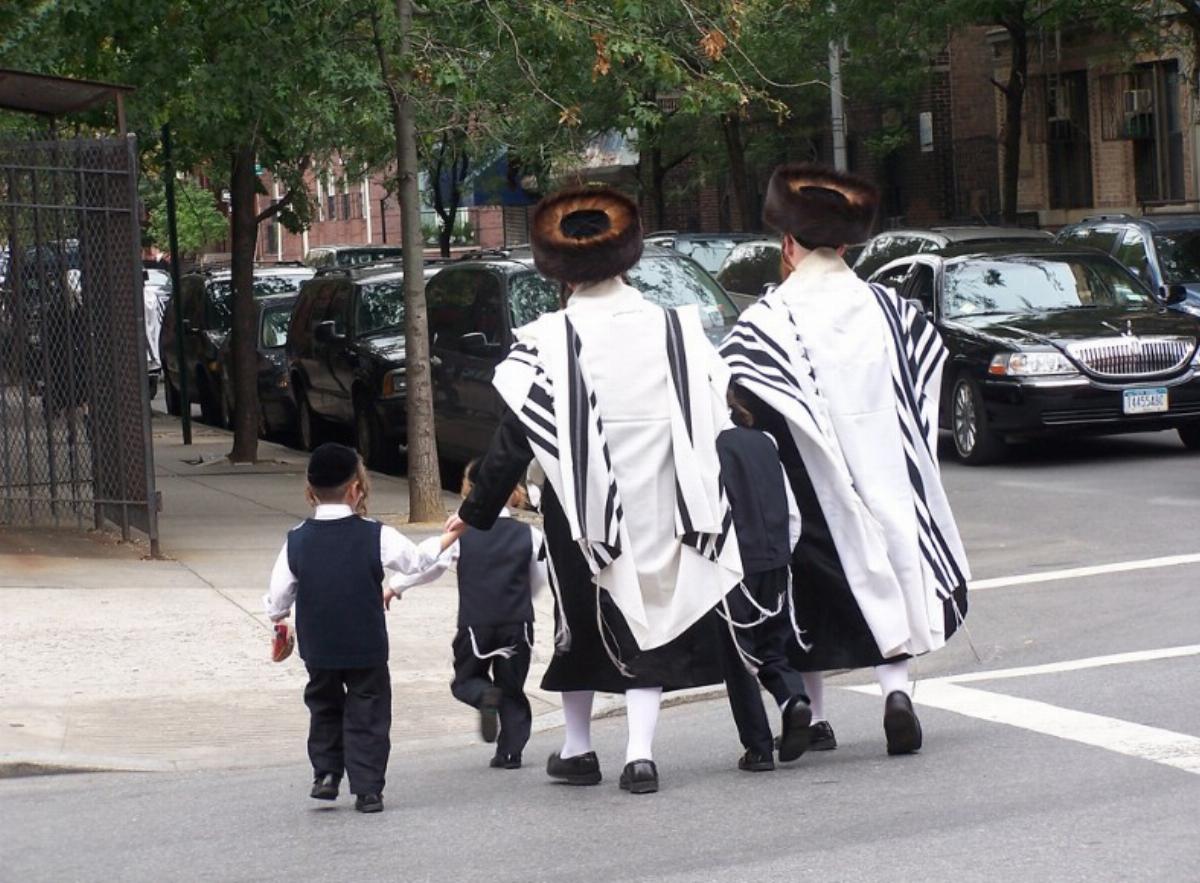
The biblical account of Daniel in the lions’ den is so well known that even those with differing religious beliefs or none are likely familiar with it. Daniel, a devout Jew exiled in Babylon, was praying in his home, which violated King Darius’s decree. As punishment, he was cast into a den of lions, but God saved him by miraculously closing the lions’ mouths.
Read more There Is No Justice in Minnesota
Thousands of years later, another Daniel finds himself at odds with his government over prayer. The stakes are not life-threatening for this Daniel, but for religious freedom in America, they are dire.
Daniel Grand is a devout Orthodox Jew who has lived in University Heights, Ohio, a small suburb east of Cleveland, since 2019. He bought his home to raise his family and live out his faith. For Daniel, those things are inseparable.
Orthodox Jewish practice calls for prayer in a group of at least ten men three times every weekday and four times on the Sabbath and Jewish holidays. On those holy days, driving is prohibited, which means Daniel must either live within walking distance of a synagogue or gather with at least ten Jewish men close to home. A minyan — a traditional Jewish prayer quorum — is not a convenience for Daniel. It is a religious duty.
He reached out to about a dozen friends near his neighborhood, inviting them to walk to his house the following Sabbath and pray together as a minyan. No announcements. No signage. No noise. Just a quiet gathering of men who share their faith and live close enough to walk to each other’s homes.
A neighbor saw the email and informed the city’s mayor. The next day — before the prayer meeting could happen — the city sent Daniel a cease-and-desist order. It accused him of operating an illegal “place of religious assembly.” It threatened legal penalties. And it ordered him to stop, citing zoning regulations.
What happened to Daniel had nothing to do with traffic, noise, or any legitimate zoning concern. It had to do with the fact that University Heights decided to classify Daniel’s prayer group the same way it classifies actual synagogues and other houses of worship — as “places of religious assembly” requiring a special use permit.
Daniel tried to work with the city and began the process of filing for the permit. The public hearing that followed was marked by overt hostility. Some neighbors sent letters opposing the permit with statements like “I am not Jewish, and I do not want our neighborhood labeled as Jewish.”
Then came the ultimate Catch-22. Daniel discovered that obtaining the permit the city had told him to apply for would have barred “sleeping or residential use” on any property governed by the permit. So the only way to legally host a prayer group in his home was to stop living there. Faced with the untenable choice between praying at home with friends or living at home, and wanting to avoid another hostile public spectacle, Daniel withdrew his permit application.
Read more Did Pennsylvania really balance its budget?
After Daniel withdrew his application, the city government’s harassment escalated. The mayor declared publicly that the cease-and-desist order remained in full force. The mayor turned to the community, urging Daniel’s neighbors to surveil his home and “report” any “activities consistent with those in a house of assembly.” Police patrols drove past Daniel’s house. The city prosecutor launched baseless housing code investigations against him. The city withheld Daniel’s certificate of occupancy and tax abatements, resulting in substantial additional taxes. City workers even began periodically skipping his home on trash collection days.
This was a coordinated pattern of harassment and discrimination. Forcing Daniel to continue the permit process was a punishment.
In 2022, Daniel filed suit in federal court for violations of his First Amendment rights, the Religious Land Use and Institutionalized Persons Act, and other federal and state laws. But the district court dismissed his case, and the U.S. Court of Appeals for the 6th Circuit agreed, saying that because Daniel had not fully completed the permit process, a court could not review his case. Missing the constitutional forest for the procedural trees, these courts never addressed the city’s blatant violations of the First Amendment.
In February 2026, Daniel petitioned the U.S. Supreme Court to hear his case. He wrote that petition himself, and it garnered the support of nine amicus briefs. Alliance Defending Freedom then came on as co-counsel, alongside Orrick, Herrington & Sutcliffe LLP, filing a reply brief on Daniel’s behalf, urging the high court to hear his case, Grand v. City of University Heights. In June, the court agreed.
If the free exercise clause of the First Amendment means anything, it should mean that no American needs the government’s permission to host a prayer meeting in his home. The result of the city’s position — that poker night with ten friends is fine, but praying requires a permit — would be laughable if the consequences were not so serious.
If government can restrict religious observance in a man’s home with no accountability, then bureaucratic tentacles have slithered into the sacred space between man and God. In this nation, founded by pilgrims fleeing religious persecution, nothing could be more antithetical to our way of life than government officials policing private religious practice.
Though this attack on religious liberty came from a local government, the United States Supreme Court should deliver justice for Daniel on a Grand scale.
Lathan Watts is the vice president of public affairs for Alliance Defending Freedom (@ADFLegal) and its sister organization, ADF Action. He earned his juris doctor degree from the University of Mississippi.
Read more Dr. Fauci takes the Fifth UPDATED
Image: diluvi.com Anna i Adria via Wikimedia Commons, CC BY 2.0 (cropped).