
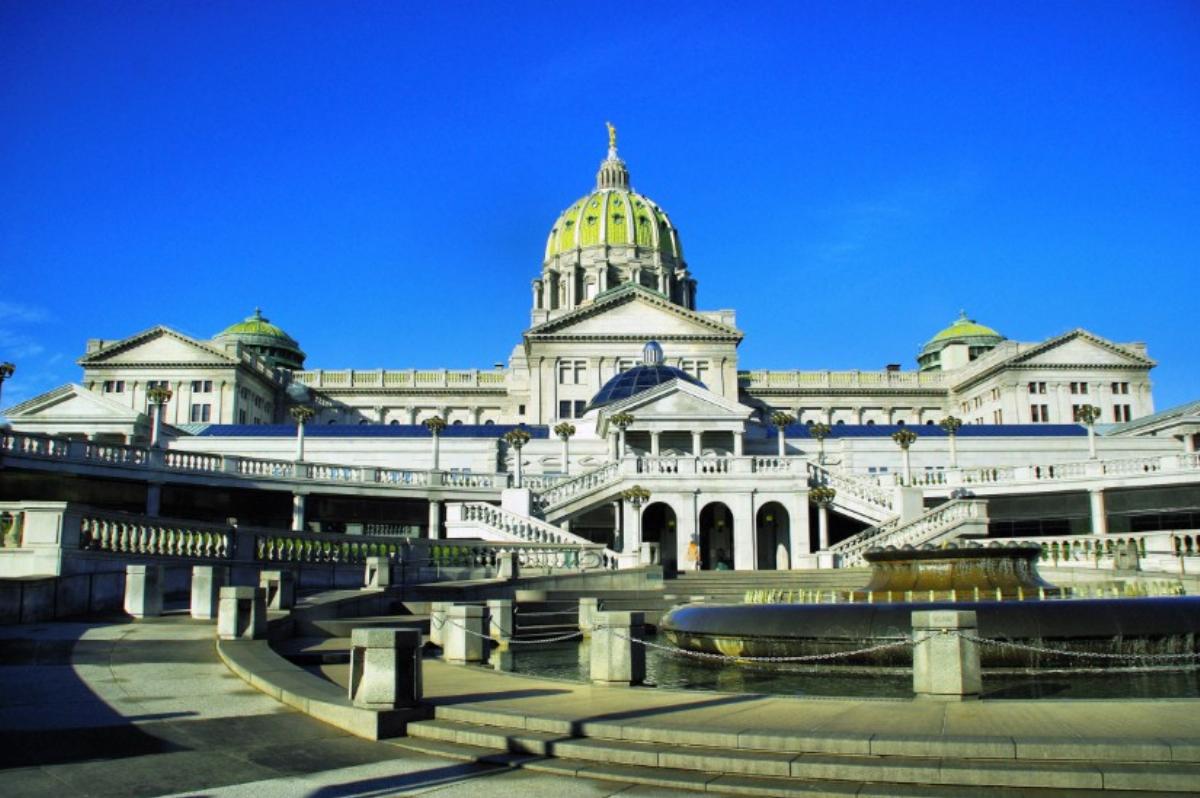
Pennsylvania’s newly enacted budget has been described as balanced. Legally and technically, that may be true, but economically, it is not. Far from being balanced, it is an incredible masterpiece of financial deception.
Read more Dr. Fauci takes the Fifth UPDATED
The Commonwealth’s 2026–27 budget is a troubling example and should become a gold standard in how to manipulate a budget with few the wiser — until it is too late.
It relies on delayed Medicaid payments, one-time transfers, redirected gaming revenues, and a new pension obligation that is being separated from the normal employer contribution process. Each decision may have an explanation. Taken together, however, they create the appearance of financial stability while pushing substantial costs into future years.
The most obvious example is the decision to delay Department of Human Services payments. Pennsylvania is postponing two monthly Medical Assistance payment cycles — one in the prior fiscal year and another in the current fiscal year. Each delayed payment is approximately $1.32 billion. Together, they create $2.64 billion of temporary budgetary relief without considering the impact on those not paid!
Nothing was saved. In fact, an illusion was created that the budget was miraculously balanced. Using that logic, perhaps all payments for 2026 should be delayed by one year, and then cut the tax rate to zero! Absurd!
A state budget is prepared under statutory budget rules. The Commonwealth’s audited financial statements, however, must follow governmental accounting standards. If a Medicaid obligation has been incurred before the end of the fiscal year, it may need to be recorded as a liability even if the cash payment is delayed. The payment schedule can change. The underlying cost cannot.
The Commonwealth’s own Independent Fiscal Office estimates that spending without the payment delay would be approximately $52.17 billion — not the $50.85 billion shown in the enacted budget.
That difference should be plainly explained to taxpayers and future bond investors to prevent allegations of fraudulent presentation of the Commonwealth’s financial position.
The larger concern is the structural deficit. The Independent Fiscal Office estimates that Pennsylvania has a structural deficit of approximately $5.03 billion. That means recurring expenditures exceed recurring revenues by more than $5 billion even during a relatively stable economy. The gap equals roughly 10 percent of annual General Fund revenue.
Pennsylvania currently has a substantial Rainy Day Fund. That is an important financial strength, and the Commonwealth deserves credit for rebuilding it. But a reserve is not a substitute for a balanced operating plan.
The risk becomes far more serious if Pennsylvania enters a recession. During a downturn, personal income tax, sales tax, corporate tax, and investment-related revenues may decline. At the same time, demand for Medicaid, unemployment assistance, and other safety-net programs increases. At the same time, falling investment markets could weaken the funded position of the Commonwealth’s two major pension systems.
Read more Does U.S. national security actually exist?
Pennsylvania’s budget also approved a cost-of-living adjustment for certain retirees who retired before July 2001. Helping them is understandable and compassionate. But compassion does not eliminate cost. Once approved, the COLA likely becomes constitutionally guaranteed.
The total annual obligation may approach $188 million. The unusual feature is how that cost will be funded. The legislation directs that gaming revenues be used to make the payments. This may reduce the appearance of pension cost in employer contribution rates, but it does not reduce the pension liability. It merely places the obligation somewhere else.
That “somewhere else” is also important. The gaming revenues being redirected have supported Local Share and Commonwealth Financing Authority programs used for water systems, sewer projects, roads, public safety, community facilities, and economic development. When those funds are diverted to pension payments, local governments may receive fewer grants.
The Commonwealth’s obligation does not disappear. The cost may simply move to counties, municipalities, and local property taxpayers. Local governments may have to delay projects, increase taxes and fees, borrow additional money, or defer maintenance. Deferred maintenance, of course, usually becomes more expensive maintenance later.
Every financial decision has a cost. Almost always, the people who ultimately pay that cost are not the people who made the original decision. Future governors and legislators may face the consequences. School districts and municipalities may be forced to raise taxes. Retirees may depend upon funding streams that prove less reliable than expected. Taxpayers may discover that today’s balanced budget was financed with tomorrow’s revenue.
Pennsylvania still has time to act.
The Commonwealth should publish a multi-year plan to eliminate its structural deficit and stop schemes that give the illusion of a balanced budget. It should also stress-test the budget against a recession, a decline in gaming revenue, and a major pension investment loss.
The greatest danger is not that Pennsylvania lacks resources. The greatest danger is that temporary financial strength may allow policymakers to postpone decisions until those resources are gone.
A budget should not merely make the numbers balance for one year. It should tell taxpayers the truth about what government costs, who will pay for it, and whether the promises being made today can be sustained tomorrow.
Frank Ryan is a CPA, retired U.S. Marine Corps Reserve colonel, former member of the Pennsylvania House of Representatives, and former vice chair of the Pennsylvania Public School Employees’ Retirement System (PSERS).
Image via Pxhere.