
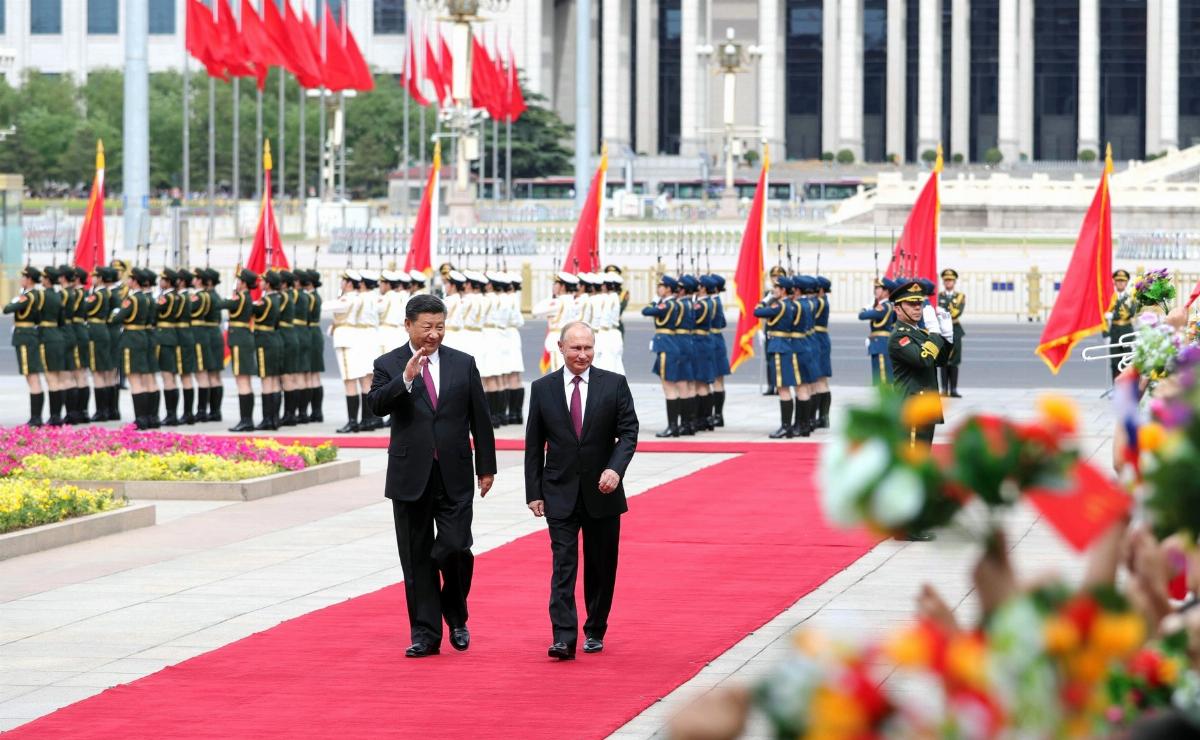
Ken Moriyasu, senior fellow at the Hudson Institute, recently posted an article titled ‘ Why Losing a Taiwan War Might Not Break China,” in which he raised the question of whether strengthening U.S. influence in Central Asia would deter Beijing from attacking Taiwan or encourage China to accelerate its military preparations and deepen its partnership with Russia.
Read more A Battle Of Good And Evil: The Reunification Of Church And State
Moriyasu argues that China’s growing economic and strategic connections throughout Eurasia could enable it to cope with the effects of a failed invasion of Taiwan by decreasing its reliance on vulnerable sea routes. As a countermeasure, strengthened U.S. ties with the Central Asian states could complicate Beijing’s strategic assessment and make military action against Taiwan less appealing.
This strategy, however, carries a danger. If Chinese leaders perceive an expanded U.S. presence in Central Asia as an attempt at strategic encirclement, they may accelerate military preparations, stockpile essential resources, and deepen cooperation with Moscow. China and Russia already share an interest in limiting American influence, while their military exercises, energy trade, and defense-industrial cooperation have strengthened their relationship. Pressure on China could therefore consolidate the partnership Washington hopes to weaken.
The answer, however, may lie in a lesson from Richard Nixon’s presidency. Rather than confronting Moscow and Beijing as an inseparable bloc, Washington should explore whether engagement with Russia could exploit differences between the two powers and improve America’s strategic position.
Nixon’s trip to China in 1972 provides a historical example of this kind of strategy. Taking advantage of the deep division between China and the Soviet Union, which had reached a climax with armed border clashes in 1969, Nixon and his National Security Advisor, Henry Kissinger, pursued rapprochement with Beijing in order to change Moscow’s strategic assessments. Their aim was not to form an alliance based on common political values, but rather to use the conflicting interests of the two communist countries to increase American diplomatic influence. The fact that contact had been established with China showed that Washington could enhance its position by dealing with one of its rivals instead of viewing both of them as a single opposing force.
The current situation is not the same. Since Moscow launched its full-scale invasion of Ukraine in 2022, Russia and China have developed a much closer strategic relationship; Beijing gives Moscow significant economic assistance, and both governments oppose certain elements of the U.S.-led international order. However, Russia and China do not share identical strategic interests. Moscow has reasons for resisting too great a dependence on Beijing, as the latter’s growing economic influence is having an increasing effect on their relationship, and Russia still has longstanding interests in Central Asia, since Chinese commercial expansion may come into competition with Russian influence.
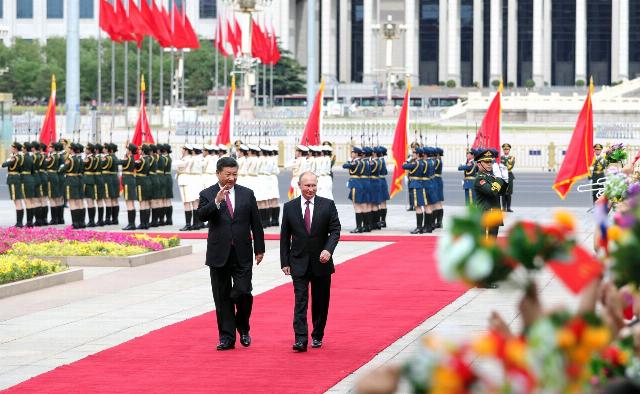
Recent developments make this possibility particularly relevant. On October 16, President Donald Trump signed an executive order waiving significant sanctions, restrictions, and tariffs provided for under the newly enacted Lindsey O. Graham Sanctioning Russia and Iran Act. The order cited the national interest and left the waivers in effect until further action was deemed appropriate.
Read more Sine Qua Non—Or The But For Cause Of Failure (Or Success)
The order followed Trump’s announcement of an agreement with Vladimir Putin under which Russia would release diesel supplies to global markets to ease fuel-price pressures. The deal drew criticism from lawmakers in both parties and from Ukrainian President Volodymyr Zelenskyy, who argued that easing restrictions could benefit Moscow while its war against Ukraine continued.
These developments demonstrate the extent to which transactional diplomacy both can and cannot achieve. While negotiations with Moscow concerning energy supplies may lead to openings in other fields, a commercial agreement does not serve as evidence of a strategic realignment, and a sanctions waiver does not show that Russia desires to decouple from China. If Washington relaxes economic pressure without making substantial concessions, it is effectively giving up its leverage rather than creating a geopolitical opening.
When dealing with Moscow, it is necessary to base any approach on a realistic evaluation of the war in Ukraine. Since Ukraine is suffering from a lack of manpower, there is reason to doubt its capacity to secure a decisive military victory. It follows that the U.S. ought to engage in diplomacy which safeguards Ukrainian sovereignty and at the same time aims at reaching a negotiated agreement, rather than continuing the conflict without a realistic prospect of winning. Moreover, the U.S. must not respond in a way that rewards Russian aggression or allow it to gain a sphere of influence over the former Soviet republics.
This principle should also be the basis of American policy towards Central Asia. The countries in the region should be left free to decide for themselves their political, economic, and security arrangements. The Trump administration ought to promote their independence through investment, energy diversification, infrastructure development, and diplomatic cooperation, rather than pressuring them to align exclusively with the United States, Russia, or China.
In the end, while increasing American influence in Central Asia could help in deterring China, it still cannot take the place of real military preparedness and cooperation with Indo-Pacific partners. Likewise, Washington should avoid turning strategic competition into a contest that gives Moscow and Beijing ever stronger reasons to cooperate.
Nixon did not make China a trusted partner of America; rather, he saw strategic value in divisions among rival powers and used diplomacy to shift the balance of power.
Washington must decide whether it can regain that strategic flexibility. If it combines a credible deterrent posture around Taiwan, maintains ongoing engagement with Central Asia, and pursues carefully conditioned diplomacy with Moscow, it could make Chinese aggression less appealing while reducing incentives for a growing Sino-Russian alignment. The aim should not be to pick Russia over China, but to stop Beijing and Moscow from thinking their interests are best advanced by acting together against the United States.
Read more The Democrats’ Enslavement
Image: Kremlin.ru