
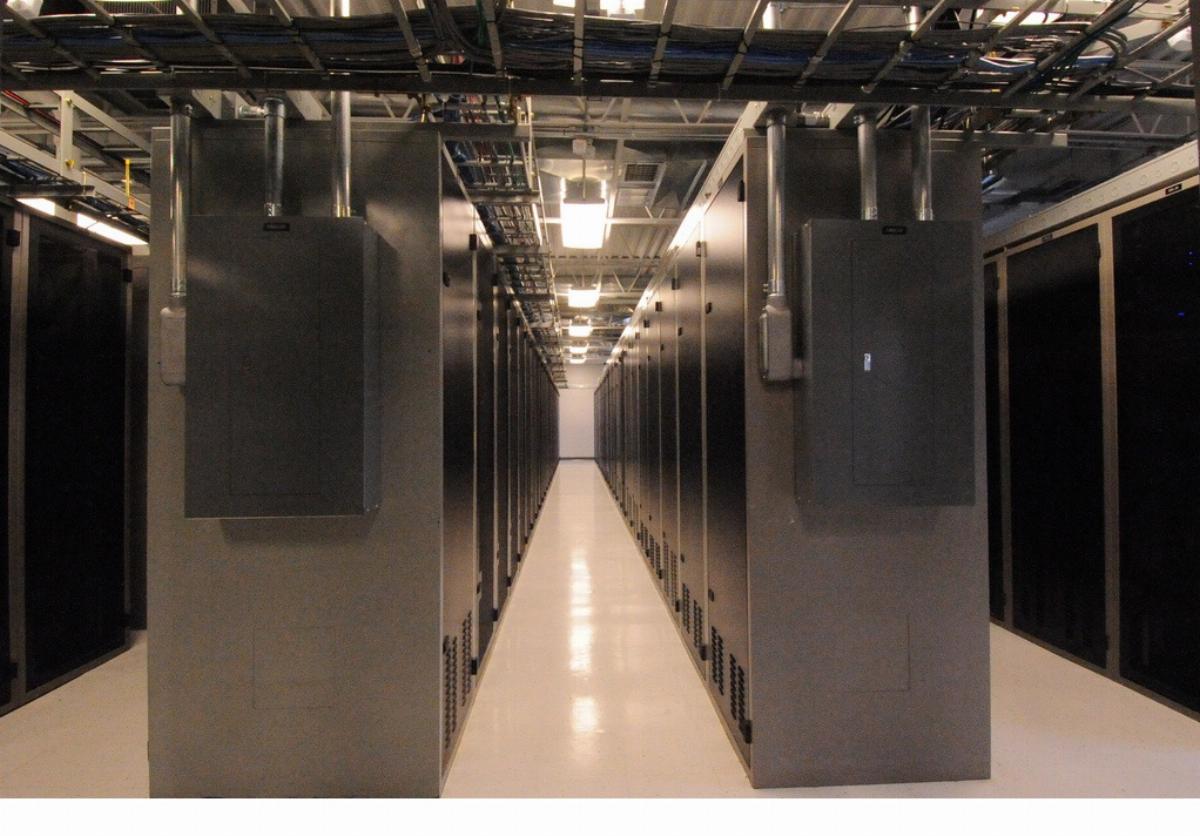
Most Americans, 71 percent based on a recent Gallup poll, disfavor the development of data centers in their local area.
Read more Don’t forget to put this on the moon
Meanwhile, nearly all those people, unless they are totally off-grid, daily use the digital services and communications made possible by data centers.
Therefore, to put it kindly, about 70 percent suffer from data center cognitive dissonance in that their actions and behaviors contradict and do not reflect or align with their beliefs.
Maybe the fact that data centers play an indirect, albeit vital, role in delivering the magic of the digital world explains why they are apparently so easy to hate.
Surely, the anti-data center propaganda and rhetoric from the likes of Sen. Bernie Sanders (I-VT), Rep. Alexandria Ocasio-Cortez (D-NY), the Democratic Socialists of America, the eco-left, the Chinese Communist Party, and so many more has resonated.
Maybe Americans want it both ways; they want to have their cake and eat it too.
Nonetheless, Americans have been conditioned to resist data development to a disturbing degree.
Unwarranted antipathy toward data centers is now producing violent confrontations when local governments do not follow the whims of the masses and enact immediate moratoriums against their development.
It is one thing if one exhibits internal cognitive dissonance. Everyone is free to be a hypocrite.
But it is a step too far to demand that all data center development must be stopped due to neurotic fears that are provably false.
Most data center scaremongering is just borrowed, shall we say recycled, rhetoric that the environmental left has been using for decades to impede progress and deter economic growth.
Fortunately, innovation, ingenuity, and technological advancements have consistently shown environmental fearmongers like Paul Ehrlich and Al Gore to be incredibly foolish.
Read more The real dilemma of Artificial Intelligence
Already, technological advancements in cooling systems have generally solved the water-use problem. As for energy use, data centers are energy customers. The suppliers are utility companies. If you pay outrageously high rates for electricity, the likely culprits are state lawmakers who passed green energy mandates and subsidies in lieu of affordable, reliable, and abundant energy.
In some cases, data centers are bypassing the grid entirely, going behind the meter, and connecting to their own power sources.
Data centers are not eyesores. They do not destroy ecosystems. Their environmental impact is negligible and absolutely pales in comparison to so-called green energy projects.
Data centers, unlike office parks, apartment complexes, shopping malls, and restaurant districts, have a rather discreet developmental footprint.
They also generate giant amounts of revenue.
Since 2017, Ohio alone has collected more than $5.2 billion in tax revenue from data centers.
Last year, Loudon County, Virginia, collected $1.1 billion. Whereas most local governments have hiked property taxes over the past decade, Loudon County has cut property taxes for 10 consecutive years. It has also used its data center tax windfall to build new schools, upgrade roads, and improve fire and police services.
With local governments carrying a combined $2.3 trillion in debt and states on the hook for $1.1 trillion, it would make sense for some of these downtrodden places to invite, not ban, data centers purely for the tax money.
Data centers are not a scourge to be stopped. I hope more Americans change their minds on data centers and resolve their cognitive dissonance.
Chris Talgo ([email protected]) is editorial director at The Heartland Institute.
Read more Why Venus Data Undermines The Consensus On Greenhouse Gas Warming
Image: 123net