
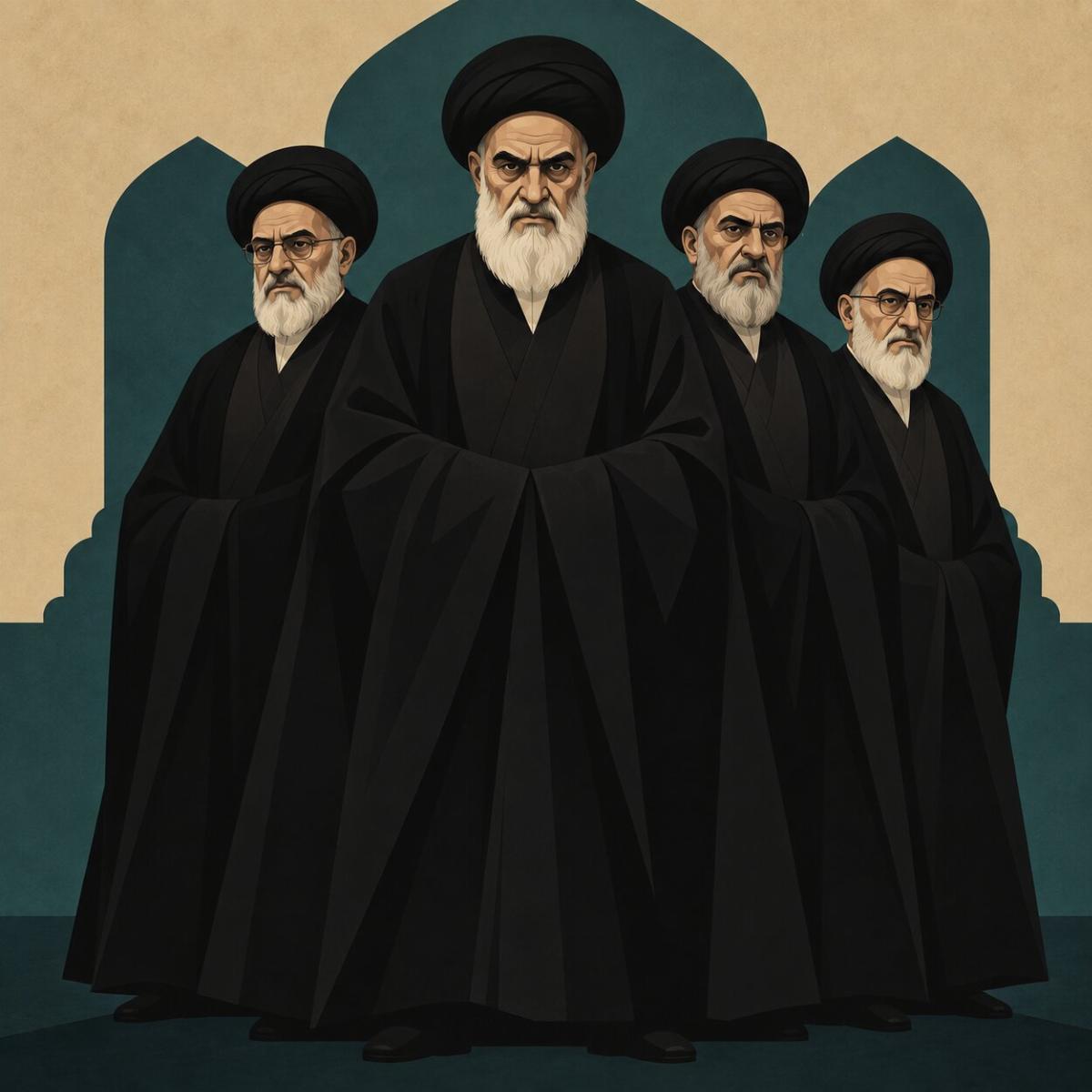
Six months ago, American and Israeli aircraft did something no summit or sanctions collective had managed in nearly five decades: they took out the Supreme Leader of Iran. On February 28, a joint strike in Tehran ended the life of Ali Khamenei, along with dozens of the regime’s senior military and intelligence officials. It was billed as the opening move of regime change.
Read more What Is The Significance Of The Mecca Pact?
Six months later, Iran is still a theocracy. The man who now sits in Khamenei’s old office is Khamenei’s own son. Mojtaba Khamenei, 56, trained in the Qom seminary and promoted through the Revolutionary Guard’s Basij militia, was installed as Iran’s third Supreme Leader within two weeks of his father’s death, and by most accounts, he is more hardline than the man he replaced. The war has ground on. The Strait of Hormuz, which normally carries roughly a fifth of the world’s oil and a fifth of its liquefied natural gas, is once again under an American naval blockade this month. War-risk insurance for tankers crossing the strait, a quarter of one percent of a ship’s value before the war, now runs seven to ten percent — turning a routine $250,000 premium into one as high as $10 million a voyage. The American president now talks of declaring the strait itself United States territory once Iran is, in his words, “defeated.”
This is the experiment the last six months have quietly run: What happens when a democracy removes a dictatorship’s head without touching its body? The answer is in. You get a change of face, not a change of system. You get a son.
A dynasty, not a democracy
The February strike killed Khamenei and, within weeks, more than three dozen other senior officials. Instead of collapse, Iran produced continuity. The Assembly of Experts did not open a path for the millions of Iranians who had filled the streets of some two hundred cities in the uprising that preceded this war. It handed the country to the old Supreme Leader’s own family. A strike can remove a leader. It cannot, on its own, remove a leadership class, an ideology, or a security apparatus built over forty-seven years to survive exactly this kind of shock. Turning a decapitation into an actual transition takes something Washington has not yet tried: pairing pressure with real, sustained support for the opposition Iranians already built, at a cost measured in thousands of lives.
Why democracies keep losing this negotiation
A government that answers to voters cannot sustain economic pain or a blocked shipping lane as long as a government that answers to no one. Tehran faces no election clock. It can let its own economy bleed and walk away from a deal the moment it stops serving the regime, and that is exactly what happened to the Islamabad Memorandum. Signed June 17, it offered sixty days of toll-free passage through Hormuz and a three-hundred-billion-dollar reconstruction package if Iran held up its end. It lasted three weeks. In early July, Iranian forces struck commercial vessels in the strait; American forces struck back; and by July 8 the president called the deal over. The blockade returned in August, and has not been lifted.
Read more Lack of Muslim assimilation in America: Perception or reality?
The toll is no longer abstract. Fifty-six separate reports of vessel damage have been logged since the war began. A tugboat has been sunk. Seventeen merchant ships have been damaged, seven abandoned outright. Two ships have been seized, twelve seafarers are dead or missing, and a Bahraini port worker has been killed. Roughly six thousand seafarers remain effectively trapped in the region. Iran’s deputy foreign minister said last week the strait “will only be closed and opened under Iran’s command.” The U.S. Treasury issued its eighth sanctions package of the year against Iran’s shadow-banking network on Friday. Neither side is negotiating from strength. Both are enduring, and the rest of the world is paying the insurance bill.
Skeptics will invoke Iraq, and the caution is fair. But the lesson of that war was never “do not act.” It was “do not act blindly.” Iran fails the Iraq test on every count that mattered: it is the world’s most active sponsor of proxy warfare, it held uranium enriched to the edge of weapons grade before this war began, and unlike Iraq in 2003, it has a population of roughly ninety million people, hundreds of thousands who had already filled two hundred cities demanding this government’s removal, at a price the regime made sure was steep. The task was never to build a democratic movement from nothing. It is to stop wasting the one that already exists.
What comes after ‘defeated’
Talk of claiming the Strait of Hormuz mistakes the waterway for the actual prize. A strait is a chokepoint, not a country. Controlling the water while a hardline cleric and his security services still run the roughly ninety million people onshore is not victory; it is a costlier version of the status quo, with an insurance bill the whole world keeps paying either way. The choice was never between war and peace, not since February 28. It is between a war that keeps producing a new Khamenei every time the old one falls, and a war finally paired with a real strategy for the Iranians who have already shown the world, at gunpoint, what they want instead. Decapitation without a plan gave us a dynasty. Only a plan can give Iran, and the rest of us, something better.
Read more Trump needs less trolling; more focus
Image generated by ChatGPT.