

It has been twenty-five years since the most dramatic and deadly of a series of September 11, 2001 (9/11) airline hijackings, which used hijacked airliners like kamikaze dive bombers to destroy not just a New York City landmark, the World Trade Center, but also to attack New York itself, the worldwide symbol of both capitalism and the center of the Western world.
Read more The Election 2028 Presidential Prospects as of Now
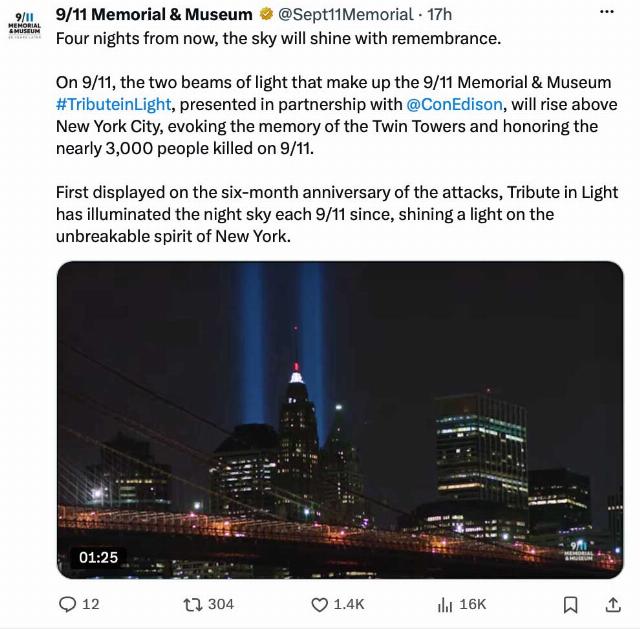
Graphic: X Post
But September 11 was an onion, and we have to peel back multiple layers around that date. To truly understand September 11’s significance, we have to go back through centuries of Ottoman history and more than 30 years of airline hijackings to understand why this date was chosen—and to see that this was not a random airline attack, but actually the culmination of a series of airline attacks going back more than 30 years before 9/11, as well as a date with historical symbolism of its own.
The Historical Significance of Prior September 11 Setbacks
The choice of September 11 was neither happenstance nor random, but represented major historical dates in Ottoman history. Indeed, many in the Islamic world trace the beginning of the decline of the Ottoman Empire, and the eventual end of its goal of conquering Europe, to setbacks around that date.
Such a conquest would have created one of the greatest empires in human history and would have encompassed much of the territory of the great Old World empires. Coming out of the seventh century, Islamic conquest absorbed much of the former empire of Alexander the Great, the Eastern Roman territories, and what we call the Christian Holy Land.
The symbolism of these conquests was enormous. The Hagia Sophia, which was to the Byzantine Empire and Eastern Christianity something comparable to what the Vatican was to the Western Church, became a mosque after Constantinople fell to the Ottomans in 1453.
Farther east stands the Taj Mahal, considered one of the world’s most perfect structures, an Islamic monument in predominantly Hindu India whose walls contain extensive inscriptions from the Koran.
It appeared that the Ottoman Empire’s manifest destiny was to extend its rule farther and farther into Europe. By the 15th and 16th centuries, this appeared increasingly possible. Ottoman armies were pushing into Central Europe from the east, while the centuries-long Muslim presence in Spain demonstrated how deeply Islamic rule had once penetrated Europe from the west.
It appeared that the Ottomans could not be stopped. But then came those annoying September 11 incidents. It was almost a curse—a bad-luck date for the Ottoman Empire.
September 11 Defeats and Setbacks
September 11, 1565 — End of the Great Siege of Malta
A relatively small defending force on Malta, led by the Knights of St. John—later associated with the Knights of Malta—faced a huge Ottoman invasion force that greatly outnumbered them. It seemed that Malta would provide a quick and easy victory, after which Italy could become a gateway farther into Europe.
But incredibly, the small outpost held out through months of siege. After the arrival of a relief force from Sicily, the Ottomans abandoned the siege and withdrew from Malta in September. The attempt to capture Malta and use it as a stepping stone toward Sicily, Naples, and ultimately Rome failed.
September 11, 1609 — The Expulsion Order Against the Moriscos in Spain
On September 11, 1609, an expulsion order was issued against the Moriscos of Valencia, beginning a much larger removal from Spain.
Muslim rule had once made Spain one of Islam’s great European conquests. That political rule had ended more than a century earlier with the fall of Granada in 1492, but a large Morisco population—descendants of Muslims who had converted to Christianity—remained.
The 1609 decree marked the beginning of their mass expulsion, bringing another major chapter in the long Muslim presence on the Iberian Peninsula toward its end.
September 11–12, 1683 — The Battle of Vienna
The Ottoman advance under Grand Vizier Kara Mustafa Pasha had reached Vienna. The city had been under siege for approximately two months, and its defenders were in increasingly desperate circumstances.
Then came a European relief army that included a major Polish force commanded by King John III Sobieski. The allied forces assembled outside Vienna and began their attack on September 12 after maneuvering into position the previous day.
The battle culminated in the famous Polish cavalry charge that helped break the Ottoman army and end the siege. Vienna was saved.
The Battle of Vienna marked the high-water point of Ottoman expansion into Central Europe. From this point began the long, slow decline that eventually ended with the collapse of the Ottoman Empire after World War I.
September 11, 1697 — The Battle of Zenta
The Battle of Zenta occurred during another war between the Ottoman Empire and the European Habsburg powers. An Imperial army commanded by Prince Eugene of Savoy caught the Ottoman army while it was crossing the Tisza River in what is now Serbia.
The result was catastrophic for the Ottomans. Eugene’s forces attacked while much of the Ottoman army was divided by the river. Tens of thousands of Ottoman troops were killed, wounded, or drowned, while Imperial losses were comparatively small.
Zenta was so decisive that it helped force the Ottomans toward the Treaty of Karlowitz in 1699, under which the Ottoman Empire surrendered extensive European territories, including most of Hungary and Transylvania.
September Airline Hijackings
The September 2001 World Trade Center airline attack was not the first time airplanes had been attacked on or around that date. Instead, it represented the culmination of a pattern going back more than 30 years.
Some radical Islamic groups used airline hijackings first as a means of bringing worldwide attention to their causes and later as increasingly violent instruments in their conflict with the West.
Read more When Grievance Enters The Huddle
To understand the full significance of the September 11, 2001 attacks, we should look at the panorama of earlier hijackings occurring during the September 5 through September 13 period.
The 1970 Hijackings
September 6, 1970: A TWA aircraft carrying 153 passengers and 17 crew members was hijacked by two men shortly after leaving Amsterdam.
September 6, 1970: An El Al Boeing 707 flying from Tel Aviv to New York via Amsterdam was the target of an attempted hijacking, but the pilot put the aircraft into a steep dive, throwing the hijackers off their feet. The aircraft made an emergency landing at Heathrow.
September 10, 1970: An Egyptian aircraft was hijacked by three hijackers. The incident ended in less than a day.
September 12, 1970: BOAC Flight 775, hijacked after leaving Bahrain on September 9, was flown to an abandoned airfield near Amman, Jordan, and the passengers were released.
September 12, 1970: Another Egyptian aircraft was hijacked in an incident lasting less than a day.
September 13, 1970: A Boeing 707 carrying 141 passengers and 10 crew members, hijacked after leaving Frankfurt on September 6, was flown to a desert airfield, and the hostages were released on September 13.
September 13, 1970: A DC-8 carrying 143 passengers and 12 crew members was hijacked after leaving Zürich on September 6. The hostages were released on September 13.
The 1986 Hijacking
September 5, 1986: Pan Am Flight 73 was at a Karachi stopover when four armed hijackers stormed the aircraft. Flight attendants alerted the cockpit crew, allowing the pilot, co-pilot, and flight engineer to escape.
During the following 16 hours, a passenger was shot, and later the hijackers opened fire on passengers and crew and threw grenades among them. Approximately 20 people were killed before the ordeal ended.
September 11, 2001
American Airlines Flight 11: The flight departed Boston for Los Angeles. Five terrorists hijacked the aircraft, took control, and struck the North Tower of the World Trade Center.
United Airlines Flight 175: The flight departed Boston for Los Angeles. Five terrorists hijacked the aircraft and changed course, striking the South Tower of the World Trade Center.
United Airlines Flight 93: The flight departed Newark. Four terrorists hijacked the aircraft. After passengers and crew attempted to regain control, the aircraft crashed in a field in Pennsylvania.
American Airlines Flight 77: The flight departed Washington Dulles. Five terrorists hijacked the aircraft, reversed course toward Washington, and crashed it into the Pentagon.
The hijackings of 1970 produced remarkably few fatalities. That changed dramatically with Pan Am Flight 73 in 1986, when violence and homicide became central to the episode. All of this paled in comparison to September 11, 2001, when nearly 3,000 people were killed.
For most Americans, September 11, 2001 felt like an isolated attack that came out of nowhere, much like the attack on Pearl Harbor on December 7, 1941—a coordinated, unexpected air attack on the United States.
But there is another way to view it. The September 11 attacks can be placed within a decades-long progression of increasingly violent and sophisticated aviation terrorism that began with the 1970 hijackings, escalated dramatically with Pan Am Flight 73 in September 1986, and culminated 15 years later with the attacks of September 11, 2001.
Behind that modern chronology lies another historical coincidence: a remarkable series of setbacks suffered by the Ottoman Empire and the Muslim presence in Europe on or around September 11.
Whether September 11 was deliberately chosen because of all of these historical associations remains a question requiring evidence. But the convergence of dates is striking enough to deserve examination—and perhaps explains why September 11 occupies a place in history rather like the number 13 in the West: a date associated, again and again, with catastrophe.
Source Note
The aviation chronology is drawn from the author’s previously published research: Larry Moore, “An End to 911 Airline Attacks? Legal Consequences under the Montreal Convention,” Journal of Business and Social Science Review, Vol. 3, No. 7 (July 2022), pp. 1–11, DOI: 10.48150/jbssr.v3no7.2022.a1. The published article, attached separately to the submission, contains the underlying Aviation Safety Network records and legal authorities.
Author’s Credit
Larry Moore is a professor of business law at the University of Memphis whose published research includes internatio