
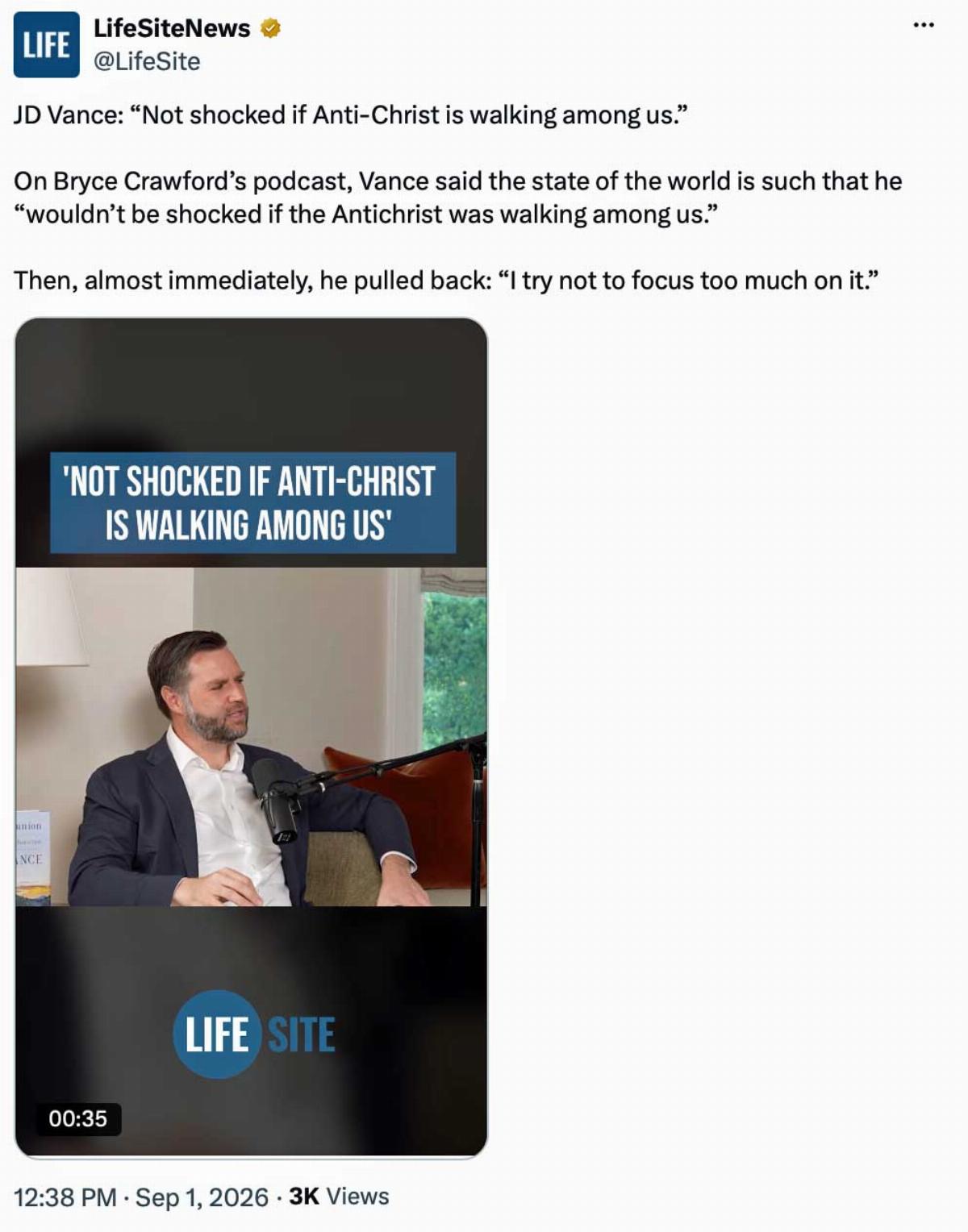
Vice President J. D. Vance said to Bryce Crawford, a popular podcaster, that AI can be bad, which is just a dog bites man headline. But then the descriptor “satanic” popped up and, lo and behold, it went viral on the World Wide Web.
Read more Second Amendment: does “in common use” mean in common use?
To test the Veep’s tentative hypothesis, I asked Google’s AI mode, “Which gospel is the warning not to tell people to be warm but do nothing actual for them?”
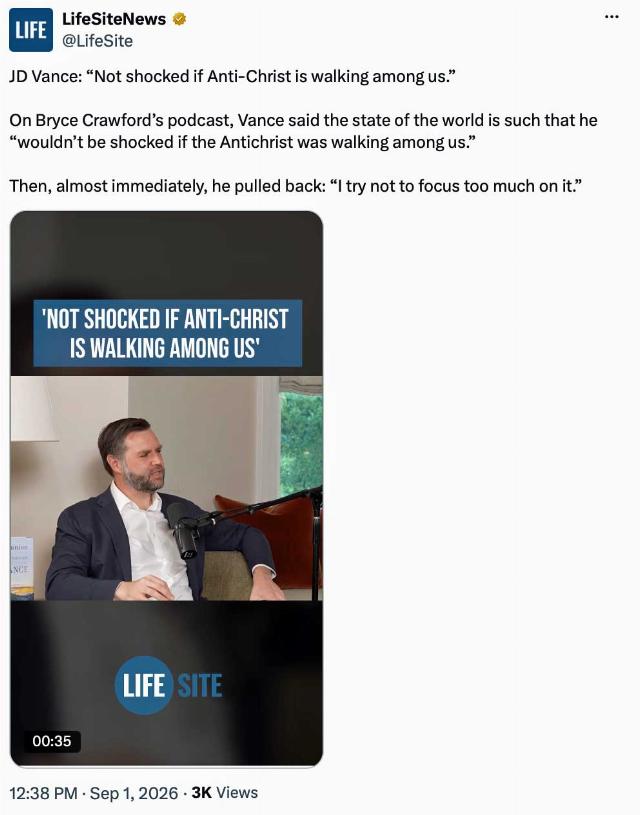
Graphic: X Post
And, not at all in the way I would imagine Satan would answer, AI told me, “This warning is actually found in the New Testament book of James (specifically James 2:16), rather than one of the four Gospels.
The verse states:
“If one of you says to them, ‘Go in peace; keep warm and well fed,’ but does nothing about their physical needs, what good is it?”
In this passage, James uses the example to explain that faith without action (works) is dead and meaningless. Instead of just offering good wishes to someone who is cold or hungry, true faith requires actually helping them.”
Next, AI asked me, “If you’d like, I can share more about the context of James chapter 2 or explore how this theme of active compassion appears in the Gospels.”
Then, to investigate AI further. I asked it, “Does the Old Testament have a similar caution?” Again, detecting no Satanism, it replied, “Yes, the Old Testament contains very similar cautions against offering empty words or delaying help when you actually have the power to do something. The closest equivalent to the ‘keep warm and well fed’ sentiment is found in Proverbs 3:27–28:
“Do not withhold good from those to whom it is due, when it is in your power to act. Do not say to your neighbor, ‘Come back tomorrow and I’ll give it to you ’—when you already have it with you.”
The Old Testament contains several other major passages that echo this warning against passive or hypocritical faith: Isaiah 58 (The False Fast). In this famous chapter, God directly rebukes people who practice religious rituals (like fasting and praying) but ignore the poor. God states that the religious action he actually desires is to:
Read more Feminine devolution
“Share your food with the hungry and to provide the poor wanderer with shelter—when you see the naked, to clothe them.”
Ezekiel 16:49: The prophet lists the sins that led to the downfall of Sodom. Notably, it wasn’t just violence or immorality, but passive indifference:
“She and her daughters were arrogant, overfed and unconcerned; they did not help the poor and needy.”
Proverbs 21:13: A stark warning about the long-term spiritual consequences of ignoring immediate physical needs:
“Whoever shuts their ears to the cry of the poor will also cry out and not be answered.”
In short, both the Old and New Testaments consistently preach that true faith and righteousness cannot just be spoken—they must be actively practiced.
This concluded my, admittedly brief, search for Satan’s residency in AI.
Note: I intentionally chose the subject because it is a Biblical theme that is the heart and soul of politicians’ ongoing claims to help people.
In politics, much mud is thrown. Satanic ideology is yet another new entrant to the list of casually thrown epithets. If you listen to the interview, you note that JD Vance used as his example a friend asking AI for marital advice, which shows that a lot more was up for confusion than the tool we know as AI. Computer scientists label the ability of AI to mimic or reflect biases in the questioner as “AI sycophancy.” Let us be careful what and how we ask for what we think we seek.
Read more Communism: We saw that movie