
There are numbers for weight, height, pulse, cholesterol, etc., etc., etc… even for intelligence. But what are the numbers for love, hate, compassion, sympathy, and the countless unquantifiable aspects of human life that define human beings? The familiar scale of “1 to 10” is hopelessly inadequate and totally subjective. Who among the most alert of academics and professionals take notice that the most important things about life are bypassed in biology, psychology, education, social and political science, and other disciplines that, as with physics and mathematics, rely on numbers?
Read more OpenAI reports disturbing behavior from AI agents
It should be obvious but is not that many essential basics of human life are ignored by the sciences or fall through the cracks of incomplete knowledge regarding being human. And it should be obvious but is not that such incomplete knowledge is reflected in the disciplines and the professions committed to human progress.
How can there be good and just government, good and just laws, good and just social policies, when all the most important things about life are neglected in the calculations? Something vital is missing when justice respecting human life depends on “data” rather than on wisdom?
“When I decided on a scientific career,” wrote Austin L. Hughes in an essay on scientism, “one of the things that appealed to me about science was the modesty of its practitioners. The typical scientist seemed to be a person who knew one small corner of the natural world and knew it very well… But outside of their circumscribed areas of expertise, scientists would hesitate to express an authoritative opinion. This attitude was attractive precisely because it stood in sharp contrast to the arrogance of the philosophers of the positivist tradition, who claimed for science and its practitioners a broad authority with which many practicing scientists themselves were uncomfortable.”
Among the “comfortable” are professionals engaged in the so-called social and political “sciences,” often at public expense. This in spite of the fact that it gets proven, time and again, that vulgarized science yields vulgarized results, regardless of the scientific labeling, following the principle dubbed GIGO: Garbage In, Garbage Out.
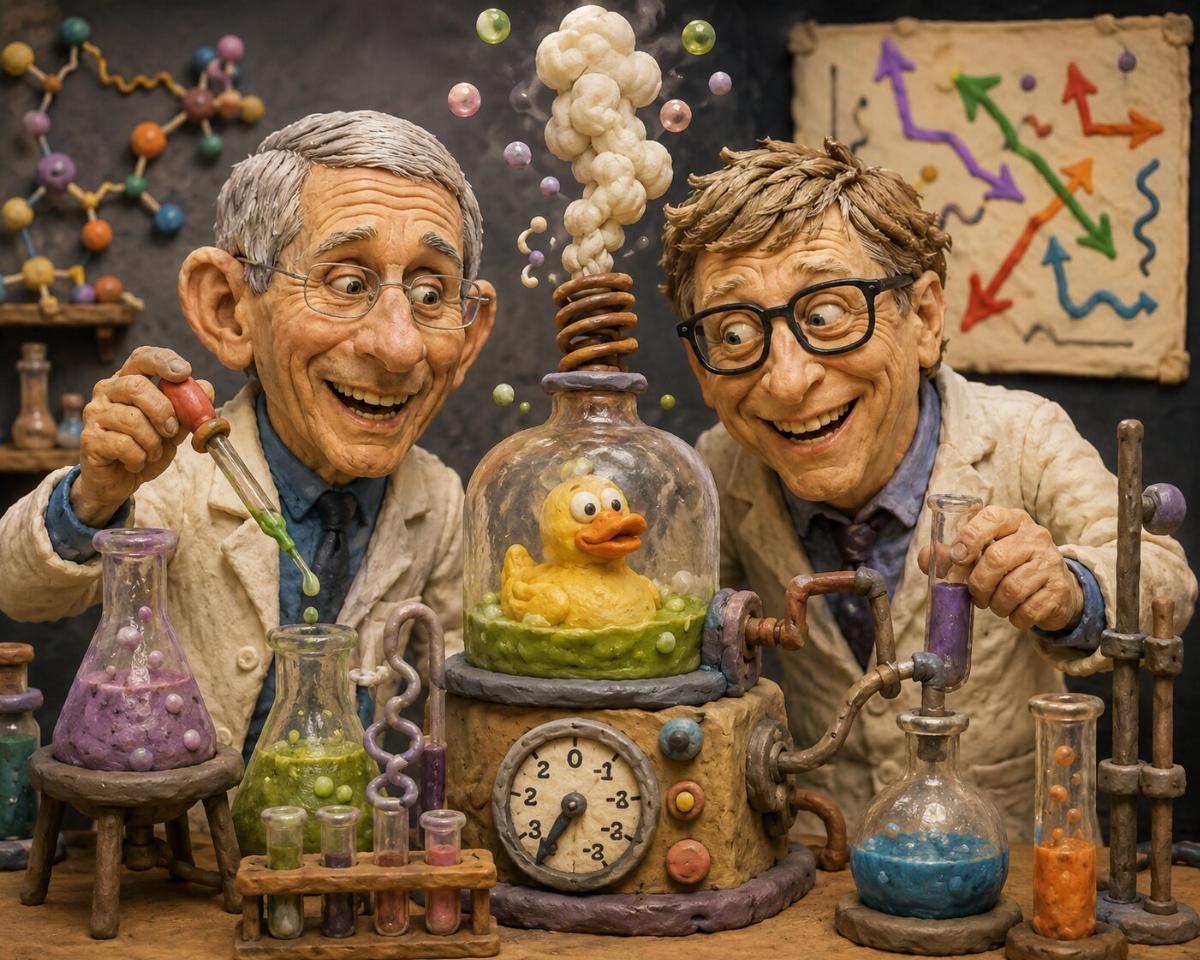
Addicts of pseudoscience seem to believe that their research and lab experiments in human behavior are rewarded by the results. These must be correct since science does not permit error. (Never mind errors made by the scientists.) The power of science over knowledge makes it essential to progress, does it not? This can be fact-checked for verification with the work of Anthony Fauci, Al Gore, and numerous other researchers that have availed themselves of the power of science to promote progress.
Read more The Democrat/DSA court-packing litmus test
(Progress toward what?)
The idea that science is the only way of knowing what is best for us is a bias of those committed to scientism, which is not science. The one is a belief system, the other a method of acquiring knowledge. Faith in science (e.g. scientism) is important in countering “less verifiable” modes of knowledge, such as provided in literature, the arts, theology, and other nonscientific investigation of the world. But real scientists do not look down upon methods of knowing that lie outside their domain, aware of the limits imposed upon their work by their methodology. Mavericks among scientists sometimes probe the vast reservoir of unquantifiable and irrational possibilities that lie beyond their accustomed reach. An example is the divine inspirations that formed the complex mathematical theorems in the mind of Ramanujan.
Practitioners of fake science expect us to support and live by their flawed programs for progress. Persuasion often comes from unelected government agencies that can be as coercive as any in the history of tyrannical rule. Some of us have noticed that the rule by iron hand, practiced in some autocracies, has been replaced in our democratic republic by the rule of a brainwashed majority, thanks to the political intervention of elites. Some of us have also noticed that ethics in such counterfeit democracy tend to favor might over morality.
As with the former witch doctors of primitive societies, today’s scientists have astonished the public with accomplishments that would indicate an infinite power to affect the world with their wizardry. It has made the general public overlook the fact that the world has also been profoundly affected by nonscientists like Confucius, Christ, Plato… Gandhi… (name the agent of major change who did not practice science).
Full knowledge of the world, from any focus, perpetually fades from our vision, like the faint star that vanishes from view when gazed at intently to see it more distinctly. It is ironically difficult for Homo sapiens (“wise man”) to accept a reality of the world (including us) that is ultimately irreducible to neat, rational terms. Yet that reality ought to be the starting point in any serious endeavor to promote human progress. To that purpose, let science be science for its important work, but let it remain free of the corrupting influence of politics.
Read more The left insists on packing the Supreme Court
Anthony J. DeBlasi is a veteran and life-long defender of Western Culture.
Image generated by ChatGPT.