
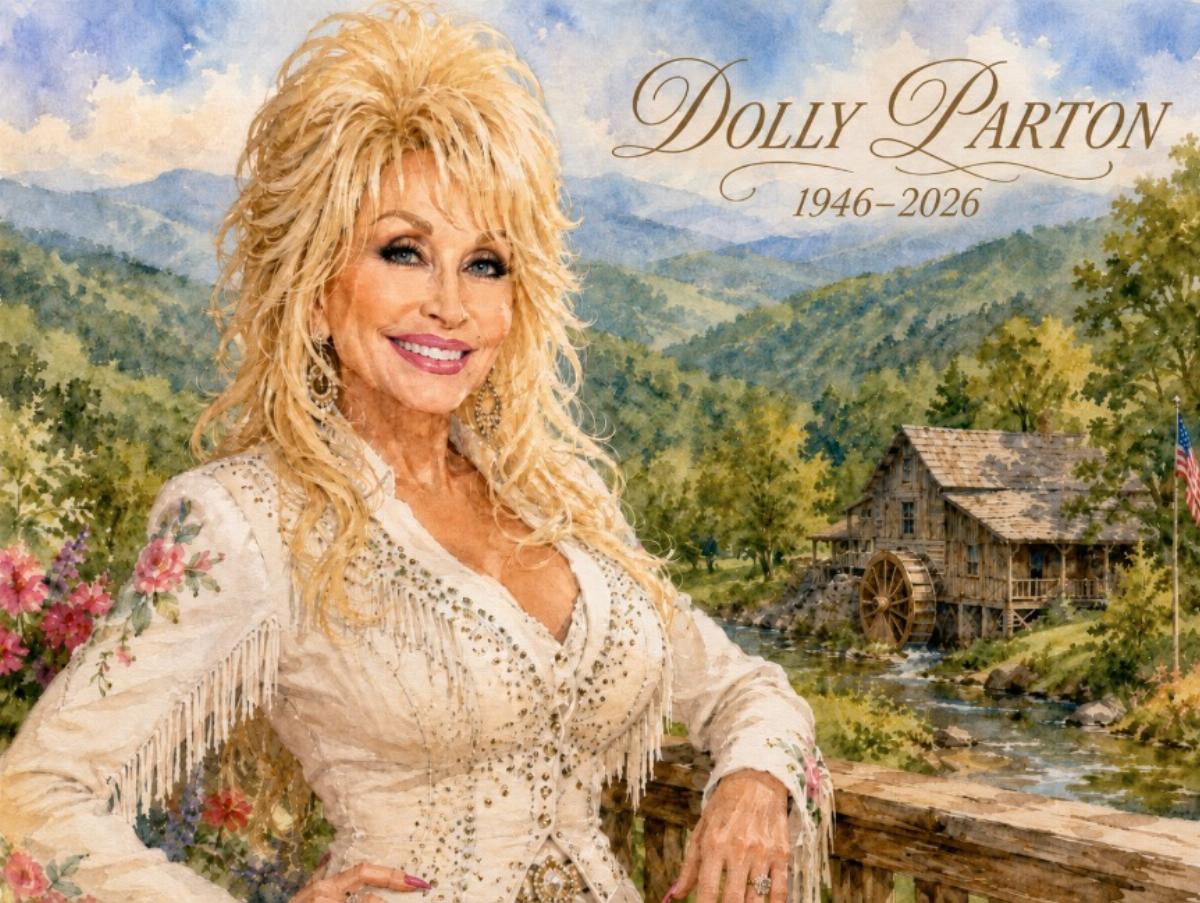
We all have artists whose voices become part of the architecture of our lives, and for many of us, Dolly Parton provided the definitive soundtrack. I can still see myself in the back seat of my dad’s Dodge Charger, singing along to “Here You Come Again,” “Coat of Many Colors,” and “I Will Always Love You” as her voice poured from the AM/FM radio into the heavy summer air. Years later, on a sweltering afternoon at northeast Ohio’s Canfield Fair, I was still at it. I’d become a teenager, and I shamelessly belted out “Jolene” at the top of my lungs while riding the Matterhorn.
Read more What is the official language of the United States
For generations of Americans, Dolly’s voice echoed through our dark days and rose through the fleeting joy of summer freedom.
The widespread mourning of Dolly’s passing reveals just how deeply she was woven into the tapestry of American life and character. My family felt that truth firsthand this summer when we visited Dolly’s Tennessean Travel Stop. Gazing at the brilliant butterflies and colorful murals outside, I marveled at her old-fashioned ability to make every stranger feel welcome.

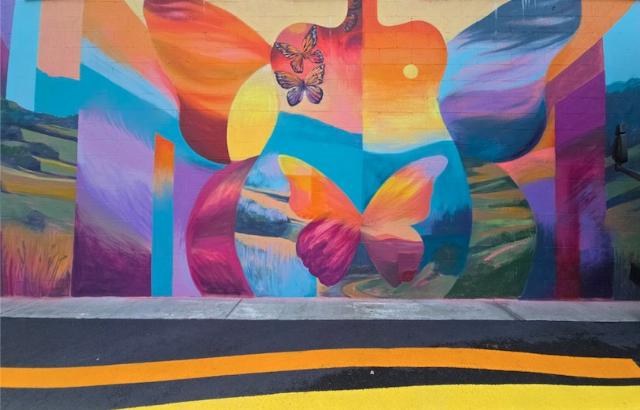
Images by Colleen Ruggieri.
In a culture that increasingly sorts us by grievance, race, identity politics, and political tribe, Dolly stubbornly refused to be reduced to a partisan symbol. Instead, she fundamentally modeled the virtues that sustain our great republic. She was an authentic American thinker, proving her point not by lecturing from a podium but by demonstrating the beauty of the ideals upon which our constitutional republic depends.
Dolly’s early life and humble beginnings in the Smoky Mountains remind us that our character and freedom are built first at home. Long before any government existed, and long after it fades, the family remains the most sacred place of all. Raised in a one-room cabin as one of twelve children, Dolly was intimately acquainted with poverty. Though they had little, her parents modeled thrift, determination, and mutual reliance.
Dolly often referred to her father, a sharecropper and tobacco farmer, as one of the smartest, hardest-working men she knew. Refusing to romanticize hardship, Dolly never let her early circumstances define her. Within that tiny cabin, her mother and father cultivated values of faith, song, and personal responsibility. Dolly learned that poverty of the pocketbook was not the same as poverty of the soul, and she came to realize that where a person begins need not determine where she ends.
The remarkable trajectory of Dolly’s career stands as a monument to the conservative truth that self-reliance and free enterprise are the foundations of the American dream. She sold more than 100 million records and achieved 25 number one hits, took massive financial risks, even turning down Elvis when he wanted to cover “I Will Always Love You,” and built commercial empires from scratch. By founding Owepar Publishing at age 21, she maintained the royalties from more than 3,000 songs she penned throughout her life.
Though advised against it, she bought a 50% stake in a local theme park named Silver City, turning it into the famous Dollywood in Pigeon Forge. Through that business decision, she brought 23,000 jobs to eastern Tennessee and helped create a business that generates $1.8 billion a year.
Dolly symbolized American entrepreneurship as she negotiated her own terms in an industry crowded with powerful figures eager to dictate who she should become. She achieved historic success without ever abandoning the girl she had been. Her story is a particularly vivid expression of the American ideal that individual talent flourishes when people are free to create, take risks, and reap the rewards of their own work. Dolly’s independence was never merely financial; it was the freedom to remain unmistakably herself.
With the creation of her Imagination Library, Dolly demonstrated how private initiative can turn personal conviction into lasting public good. Inspired by her own father’s inability to read or write, she began mailing free books to children in her native Tennessee. What started as a local effort became an international program that has delivered over 300 million books.
Read more The emergency declaration Trump doesn’t need
Dolly understood that literacy is a key to freedom, but she also understood that meaningful change could begin with one person taking responsibility for a need in her own community. She used the fruits of her own success to give children an opportunity she wished her father had possessed. What began as an intensely personal act of generosity became a gift to millions.
The unpretentious clarity of Dolly’s faith revealed the Judeo-Christian moral tradition that has shaped so much of the American character. Her belief in God was woven directly into the fabric of her life, echoed by her frequent return to Matthew 19:26: “With God all things are possible.”
In an era when religion is routinely mocked by popular culture or wielded as a political weapon, Dolly offered a refreshing alternative by simply living what she believed. Her faith found expression in the way she treated ordinary people, cared for animals, gave generously, and never took herself too seriously. Even her trademark rhinestones represented Dolly’s philosophy that success could sparkle without becoming arrogant and that humility did not require pretending that one’s gifts were nothing special.
By championing universal human virtues rather than divisive political platforms, Dolly possessed a rare capacity to provide common ground in an otherwise fractured nation. Liberals, conservatives, Northerners, and Southerners all found common ground in her artistry because she never demanded ideological conformity before offering her gifts. She simply lived as though work, family, faith, and personal responsibility were not political positions but ordinary obligations. Her life was an enduring testament to the idea that people of all walks of life could find a common melody.
As this week draws to a close and Dolly’s music plays on, my thoughts drift back to my younger self singing in the back seat of my father’s Dodge Charger, entirely unaware of the deeper philosophy guiding the voice on the radio. I knew her melodies then, but I understand her wisdom now. Dolly showed us that an individual can be fiercely ambitious without becoming ruthless and that we can be deeply faithful without becoming judgmental.
She understood that freedom gives us the right to build, but character determines what we do with what we have built. She crafted an extraordinary life without ever severing herself from the people and principles that made it possible.
This week, we are mourning someone who belonged to an America we still recognize, even if we sometimes struggle to find it. She represented a nation where a poor girl from the Tennessee mountains could write her own way into the world, where ownership, work, faith, family, and enterprise could coexist with generosity. She proved that someone could rise to the heights of success without becoming ashamed of coming from ordinary people.
I loved Dolly Parton as a child because of the music. I love her today because of the life behind it. I know I’m not alone in mourning that loss or in hoping that the America Dolly represented is not lost with her. Yes, we will always love you, Dolly.
Colleen Ruggieri is a retired professor who taught at an Appalachian university and is a recipient of the Ohio Governor’s Award for Teaching Excellence. She fearlessly champions intellectual freedom, traditional values, and the belief that constitutional principles pair perfectly with a heavy dose of old-time country radio and rhinestone sparkle.
Read more What Lindsey Clancy’s defenders have revealed about American women