
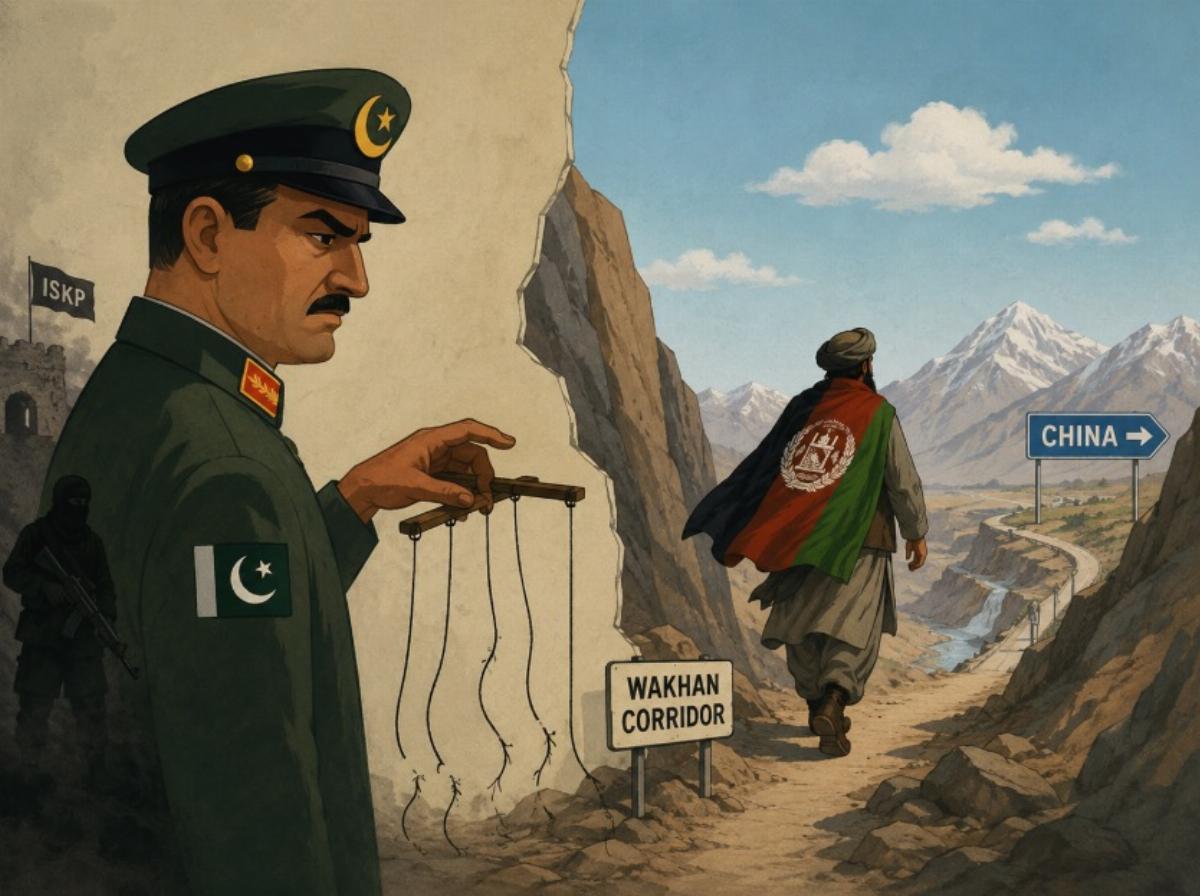
Pakistan’s long-standing strategy of treating Afghanistan as an extension of its own security system has collapsed. For decades, Pakistani military and intelligence leaders pursued “strategic depth.” They believed a friendly government in Kabul would give Pakistan extra space against India and prevent a hostile western border. That assumption no longer holds.
Read more Change The Counseling; Change The Culture
When the Taliban returned to power in August 2021, Pakistani leaders expected compliance. They wanted the Taliban to accept the Durand Line, suppress the Tehrik-e-Taliban Pakistan (TTP), and remain dependent on Pakistani trade routes and patronage.
Instead, the Taliban asserted independence. Relations between Islamabad and Kabul have deteriorated into border clashes, airstrikes, economic pressure, and mutual accusations of supporting terrorism.
Pakistani officials now speak the language of open confrontation. In February 2026, Defense Minister Khawaja Muhammad Asif declared that “our cup of patience has overflowed” and that open war had begun. Pakistani discourse increasingly frames Afghan resistance as ingratitude rather than the behavior of a sovereign neighbor.
As conventional leverage fades, Pakistan appears to have returned to a familiar tool: selective tolerance of militant groups. Analysts report Islamic State Khorasan Province (ISKP) networks in Khyber Pakhtunkhwa and Balochistan, many of which likely exist only because they are tolerated or facilitated by elements of the Pakistani security apparatus.
The Taliban claim ISKP infrastructure operates on Pakistani soil. They point to the survival and cross-border movement of ISKP leader Sanaullah Ghafari and to alleged camps inside Pakistan. In June 2026, the Taliban announced strikes on what they claimed were ISKP-linked sites in Balochistan and Khyber Pakhtunkhwa.
ISKP remains the Taliban’s most dangerous jihadist rival. Unlike the Taliban’s Afghanistan-focused project, ISKP belongs to Islamic State’s transnational ideology and rejects the Taliban as illegitimate. Since 2021, the Taliban have aggressively targeted the group. Any Pakistani tolerance of ISKP therefore directly undermines Taliban efforts and raises the risk of a more capable regional terrorist presence.
The Wakhan Corridor has become a central arena in this contest. The narrow strip of land gives Afghanistan its only direct border with China’s Xinjiang region. Kabul is building a road toward China. In May 2026, Afghan authorities reported that roughly 70 percent of the route was complete.
A functioning corridor would allow Afghanistan to trade and move goods with China without relying on Pakistani territory. It would reduce Pakistan’s historic leverage over landlocked Afghanistan and potentially lessen the relative importance of the China-Pakistan Economic Corridor for Afghan cargo.
Available information strongly suggests that instability in Badakhshan and the approaches to the Wakhan Corridor serves Pakistani interests. An insecure route gives Beijing reasons to delay direct connectivity and keeps Pakistan as China’s primary western partner.
Read more The Cultural Divide, The Crisis Of Womanhood, And The Revitalization Of Motherhood
Reports of arms seizures allegedly destined for the Wakhan theater, combined with renewed anti-Taliban attacks in Badakhshan, suggest the area is heating up at precisely the moment it gains strategic value.
ISKP has already targeted Chinese interests. In January 2026, the group claimed a suicide bombing at a Chinese-run restaurant in Kabul that killed one Chinese national and six Afghans. Beijing pressed the Taliban to improve protection for Chinese citizens and projects. Chinese mining activity in northern Afghanistan has also faced attacks.
Possible links between Lashkar-e-Taiba networks and ISKP activity inside Pakistan add another layer of concern. The two groups are not natural allies, yet historical and more recent reporting points to overlapping personnel and infrastructure in Khyber Pakhtunkhwa.
For American policymakers, several facts stand out. Pakistan’s ability to shape Afghan behavior has sharply declined. The old strategic-depth model is obsolete.
At the same time, the reported presence of ISKP networks inside Pakistan creates a direct counterterrorism problem. ISKP has demonstrated both the intent and the capacity to attack foreign targets. Any tolerance of the group risks empowering a transnational threat.
The competition over the Wakhan Corridor also carries implications for great-power dynamics. China seeks stable access and resource opportunities in Afghanistan. Pakistan prefers conditions that preserve its role as the indispensable partner.
The United States has limited tools to influence infrastructure projects on the ground. Its clearest interest lies in preventing the growth of ISKP safe havens and discouraging escalation that could further destabilize the region.
Pakistan has already lost most of its old control over the Taliban. The United States does not have the power to give that control back to Pakistan, even if it wanted to. Trying to restore Pakistani influence would be both unrealistic and unwise.
The United States also cannot block Chinese commercial connectivity. What it can do is treat the reported facilitation of ISKP networks as a serious counterterrorism issue, maintain pressure on all parties to avoid wider conflict, and recognize that the old assumptions about Pakistan’s role in Afghanistan no longer match reality.
Read more The Late Jason Arday: Just Another Dead Body For The Left To Use
Image created using AI.