
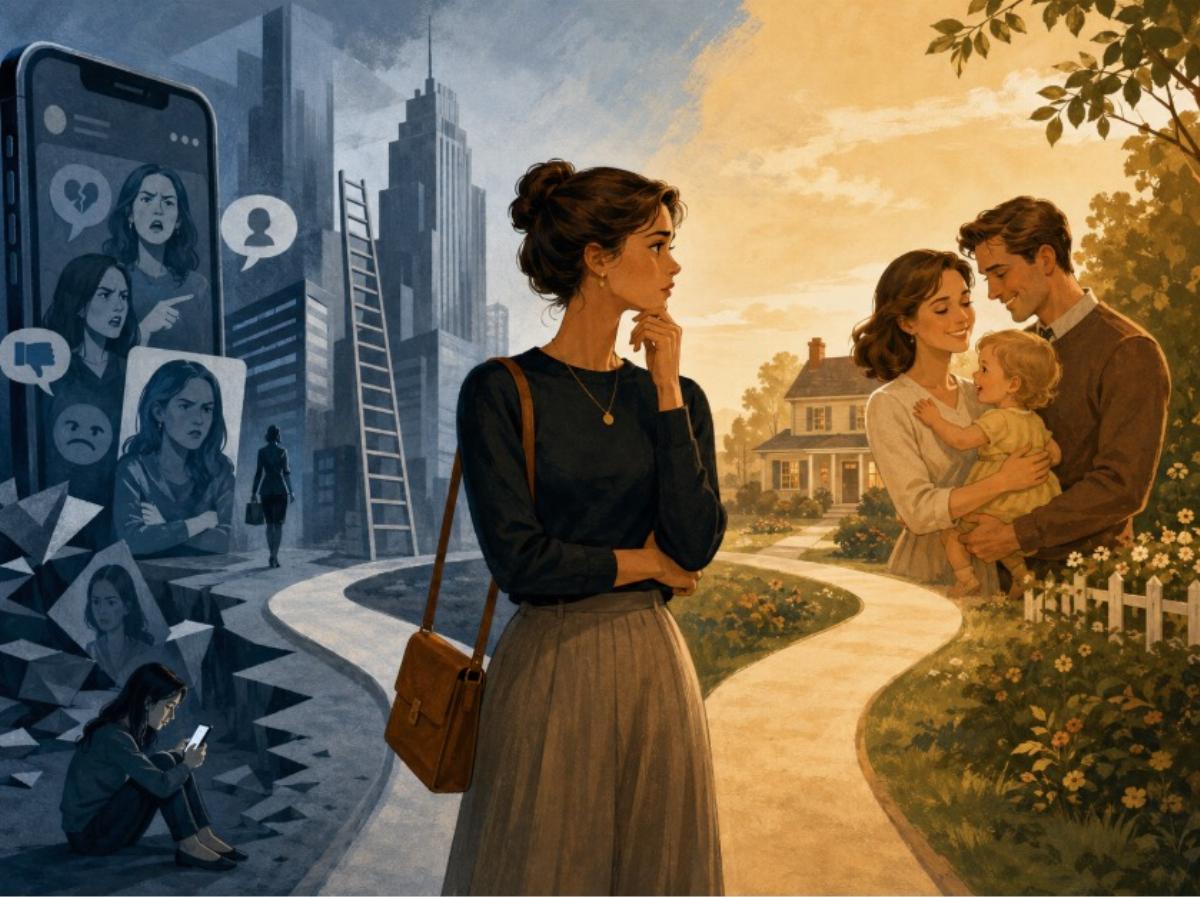
Recent polling, highlighted in The Independent, reveals a profound cultural shift: young women today hold significantly more negative views of men than any generation before them. Only about a third of women under 25 report a positive view of men, and this sentiment is amplified across social media platforms like TikTok, YouTube, and Instagram.
Read more The Late Jason Arday: Just Another Dead Body For The Left To Use
Thousands of videos feature young women expressing distrust, frustration, or outright disdain toward men, often framed through themes of “toxicity,” “danger,” or “male privilege.” This digital chorus has become a cultural echo chamber, reinforcing the belief that men are inherently problematic and that relationships with them are fraught with risk.
It is the result of decades of ideological evolution within the feminist movement. Feminism in the 1960s began with legitimate goals: expanding women’s rights, opening educational and professional doors, and ensuring equal opportunity. But over time, certain branches of feminism shifted from advocating equality to promoting suspicion—even hostility—toward traditional family structures, marriage, and masculinity itself.
The message became clear: marriage is dangerous, motherhood is limiting, men are obstacles, independence means avoiding commitment, and fulfillment comes from career, not family.
This worldview created a widening divide between men and women, one that has left many women emotionally adrift. It also produced a cultural paradox: women have more freedom than ever before, yet report higher levels of anxiety, depression, loneliness, and dissatisfaction.
The Independent article notes that young women are significantly more pessimistic about relationships, the future, and their own emotional well-being. Many wander through life with no clear sense of purpose because they have been disconnected from the roles that historically provided meaning, identity, and emotional grounding.
This raises a deeper question: What is the source of purpose? For generations, women found meaning not only in work but in relationships—in marriage, motherhood, community, and family. They offered emotional grounding, unconditional love, and a sense of legacy.
Today, many women have been encouraged to trade those foundations for corporate success, yet corporations cannot provide love, belonging, or identity. A job can offer achievement, but it cannot offer the emotional fulfillment that comes from raising children, building a home, or growing old with a partner.
A provocative thought experiment illustrates the imbalance: If every woman left the workforce tomorrow, society would struggle but ultimately adapt. Men would continue working, infrastructure would continue functioning, and families would still exist.
But imagine the opposite scenario: If every woman abandoned marriage, motherhood, and family to focus solely on career, society would collapse. Birth rates would plummet, family structures would dissolve, and the emotional and developmental foundation of future generations would disappear. Civilization cannot survive without children, and children cannot thrive without stable families.
This reveals a truth modern culture often ignores: women are essential to the continuity of the human race, the emotional stability of families, and the nurturing of future generations. When women step away from these roles entirely, the consequences ripple across society.
Today’s culture often reduces women to two roles: sex objects and corporate workers. Social media hypersexualizes women, rewarding appearance over character, validation over connection. At the same time, corporate culture celebrates women only when they mirror male productivity—long hours, constant ambition, and total devotion to career.
Women aren’t unhappy because they work—they’re unhappy because culture has devalued the deeper meaning of womanhood. Being desired sexually does not bring love, and being valued only as a worker does not bring belonging or purpose.
Read more The Tyranny of Voter Apathy
When women reject men entirely, reject marriage, reject motherhood, and embrace only career, they risk losing the deeper sources of meaning that human beings have relied on for centuries. The loneliness many women feel today is not a mystery; it is the predictable outcome of a culture that devalues connection.
And when women elevate “trans women”—biological men identifying as women—above themselves, praising them as more authentic or more valid, it reflects not empowerment but confusion and desperation. It suggests a loss of confidence in the value of womanhood itself.
A meaningful solution to the cultural divide is the revitalization of womanhood—not by restricting women, but by restoring the value of motherhood and family. Scripture consistently elevates the roles of nurturing, teaching, and building a home as honorable and deeply meaningful.
Proverbs 31:28: “Her children rise up and call her blessed; her husband also, and he praises her,” affirming the virtuous woman’s impact through diligent household management and character. This highlights the joy and purpose found in family life.
In 1 Timothy 5:10, Paul praises women who have “brought up children” and “shown hospitality,” presenting these acts as expressions of faith and love.
These passages do not diminish women’s ability to work or lead; rather, they affirm that family, marriage, and motherhood carry profound spiritual significance. Revitalizing womanhood means recognizing that these roles can be sources of deep fulfillment, identity, and purpose—not obstacles to achievement.
Revitalizing motherhood also means healing the divide between men and women. Men and women are not adversaries; they are partners. Healthy masculinity is not toxic—it is protective, stabilizing, and essential. Healthy femininity is not weak—it is nurturing, resilient, and foundational.
When women embrace motherhood and partnership, and when men embrace responsibility and support, the divide begins to close.
Women can—and should—pursue education, careers, and professional excellence. But family should not be sacrificed for career. Partnership should not be replaced by isolation. Motherhood should not be dismissed as outdated.
True fulfillment comes from connection, love, partnership, and family. Women can reclaim purpose by embracing the fullness of their identity: professional achievement alongside marriage, motherhood, nurturing, and community.
Revitalizing motherhood is not about limiting women. It is about restoring meaning and purpose. It is about recognizing that the future of civilization depends not on corporate output, but on the strength of families and the love that mothers bring into the world.
Read more Iran Is Betting America Will Cut And Run
Image created using AI.