
Growing up in a Cuban home, my parents were constantly telling us about communism or “la gran mentira” (“the big lie”), as my late father called it. My mother would add to my father’s message by reminding the three of us that it’s easy to forget unless you are reminded often. Like a wonderful Cuban mother, she often spoke about it and about my father’s cousin, who was a political prisoner.
Read more Carbon accounting
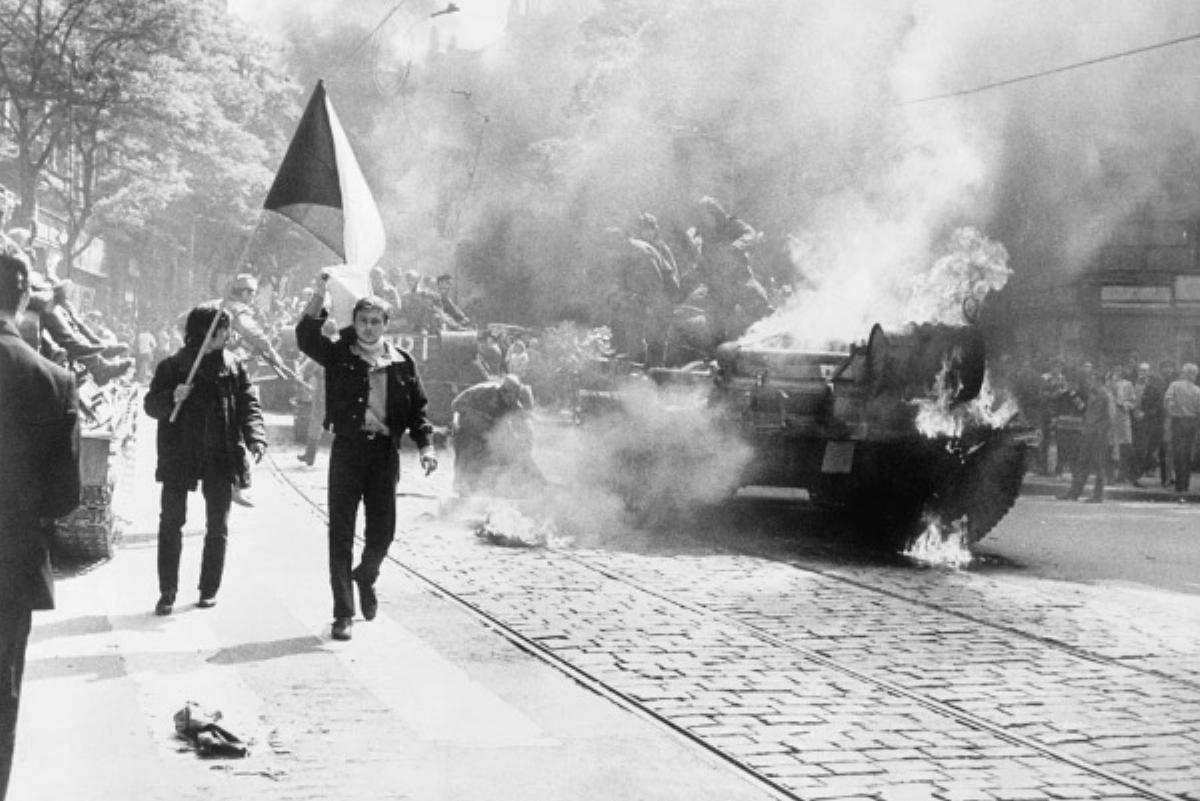
This is another reminder of why we must remember the many ugly chapters of communism. Back in August 1968, we saw the ugly face of communism:
On the night of August 20, 1968, approximately 200,000 Warsaw Pact troops and 5,000 tanks invade Czechoslovakia to crush the “Prague Spring”—a brief period of liberalization in the communist country. Czechoslovakians protested the invasion with public demonstrations and other non-violent tactics, but they were no match for the Soviet tanks. The liberal reforms of First Secretary Alexander Dubcek were repealed and “normalization” began under his successor Gustav Husak.
Pro-Soviet communists seized control of Czechoslovakia’s democratic government in 1948. Soviet leader Joseph Stalin imposed his will on Czechoslovakia’s communist leaders, and the country was run as a Stalinist state until 1964, when a gradual trend toward liberalization began. However, modest economic reform was not enough for many Czechoslovakians, and beginning in 1966 students and intellectuals began to agitate for changes to education and an end to censorship. First Secretary Antonin Novotny’s problems were made worse by opposition from Slovakian leaders, among them Alexander Dubcek and Gustav Husak, who accused the central government of being dominated by Czechs.
In January 1968, Novotny was replaced as first secretary by Alexander Dubcek, who was unanimously elected by the Czechoslovakian Central Committee. To secure his power base, Dubcek appealed to the public to voice support for his proposed reforms. The response was overwhelming, and Czech and Slovak reformers took over the communist leadership.
The USSR and the Warsaw Pact are now history or questions in a trivia game. It all collapsed at the end of 1991. In other words, most people younger than 40 have no emotional involvement with what we grew up with. They’ve probably never heard of the Berlin Wall or the 1956 Hungarian revolution or the atrocities of communism. Prague is now the capital of the Czech Republic, and Slovakia is another country. It all seems like a time so long ago.
Read more Trump quietly reopens Hormuz
Some of us are old enough to remember this week when 200,000 Warsaw Pact troops and 5,000 tanks invaded Czechoslovakia to crush the “Prague Spring.”
It was a dark day for freedom. Like the Hungarians in 1956, the people of Czechoslovakia were given a taste of Soviet “tolerance.” The “Prague Spring” was all about freedom and reforms, but the Kremlin did not accept it and sent the tanks in.
A sad day for those of us who were watching from the West, especially when Fidel Castro defended the USSR by saying, among many things, that the country was “heading toward a counter-revolutionary situation, toward capitalism and into the arms of imperialism.”
We remember today all the people who stood up to Soviet tanks in Prague. And we remember more victims of communism.
Read more What a government under the Democratic Socialists would look like
CIA Image.
P.S. Check out my blog for posts, podcasts, and videos.