
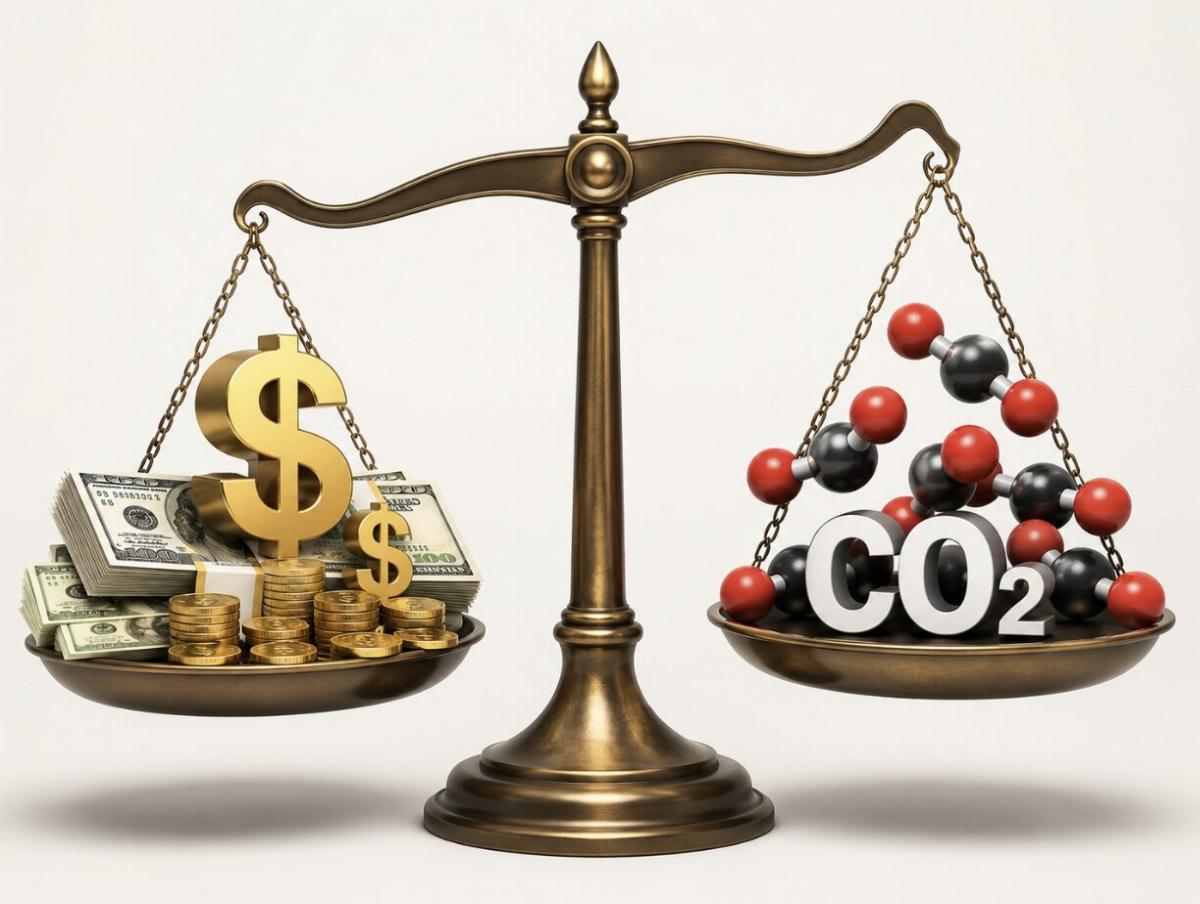
I have observed that net zero adherents are not very good at accounting. For example, it is not difficult to compare the cost of electricity generation ($/kWh) on a grid with wind, solar, and thermal power running in tandem with the same grid operating with thermal power only, minus the wind and solar. The power capacity (GW), annual generation (TWh), capital cost ($/GW) and fuel cost are known for each of the different power sources in regions from Texas to the U.K. I have yet to discover one where a mixed system costs less than a thermal only one. However, net zero adherents disagree with me on this rather straightforward point.
Read more Trump quietly reopens Hormuz
One would think that they would be more fastidious when it came to carbon accounting. After all, that is their big concern. But even there, they seem to be missing pieces to the puzzle. Electric utilities committed to achieving net zero are boastful of how much CO2 they have avoided emitting by employing renewables. They refer to deferred emissions from a reduction in fossil fuel consumption in their thermal power plants. However, they do not account for carbon emissions associated with building, installing, maintaining and retiring wind turbines, solar panels, batteries, and ancillary equipment. I understand their reluctance, because these activities are energy intensive and consume much fossil fuel. It is also difficult to calculate how much is consumed in this way as opposed to just computing plant fuel reduction. However, there is a way to attain a sense of the relative magnitude of each.
In building these machines for renewable power and storage, materials must be mined and refined, consuming a lot of fossil fuel in the process. Afterward, these materials must be fashioned into products, installed, and maintained over their lifespan, also consuming a lot of fossil fuel. What I am describing are energy-intensive physical processes, not someone just developing software with fuel consumption limited to a can of coke and a bag of potato chips.
Read more What a government under the Democratic Socialists would look like
The construction of large physical machines, whether they produce renewable energy or not, consume a lot of energy and therefore emit a lot of CO2 long before they start operating. Moreover, there is a way to compare the relative magnitude of carbon emissions that each machine will consume over its lifespan. It’s called prices. Embedded in the price of a physical product is a measure of its energy intensity. In comparing the total life cycle cost of renewables operating in tandem with thermal plant against a thermal plant running solo with added fuel consumption, one can infer the relative energy intensity and CO2 emissivity. In summary, the price of a system is a measure of how much CO2 it emits over its lifetime relative to another system priced differently. From this perspective, renewables fail in terms of both fiscal and carbon accounting.
Read more Running on ‘Medicare for All’ in Florida is a fool’s errand
Image generated by ChatGPT.