
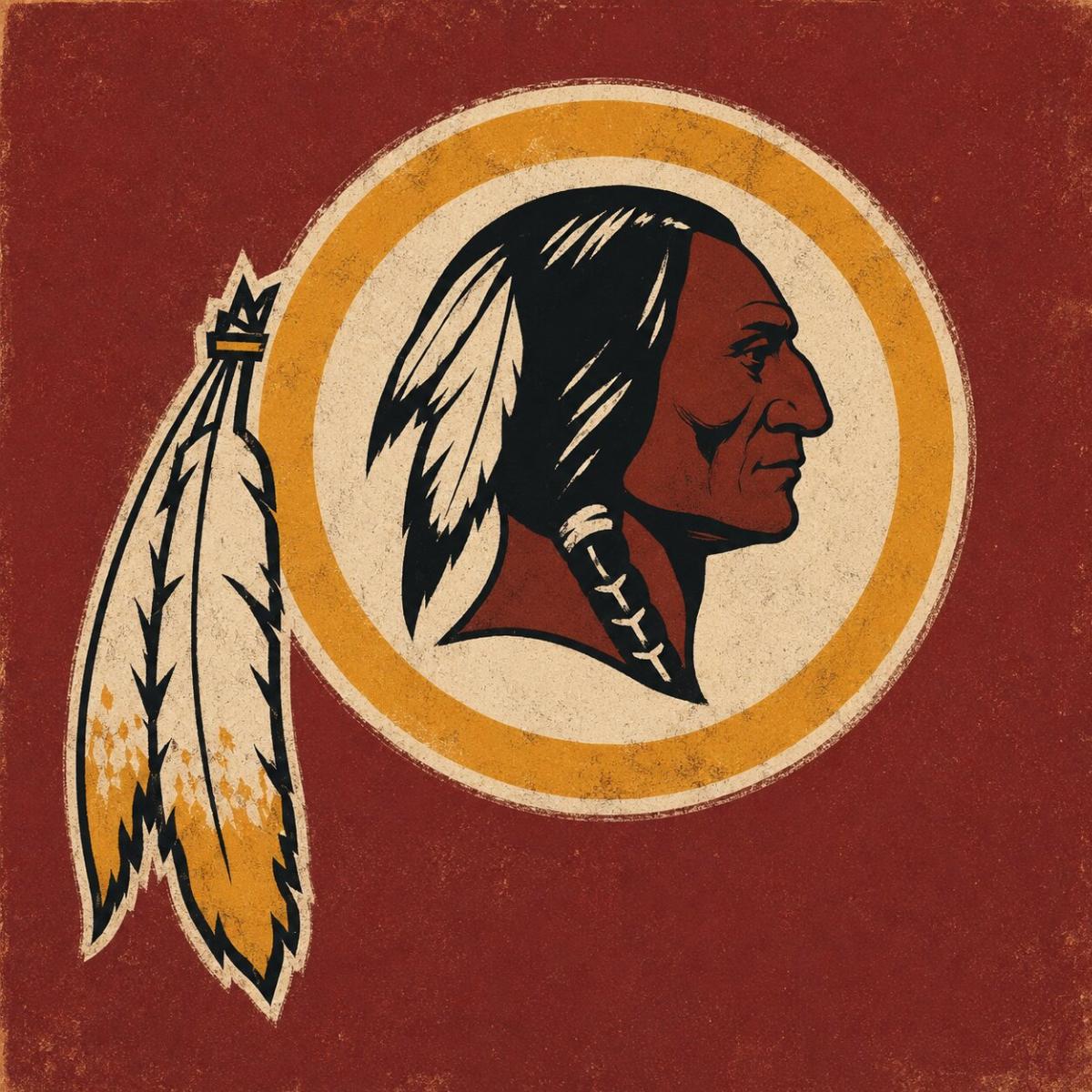
For 2,427 days, Redskins fans have waited to hear four remarkable words that now offer new hope of fully recovering George Washington’s authentic football team. The Redskins played their final home game in late December 2019, the last season the historic fight song was officially sung under that name. Then last Friday night, as the Commanders faced the Miami Dolphins, a key part of that song suddenly returned. Across the giant scoreboard at Northwest Stadium appeared four words once inseparable from Washington football:
Read more The Cyclospora Panic of 2026
“BRAVES ON THE WARPATH!”
The team changed the fight song lyrics back to say “Braves on the Warpath”.
— Chris Bryant (@HogfarmerChris) August 15, 2026
The song sounds almost identical to the old one now. 🫡#RaiseHail pic.twitter.com/q1R6VCcKIv
For those looking for signs that the Redskins—and Chief Two Guns White Calf—are finding their way home, it was another unmistakable proof of life. For several years the Commanders have been releasing pieces of the old Redskins identity one bit at a time. The blood-red burgundy survived. The gold pants returned. Then came the championship-era uniforms. This year came the spear, the martial symbol first worn on Redskins helmets in 1965. And now the warpath stanza has returned.
Yet the warrior himself—Chief John Two Guns White Calf, the Blackfeet leader whom the Redskins publicly identified in 2018 with the creation of their enduring Native-head logo—remains held hostage. In the team’s own account, former Blackfeet chairman Walter “Blackie” Wetzel brought photographs from the Blackfeet Reservation to Washington in 1971. The image of Two Guns, the Redskins said, “was most admired and the enduring Redskins logo was born.” The organization emphasized that the image was “not of a mascot,” but a real Native person represented out of respect.
So here is the strange state of Washington football in 2026: the colors are free, the uniforms are free, the spear is free, and now the warpath is free. But Two Guns remains captive to the political controversy surrounding the name that once accompanied him.
That becomes difficult to explain when we examine what Redskins historically represented. The team’s own 2005 Media Guide—drawing on more than a dozen historical and cultural experts—directed reporters toward Native traditions of vermilion, red ochre, and bloodroot. The red-painted skilled-warrior interpretation was not invented after the name controversy. It was part of the NFL Redskins’s official historical guidance more than two decades ago.
And redskin as a warrior status reaches back centuries.
The Beothuk of Newfoundland offer a clear example of Europeans encountering native people who deliberately became red. Red ochre covered their bodies, faces, clothing, weapons, and canoes. Eighteenth-century explorer John Cartwright explicitly linked their “red” designation to this pervasive use of ochre. That matters because today’s discussion often assumes “red” was merely a European racial description of Native complexion. Early accounts more commonly used copper or tawny for natural skin tone. Particular Native warrior cultures deliberately painted themselves red for cultural, spiritual, and martial reasons.
George Washington noticed.
In 1754, operating in the Native diplomatic and military world of the Ohio Country, the 22-year-old Washington wrote that red was “compard to Blood” and ranked among the “distinguishing marks of Warriours and great Men.” His “acquaintance with these Indians, and a Study of their Tempers” had taught him their customs.
Washington did more than observe. As a lieutenant colonel commanding Virginia provincial troops, he recommended dressing his men in red because the color would communicate martial status to the Native peoples with whom they operated. Governor Robert Dinwiddie described the proposed uniform as a “Coat and Breeches of red Cloth.” Before there was a Washington, D.C., much less a Washington Redskins team, George Washington proposed red for his own fighting men precisely because he understood its Native warrior symbolism. He was writing in 1754—not defending a football team.
Fifteen years later comes crucial linguistic evidence. In 1769, during negotiations with the British, Piankeshaw Chief Mosquito promised protection: “if any redskins do you harm, I shall be able to look out for you even at the peril of my life.” It is among the earliest unchallenged appearances of the word in the translated speech of a Native speaker.
Mosquito spoke as a leader directing peace among fighting men. His assurance was that if any of his redskins harmed the British visitor, he held the authority—and was willing to risk his life—to intervene. Substitute “warriors”: “If any warriors do you harm…” The operative meaning does not change. Among people of red-warrior traditions, Mosquito’s language is best read not as a racial observation about Indians generally, but as a chief speaking of the fighting men whose behavior he could control—his redskin warriors, his braves, whom he could take off the warpath.
That distinction is especially pointed among the Blackfeet, the people of Two Guns White Calf. Among the Blackfoot Confederacy, including the Kainai or Blood, red paint carried profound ceremonial and warrior meaning. Smithsonian ethnologist John C. Ewers documented the large quantities of vermilion entering Blackfeet life through the treaty-annuity system and used redskin terminology for these painted warriors.
Like the NFL generations later, the federal government itself eventually turned against elements of Native warrior tradition. Beginning in the 1880s, policy targeted the Sun Dance, scalp dance, war dance, and related ceremonies. Officials complained these practices stimulated the “warlike passions of the young warriors.” Rules enforced on reservations suppressed the ceremonial means by which warrior societies prepared and strengthened their young men. Fines, ration cuts, and imprisonment became tools against traditions that included warrior paint.
Native warrior history then collided with American football. At Carlisle Indian Industrial School, Glenn “Pop” Warner built one of the nation’s most innovative programs. Its greatest star was Jim Thorpe, the Sac and Fox athlete who became perhaps America’s finest all-around sportsman. The history of those teams later carried the title Fabulous Redmen: The Carlisle Indians and Their Famous Football Teams.
Read more Fake News ‘Journalists’ Love the Deep State
Thorpe’s Sac and Fox identity leads to Abraham Lincoln. Eighty years earlier, Lincoln served in the Black Hawk War against Black Hawk and his Sauk followers. Years later he recalled the scalped bodies after Stillman’s Run and the red spots where “the red-skins had taken his scalp.” Indian remained the ordinary general term of the period; Lincoln’s “red-skins” described fighting men in warfare, not an abstract racial category.
Another presidential encounter reinforces the pattern. In 1812, French Crow told President James Madison, “I am a red-skin.” His next substantive statement: “We are at war with one nation and we will revenge.” He then spoke of friendship with whites and preventing violence against them. Early American Indian diplomacy frequently turned on war parties, retaliation, alliances, and peace—persuading fighting men to bury the hatchet and leave the warpath.
Washington’s NFL franchise began in 1932 as the Boston Braves, a name with deep American roots. Owner James Gaffney was a Tammany Hall man; Tammany traced its identity to Chief Tamanend, the Lenape leader linked to William Penn and early Pennsylvania treaty tradition. Tammany adopted Native symbolism and called its members Braves.
That legacy produced what I call the Tammany Triangle. In Philadelphia, Tamanend holds the wampum belt of friendship and treaty. At the Naval Academy, another Tamanend (long miscalled “Tecumseh”) stands before Bancroft Hall, where generations of American warriors have prepared for service. At Gettysburg, Tamanend crowns the monument to the 42nd New York Infantry—the Tammany Regiment—near the High Water Mark and the repulse of Pickett’s Charge. At the 1891 dedication, Major General Daniel Sickles named its soldiers “Tammany Braves.”
Treaty and friendship in Philadelphia, military preparation at Annapolis, defense of the Union at Gettysburg: three manifestations of a Lenape leader tying the founding, protection, and preservation of the American experiment to its warrior spirit.
“Braves on the Warpath.”
I defended this history under oath in the Pennsylvania Human Relations Commission hearings over the Neshaminy Redskins. I argued that historically inappropriate Native imagery should be removed; Plains-style symbols in Lenape country did not need defense. Native feathers and honors carry meaning; wearing unearned honors is a form of stolen valor. But the point was clear: get the history right. Neshaminy kept the Redskins name while restricting objectionable imagery and requiring deeper education. Educate, not eradicate.
Which returns us to the missing Blackfeet warrior.
For years Washington has released what now reads as proof of life from the Redskins identity: the blood-red burgundy, the championship uniforms, the spear. Friday night the clearest signal yet flashed across the stadium: “BRAVES ON THE WARPATH!”
The historical pattern is consistent. Washington associated red and blood with “Warriours and great Men” and proposed dressing his Virginia troops in red for that reason. Chief Mosquito spoke of redskins as fighting men he could restrain. French Crow called himself a red-skin while discussing war and peace. Lincoln remembered red-skins as Black Hawk’s warriors. Carlisle produced Thorpe, Warner, and the Fabulous Redmen. Tamanend’s legacy produced the Tammany Braves. The Redskins’ 2005 guidance pointed to Native red-paint traditions. And the team itself identified Blackfeet Chief Two Guns White Calf as the man whose image became their enduring logo.
The team’s own song does not hail a race. It hails “Braves on the Warpath.”
Of all the places this franchise could have called home, Washington was peculiarly fitting. The city bears the name of the young Virginia officer who, fifteen years before Chief Mosquito’s recorded use of redskins, documented red and blood as marks of Native “Warriours and great Men”—and sought to put his own fighting men in red because he understood what the color communicated.
Nearly two centuries later, a football team in the city bearing his name dressed in blood-red burgundy and hailed its Redskins as “Braves on the Warpath.”
Now those words are free again. The burgundy is free. The uniforms are free. The spear is free. The warpath is free.
So why is Two Guns still held? After 2,427 days, Washington has supplied enough proof of life.
Dear Commanders: it is time to get real and release Two Guns White Calf and the Redskins name. He deserves it. His tribe deserves it. And America needs more—not less—Redskin-inspired warriors.
Read more Brooklyn socialist suggests crime should pay
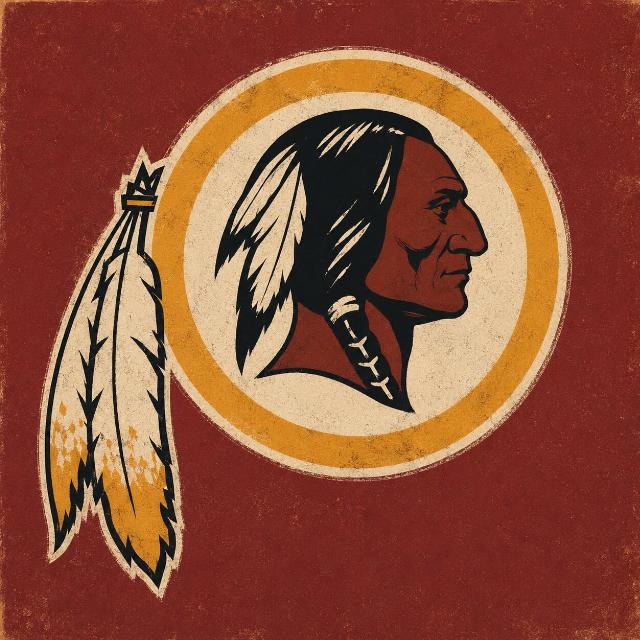
Image generated by ChatGPT.