
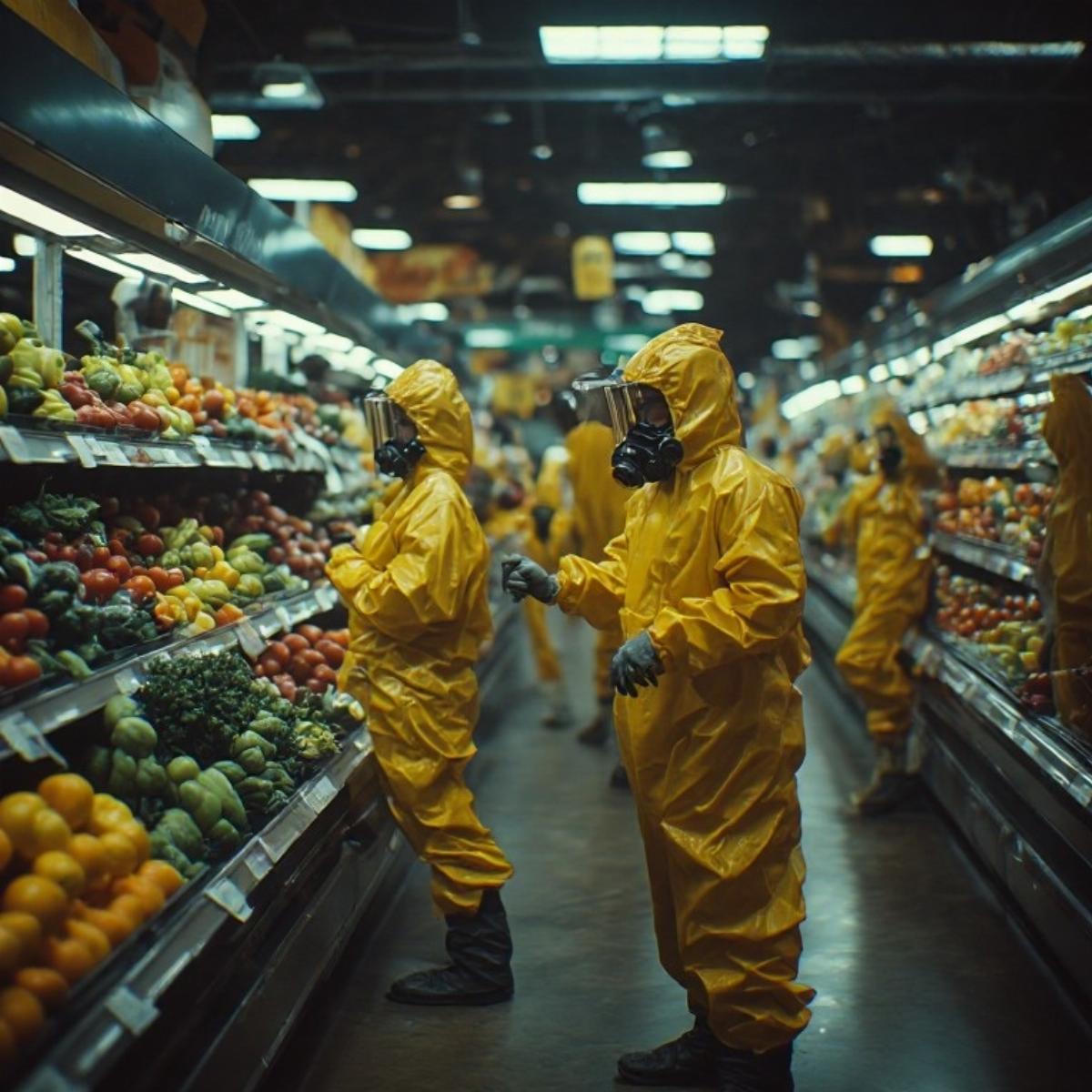
If the government discovered a new risk that you could catch an illness — like a really bad stomach flu — from eating something, would you want the government to warn you?
Read more Fake News ‘Journalists’ Love the Deep State
Now, what if they didn’t know which one thing was spreading this illness, but it could be any of a number of different fruits and vegetables? Still want that vague warning?
Now, what if this illness is always present, with a few thousand cases every year, but this year, the spread just might be worse than usual? So, the difference this year is really just a matter of degree. Still want them to tell you?
A few thousand people get cyclosporiasis every year (and yes, it is awful). In 2026, federal agencies suspected it might hit the tens of thousands of cases.
Still a drop in the bucket, in a nation of 340 million.
So these agencies reported the risk. They didn’t go overboard and ban everything imaginable. They tried to use their bully pulpit responsibly by sharing the warning and looking for the source of the somewhat higher-than-usual incidence of this parasite.
As the summer went on, the public learned more and more about the source of this illness. It’s a parasite. It lives in fecal matter. It’s destroyed by proper water processing systems. But some water processing systems don’t process sewage correctly, so when farms irrigate their crops with improperly treated water, the very process of irrigating crops can spread it onto fresh crops. You buy raw ingredients, eat them, ingest the troublemaker, and get sick. Cyclosporiasis hits.
In response to this information, many Americans spent their summer avoiding raw ingredients. People who usually start their meals with a salad started skipping that salad. People who usually have burgers with tomato, onions, and lettuce started ordering their burgers plain. People who usually have tacos and similar foods that contain raw vegetables switched to foods that don’t contain raw vegetables.
People who usually eat fresh fruit as a snack switched to other snacks. Potato chips and cookies were considered “safer” than salad or fruit trays.
Note that this doesn’t mean the alternative is objectively safe, objectively healthy, objectively nutritious — just that the alternative is free of this one particular risk.
The alternative may also have been less nutritious, more fattening, more expensive — but the popular trend this summer was to avoid things that could carry cyclospora, and the health risks presented by alternative choices weren’t top-of-mind.
It’s a free country. We all have the right to choose what kind of food to eat, as long as we can afford to pay for it. We have the right to choose which risks to run with our diets – to go heavy or light, to cook everything or eat raw, to be carnivorous or vegetarian. These are personal choices.
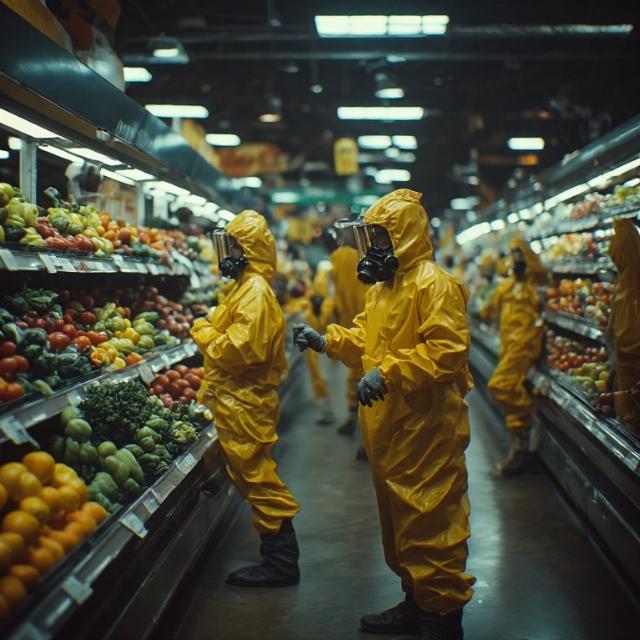
If the government mandates a recall, the cost is direct and self-evident. Distributors have to refund purchases, cancel orders, collect and destroy already-delivered prepacked salads or ingredient packets. How many farms had to plow under entire fields this summer when the threat was discovered, without certainty, even then, that the next crop would be immune?
And even if no government mandate is issued, a cautious public notice can produce the same result by crashing demand.
If necessary, because of a confirmed risk of contagion — then that’s life; it’s the right action. But if it’s an overreaction, it’s a very costly choice indeed.
Read more Brooklyn socialist suggests crime should pay
Thinking back on this past summer, we should ask ourselves:
How many of us switched from our usually healthy food choices to an unhealthier diet this summer, because of this possibly overblown risk?
How much additional spoilage was there in the produce sections of our nation’s grocery stores and fruit markets this summer, as fresh groceries went unpurchased?
How much did restaurants and cafeterias suffer, in salads and raw ingredients stocked but never served? (Obviously, the issues vary from vegetable to vegetable — carrots, celery, and onions not served raw can be used in sauces and soups, but lettuce, cucumbers, and radishes not served cold won’t get used at all).
How much damage did this fear do to Vietnamese restaurants, Mexican restaurants, and other such cuisines that specialize in foods served raw, where they lost whole dining parties this summer, as customers chose other cuisines, or chose not to dine out at all?
And what has this done to individual people’s health, as this one fear drove them to choose other risks instead? Picture a burger, normally served with fresh lettuce and tomato, and the customer switching to fried onions and sautéed mushrooms instead, and then skipping the salad and getting a breaded and fried appetizer instead, for another thousand calories?
For a day or two, such choices won’t break an individual diet or an individual business. But over the course of a summer? How many farms suffered, how many restaurants and grocery stores? And how many people got fatter because their fear of a bout of gut illness drove them to eat more pizza, fried chicken, and ice cream?
And perhaps the biggest question of all: what if the risk was never outsized enough to deserve mention? What if the cyclospora incidence (which, after all, is always present in a limited way, every year) was only a little higher in 2026 than in most years, but the vast majority of us wouldn’t in fact be likelier than usual to get it anyway?
As summer comes to an end, cyclosporiasis appears to have increased three or fourfold this year, but in a country of 340 million, that’s still a tiny amount. Was the fear overblown, or was the result relatively mild only because people reacted to the warnings and took precautions? And if so, was it worth it? Who knows?
This isn’t to attack the government for issuing these limited warnings. Both the Departments of Agriculture and of Health and Human Services seem to have restrained themselves this time (in contradiction to their “The sky is falling!” approach to COVID-19, six years ago).
But it is a worthwhile wake-up call, if we think it through, and realize how much even a restrained warning can affect the marketplace.
One of the great truisms of political science is Chief Justice John Marshall’s dictum that “The power to tax is the power to destroy.”
It is too easy to forget that Justice Marshall wasn’t just talking about taxes; he was talking about all government power, from laws to regulations, and even to public health warnings.
Our federal government is now so powerful that it can bankrupt or shut down a commodity, an industry, or a class of restaurant with a single decree.
Read more Flock thyselves