
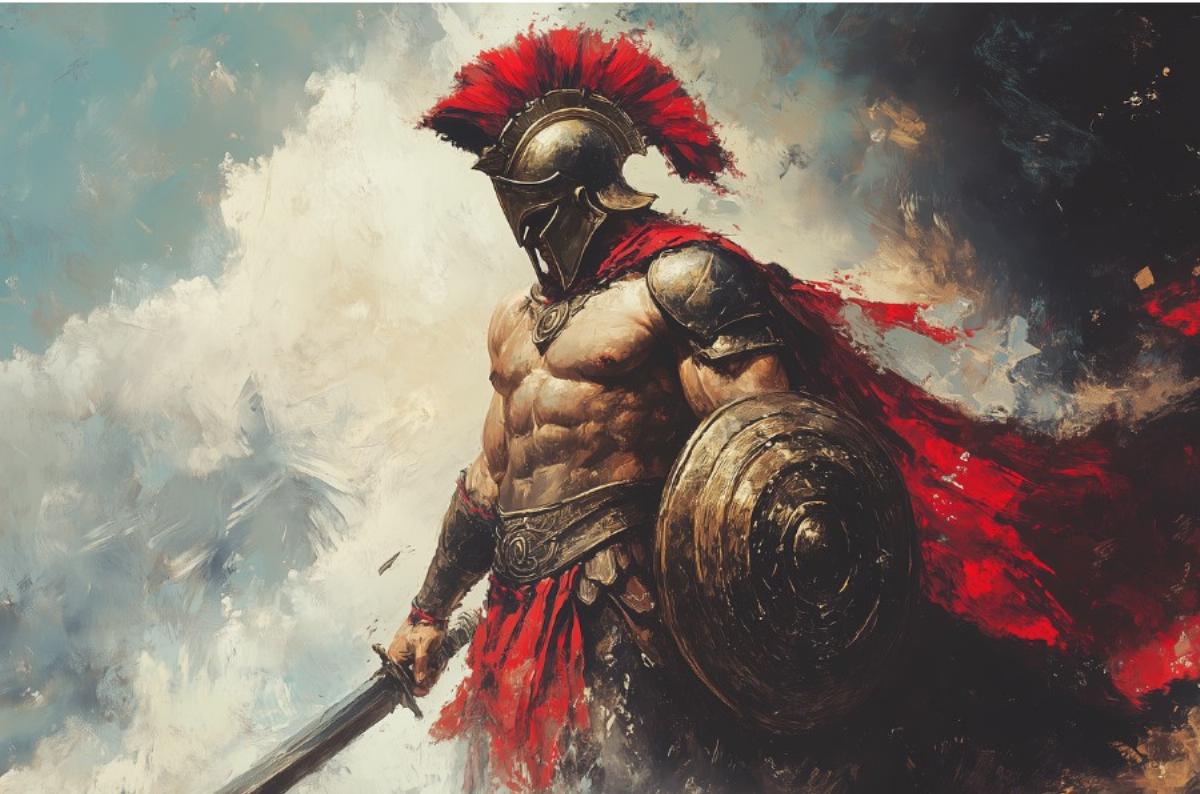
In World War II, the term “maximum effort” described the mobilization of air crews and equipment for bombing raids in Germany.
Read more A victory over the National Firearms Act
It involved putting up every airworthy aircraft, deploying every functional crew member, using all ground support members and logistics operations in 24-hour shifts for maintenance and servicing, and sending out multiple squadrons beyond their normal capacity, pushing men and machines to their limits and beyond.
In popular media, the 1949 film “Twelve O’Clock High,” about the U.S. Army 8th Air Force operating in England, used the term as the core concept of its story.
As the film’s Gen. Pritchard put it, “we’ve got to find out what a man can take, and get it all.”
Several military commanding officers were consultants to the film.
As filmmaking, it used an ingenious sound format: there was no music (except the brief opening and closing credits). The director, a pilot himself, said he wanted the sound of aircraft and maximum effort fighting to be the “score.”
If you look back on World War II, and many large-scale wars going back to ancient times, men and resources were pushed to their human limits. In the U.S. Revolutionary and Civil wars, not only were soldiers, horses, and more placed under extraordinary physical hardship, but in between that, had to make camp, hunt and forage for food, tend to wounds with little if any medicines, and slept, if at all, in the most crude and exposed makeshift arrangements in extreme temperatures, torrential rain, amid disease and mosquitos.
Men soldiered on with missing fingers and teeth, worn-out shoes, wounds, burns, hunger, and lack of sleep.
There’s a lot of current left-wing media that resembles classic wartime psychological operations, except that it’s directed at our own military and public confidence in it.
According to media reports, the food isn’t good enough, the beds are too uncomfortable, and soldiers have been deployed too long. Recent reports about the U.S.S. Abraham Lincoln are one example. The reported depletion of U.S. weapons stockpiles is another.
Even if some of these normal challenges occur, this has all the hallmarks of opportunistic war propaganda by U.S. enemies. Unfortunately, those enemies are domestic. The liberal media is merely revealing, however, their own personal threshold for mutiny and retreat: the hardship of life without Starbucks, iPhones, and down pillows.
But this reveals two important things: one, not surprisingly, is that the liberal left has little understanding of what warfare is — other than “lawfare” paperwork — nor does it have the stomach for physical endurance and killing that our U.S. and allied soldiers do. They underestimate our own fighting men and women, and they have a weak, defeatist psychology.
The other thing this kind of media narrative brings up, however, is the nature of a warrior culture. Some nations have it. Some don’t.
Read more China backs sham marriages with our citizens
In three thousand years of history, some societies were ruthless and victorious, made up of physically superior forces, weapons, training, leadership, and intellect. Others had no fighting culture and were conquered or slaughtered. The dividing line in social history isn’t quite that neat, and some nations prospered by avoiding war. As Sun Tzu advised in The Art of War, “win without fighting.” It is a strategy based on conserving resources and letting the enemy defeat themselves.
As the world is hosting two theaters of war that are poised to merge into one and escalate, the notion of “maximum effort” will become relevant again as Russia battles Ukraine; as Israel and the U.S. fight Iran; and as other nations assemble in competitive alliances.
With the advent of widespread drone technology, however, it is harder to take “maximum effort” doctrine quite as seriously, as the drone is by nature an unmanned fighting weapon, and it makes war and killing especially abstract, remote, and effortless. The risk-reward trade-offs are altered, and not in a good way. It’s too easy, and too removed from the demands of physical endurance and pure physical and mental stress that must go beyond normal limitations to win.
Perhaps the drone is the product of larger human physical and mental standards today. With the majority of adults physically out of shape, and with young college students even claiming “mental health issues,” it is uncomfortable to think about what this means in future fighting culture. Secretary of War Hegseth put it well when he described the “fat generals” among the command structure. This also reflects a passive youth culture fixated on phones, social media, and spending.
In Vietnam, the notion of “McNamara’s folly” is the subject of a recent work that chronicles the then government recruitment strategy, which relied on the use of substandard applicants who weren’t of the right psychological and physical makeup, and with disastrous results in combat.
With so much media attention on college and university students who have been “dumbed down” by progressive ideology, it is worrying to consider what the future military recruitment pool may consist of; how willing and able it is to fight; and whether it can put up a “maximum effort” outside of complaining and protesting.
The old “dons” of interwar England who ran Oxford and Cambridge, many of whom also served in, and contributed to war planning, are a glaring counterpart to today’s university culture: they represented standards and expectations that make most faculty and students today seem unready for life’s battles. As author Noel Annan wrote in his book The Dons, “A university is dead if the dons cannot communicate to the students the struggle to produce out of chaos some order won.”
It is a fighting philosophy. Today’s youth, by contrast, and the future recruitment pool, have a philosophy of entitlement.
In Twelve O’Clock High, a movie still used as a leadership training film, the commanding general, played by Gregory Peck, demonstrated what a maximum effort is, and combined it with the equally vital principle of pride. From that flows confidence.
Today’s US fighting soldiers have those qualities, and more, despite being undermined by their own liberal, if not traitorous, media, and by a misled youth culture that may not be as willing or able to fight when duty calls.
Matthew G. Andersson is a former aerospace CEO, management consultant, and author. He has testified before the U.S. Senate and is a graduate of the University of Texas at Austin, where he worked with White House national security advisor W.W. Rostow at the LBJ School of Public Affairs.
Read more You’re easier to find than you think
Image: Pixabay // Pixabay License