
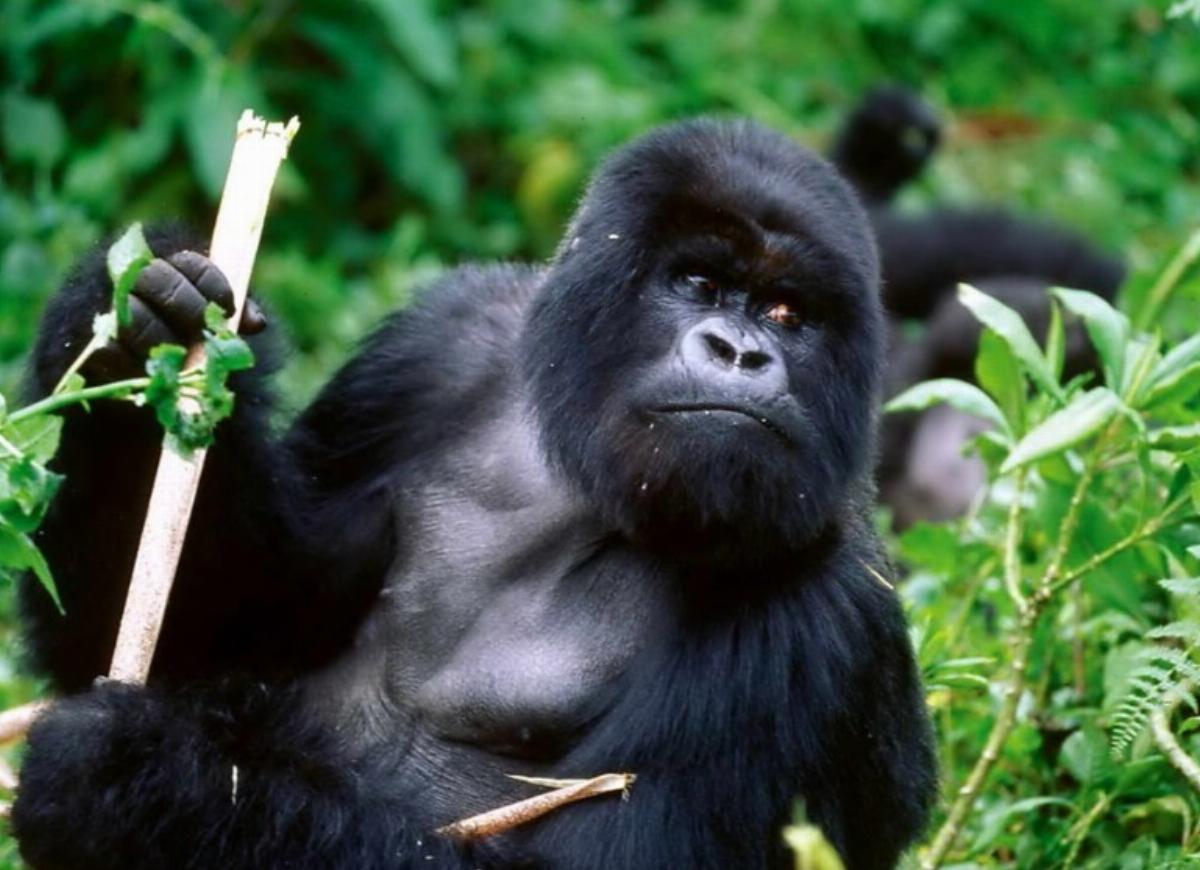
Charles Darwin’s natural selection, as people commonly understand it, actually includes three separate mechanisms: heredity, variation, and selection. The heredity mechanism involves the reproductive transmission of genotypes from one generation to the next. Variation refers to random fluctuations of common genotypes. Lastly, selection pertains to mechanisms that reward (or penalize) inevitable gene alterations, thereby allowing some permutations to dominate a population.
Read more Evidence of cultural decline seen at the dog pound
Experts debate whether social systems can directly apply the Darwinian setup (known as Generalized Darwinism). However, the ideological sphere offers an attractive and direct correspondence to Darwin’s three vehicles of natural selection.
Heredity may be associated with the endurance of an ideology that governs society, as humans successfully transmit it from one generation to the next. Changes in ideology, driven by never-ending challenges, could lead to variation. Selection could be tied to the method society chooses to address those challenges. Therefore, ideological evolution could be explored through the lens of Darwin’s theory.
Traditionally, the dominant sentiment is that people assign the role of the variation instrument primarily to left-wingers, the selection mechanism predominantly to right-wingers, and the role of the heredity (retention) component overwhelmingly to the apolitical (non-ideologically engaged) population. That functional asymmetry is well acknowledged. All three must be present in society to ensure proper (and competitive) advancement. All three create necessary (but not sufficient) conditions for society’s members to keep going (and succeed) in the face of ever-present, all-encompassing unfairness.
Without conservatism, social evolution would be as directionless as biological evolution. Nature does not follow a predetermined course; its mutations are pointless random walks. Within this framework, without conservatism, there would be no progress in society despite numerous mutations. In the sphere of ideology, there would be no natural selection without conservatism. Finally, without conservatism, human society would have no purpose, because one of the foundations of Darwinism is that biological species have no collective purpose or defined goals.
Conservatism is society’s modus operandi for moving forward, complemented by controls that prevent slipping backward. Collectivism is a scalar; conservatism is a vector. Conservatism is the only recorded human tool capable of precisely orienting society’s development axis between the Scylla of chaos from under-governance and the Charybdis of tyranny due to over-governance. Nevertheless, again, conservatism is not the engine; it is the rudder of society.
Conversely, social evolution is argued and maintained primarily by conservatives. In the biological evolutionary race, Mother Nature has no idea where the finish line is or even whether there is one. In social evolution, the endpoint is unobservable, but there are many arguments for its existence. Biological evolution is a two-way street; conservatism makes social evolution a one-way street (with many potholes and bumps, of course).
Conservatism functions like an ideological semiconducting diode, allowing society to move forward and upward. Note that conservatism — made clear by its etymology — seeks to conserve something. That “something” is the orientation of society’s evolution.
From that consideration, conservatism long precedes liberalism. Pre-Enlightenment humans instinctively sought an idea selection apparatus that could serve as a negative feedback loop in society’s development. After the Enlightenment, that instinct-based selection process received proper recognition as the reason-based force that facilitated (and continues to maintain) the evolution of freedom. Society perpetually de-transitions from omnidirectional left pursuits into the austere choppers of the right selection process. The system passes on whatever ideas endure to the next generation, resulting in the visible evolution of freedom.
Biological evolution always operates isotropically, with Mother Nature permitting mutations in all possible directions (though only a small number carry on). Social evolution is inherently anisotropic: Conservatives usually supervise society’s self-administered evolutionary procedure. The fact that human society has not been blown asunder so far suggests that conservative ideas appeared at the same time society came into being.
Read more Crumpled American flags found in AOC’s trash can, Democrat operative recounts
Moreover, biological evolution is non-teleological (consequential but non-purposive). In contrast, social evolution is teleological: It is incoherent, illogical, and intermittent, but ultimately, it has a directive principle toward a higher degree of freedom.
The role of information is one of the most overlooked characteristics of evolution, both biological and social. Only an uninterrupted supply of all available information enables the evolutionary selection mechanism to function. Only information exchange between an individual and his environment allows the selection formula to decide what is worthwhile. In other words, evolution could be effectively stopped if the information channels were closed.
From that perspective, consider central planning. In such an economic system, prices are commandeered and not established naturally. That implies that information about actual prices (normally manifested via free, voluntary exchange) is missing, so producers do not know what customers really want. Central planning prevents prices from performing their evolutionary selection function because it lacks the necessary information.
In another example, review strict sharia law, where women must cover their bodies from head to toe in public. It shuts down the flow of information between women and men. Men no longer make mating decisions based on a woman’s characteristics; their choices are solely grounded in financial availability or tribal customs. Thus, women in such societies are, for all practical purposes, expunged from evolutionary pressures, and it eventually spills over into men’s evolution (or rather, a lack thereof). Consequently, men customarily treat women like cattle and devolve back into an animalistic state. Under severe sharia, women, for the most part, have no right or means to contribute to evolutionary selection. As a result of the ensuing devolution, men in such societies lack the cognitive capacity even to recognize this issue.
To summarize, social and biological evolution demands free information exchange. Halt information exchange, and evolution stops or, more often than not, reverses. From that perspective, the “sudden” appearance of miniskirts and bikinis was expected. This phenomenon represents women’s evolutionary response to a male-dominated world. The selection setup was right there; it offered evolutionary advantages to women who could wear miniskirts and, to some degree, prevented women who could not from passing on their genes to future generations. Similarly, the absence of reliable price information in countries that practice central planning forces them to rely on unrealistic, ephemeral prices, leading not to genuine success, but to transient success.
The notion that societies mimic some features of biological evolution does not mean that they obey the same laws as living organisms. Instead, it conveys a shared principle: Robust systems require tools to generate variation, preserve what is effective, and explore alternative paths. If a society stifles innovation, it will eventually stagnate. A society that discards beloved inherited institutions risks losing the wisdom needed for long-term stability.
If information is the currency of evolution, freedom is what facilitates that currency’s circulation. Free inquiry, open debate, voluntary exchange, scientific critique, artistic expression, and political competition all widen the field of information from which societies learn. Censorship, ideological conformity, concentrated power, and tight social control constrict the landscape and reduce society’s capacity to flourish.
Civilizations survive, whether through Darwinian evolution or political theory, not by doing away with the struggle between old and new ideas. Rather, they safeguard institutions that can transform this clash of ideas into understanding and lasting progress.
Read more The biggest story of all is untold: The media’s refusal to tell the truth
Image via Pixnio.