
Since the release of Anthony Fauci’s diaries, there has been a question floating around: has there ever been a previous American as narcissistic as this guy?
Read more Opposing ICE? Try some split second decision-making
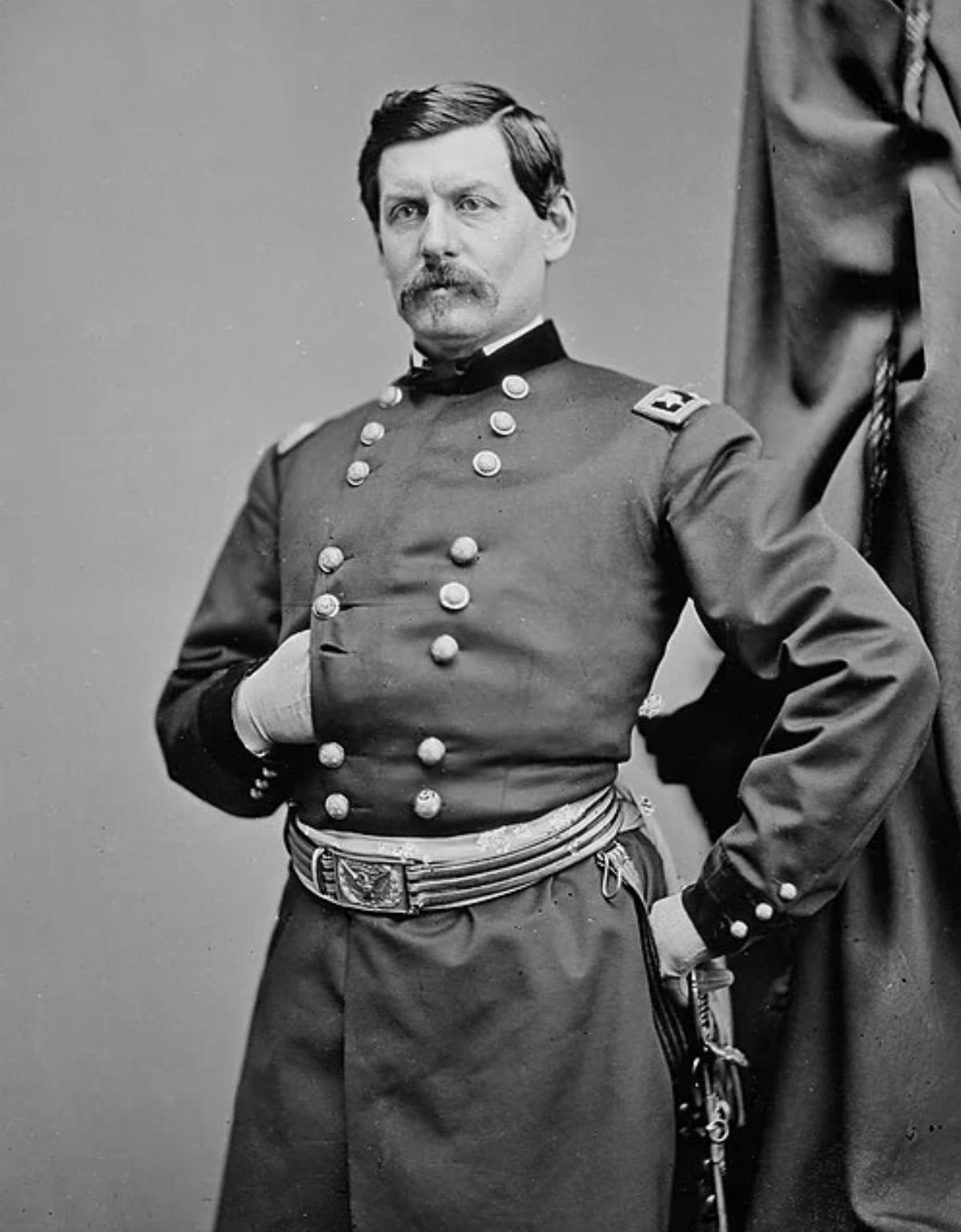
Well, difficult as it is to believe, there actually was. His name was George B. McClellan, and he was the commander of the Army of the Potomac during the first years of the Civil War.
It may seem difficult to impossible to outdo Fauci’s record of page after page detailing how many covers he appeared on, how many shows, how many times he was quoted, and how many A-listers he knew, but McClellan did bring off a few things that were closed to the Messiah Bureaucrat.
McClellan was a successful railroad executive when the war began. He was immediately appointed the commander of the Ohio Volunteers by the state government. He’d had a successful Army career, graduating second in his class at West Point in 1846 and serving as an engineering officer under Winfield Scott during the Mexican-American War.
McClellan became commander of the Army of the Potomac in July 1861. At first, he did well, reorganizing Union forces and transforming a chaotic mess into a force capable of taking action. If that had been it, McClellan would be praised as a minor but critical wartime figure. Instead, he was promoted up to and beyond his level of incompetence as overall commander of Union forces.
It was here that things began falling apart. In March 1862, McClellan and the Army of the Potomac embarked on the Peninsula campaign. On the surface, it appeared brilliant: land the army on the James peninsula, march up the river to Richmond to take the city by coup de main, striking a critical blow to the Confederacy. But instead, McClellan dawdled far east of the city, sending hysterical messages to Lincoln insisting that Robert E. Lee had hundreds of thousands of troops. (Lee actually had about 85,000 to 90,000 men.)
McClellan didn’t get moving until late June, giving Lee all the time in the world to gather his forces and fortify the city. Reaching Richmond, he engaged in a flurry of battles — the Seven Days battles — almost all of which were draws or Confederate victories. At last, he did what he should have done in the first place: force Lee to attack a fortified position at Malvern Hill on July 1. Then, having won a clear victory, he packed up his army and headed back north.
In September, after Lee, emboldened by McClellan’s lack of initiative (at one point, Lincoln wrote to ask him that, since he wasn’t using the Army, perhaps he could borrow it?) invaded the northern states. A federal officer found an interesting package in a field: several cigars wrapped in a sheet of paper that turned out to be Lee’s orders to the Army of Northern Virginia. This was sent to McClellan, who, instead of calling in his officers for orders, burst out of his tent and raced around the camp shouting, “I have him. I’ve got Bobby Lee!”
A local civilian with Southern sympathies overheard him and immediately contacted the Southerners, once again giving Lee, never a man to waste an opportunity, time to pull his army together. The battle of Antietam, instead of being a clean sweep for the North, turned into a day-long slog resulting in nearly 23,000 casualties, with McClellan “victorious” simply by holding on.
Read more COVID-era inflation
Lincoln let McClellan go in November. A man who held every card in the deck and threw them away one by one.
But you wouldn’t think that if you listened to McClellan himself. We know exactly what he thought, thanks to his letters to his wife Ellen. “By some strange operation of magic,” he wrote her in July, 1861. “I seem to have become the power of the land.”
That’s right. The entire government — President Lincoln, the cabinet, and Army chief Gen. Winfield Scott — all waited anxiously to hear what McClellan had to say, unable to come to a decision or make a move without his go-ahead. And beyond that: ”The people call upon me to save the country — I must save it and cannot respect anything that is in the way… I have conversation after conversation calling on me to save the nation.”
It goes on like this page after page, one blast of rampant egomania after another. It’s too bad there was no mass media at the time. He’d have had more to write Ellen about.
And when he wasn’t polishing his halo, he was dropping absolute contempt on everybody he was working with. Winfield Scott, who had served the country for over fifty years, was a “perfect imbecile” and a “traitor.” His nickname for Scott was “Dunky,” which means exactly what you think it does. McClellan worked to undermine Scott with some success – he forced him into retirement in November 1861, taking over as general-in-chief and doing a worse job than Scott had ever done.
He tried to do the same with Lincoln, whom he dismissed as a “baboon’ and “gorilla.” At one point he told his wife that he had been advised by many people to “take the army and march on Washington.” (Now we know where Mark Milley gets his ideas.) He topped this off by running against Lincoln in 1864, failing in that too.
As the song goes, those were different times. So it’s hard to say whether George McClellan actually outdoes Anthony Fauci in the demented, over-the-top narcissist race (at least he didn’t kill as many people). But to my mind, running for the presidency clinches it. Come on, Tony. Go for it. 2028 is right around the corner.
Read more The Mohammunist Manifesto’s Inequality Before the Law
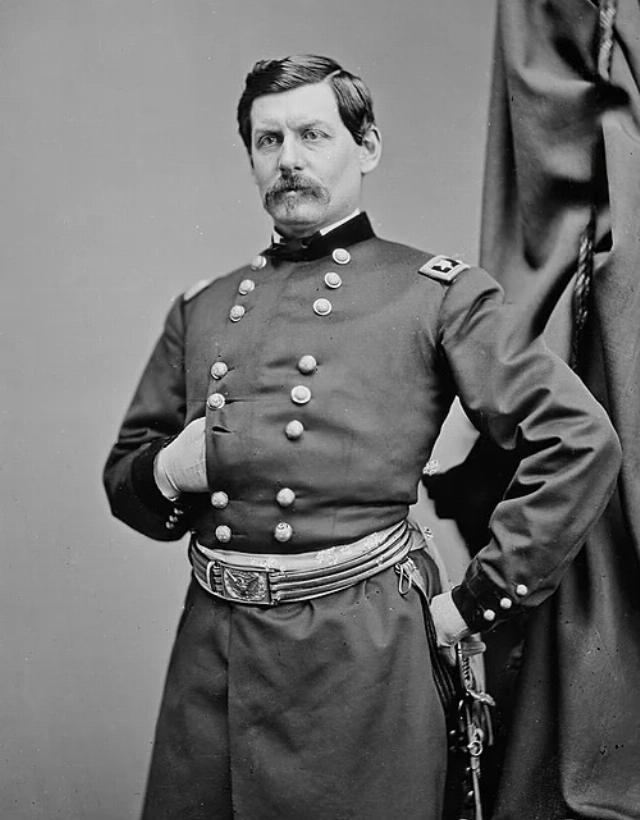
Image: National Archives