

The socialistas are taking over the Democrat party, and the establishment Democrats are so addicted to power and corruption that they just don’t care. They will say or do anything to save their seats (and stay out of prison).
Read more Why voting is not a right but privilege
Their only strategy is to demonize President Trump and oppose everything he does, even when he helps their own constituents. If the Democrats win the midterms, the radical socialistas will run the show.
First and foremost, election integrity is everything. Anyone who says fraud isn’t rampant is living on another planet. President Trump’s explosive revelations last Thursday may finally force the RINO Senate to pass the SAVE America Act and secure our ballots.
To win as many seats as possible, we have to pick America First candidates in the remaining primaries and support them with everything we’ve got.
But the old way of running political campaigns is no longer effective.
Every election cycle, grassroots candidates for Congress, state house, and county seats are handed the same playbook by high-priced establishment consultants: “Raise hundreds of thousands of dollars, hand them over to a media firm, and generate polarizing TV ads and glossy mail pieces.”
Voters are completely sick of it. They don’t trust focus-grouped political ads, they change the channel, and they throw glossy campaign mail straight into the recycling. As one voter put it, “they send me flyers I will never read, asking for money I can’t afford, so they can send me more flyers I will never read.”
When candidates buy a polished, million-dollar ad campaign, they instantly signal to voters that they are part of the very establishment that has failed to fix their family’s critical pocketbook issues.
To win against well funded incumbent machines and the liberal media, conservative candidates must change how they talk to the people.
The answer is a new approach: The Un-Campaign.
Grassroots candidates can flip the script on the establishment by using a strategy first mastered in the entertainment world. This is the approach that propelled Spencer Pratt to massive success in über-liberal California — before his second-place finish was stolen.
Pratt gave a master class on how to beat the system and talk directly to the people. He bypassed traditional media gatekeepers and rejected expensive, polished public relations campaigns. Instead, he used his cell phone to create raw, high-frequency, unscripted videos and encouraged his supporters to share his message. He didn’t spend a dime on paid advertising.
By using free, vertical-video platforms like TikTok, Instagram Reels, and YouTube Shorts along with local digital channels, down-ballot candidates can get more reach, real authenticity, and deeper voter trust. They can replace fake, focus-group talking points with a raw look at real-world issues that matter to voters.
A successful low-cost, organic campaign doesn’t broadcast the same generic message to the whole district. Instead, the candidate uses daily, smartphone-shot videos to speak directly to the real-life pressure points of three specific voter groups we need for a conservative victory.
1. The Wary Conservative (“The Turnout Risk”)
Every midterm race has reliable, right-leaning voters who just stay home. They aren’t unpatriotic; their main frustration is watching their local and state government become a black hole for their hard earned tax dollars. They feel that their vote will do nothing to end government waste and broken promises.
Candidates can reach these voters by acting as a citizen-journalist, pulling back the curtain on incompetent government taking their smartphone directly to local examples of government failure — like an abandoned municipal project or a wasteful county building. By exposing these failures in unedited videos, the campaign converts voter frustration into a strong motivation to show up.
Read more ‘The science’ speaks for itself — until it’s subpoenaed
2. The Disaffected Democrat (“The Defector”)
Across the country, millions of traditional working-class Democrats feel left behind by their party’s insane shift toward hyper-liberal policies and progressive social engineering. But they won’t vote for a conservative if they see only aggressive, multimillion-dollar partisan attack ads funded by national PACs.
To win them over, the Un-Campaign focuses on kitchen-table economic realities, the rising costs of basic survival at the grocery store, sky-high utility bills, and the ever rising cost of local child care. Candidates can reach the Disaffected Democrat with real empathy and clear, commonsense solutions. This gives lifelong Democrats the cultural permission they need to cross over and vote for a local conservative.
3. The Pure Independent (“The Outsider”)
Suburban independent voters are the fastest growing and most unpredictable part of the electorate. They despise both major political parties and tune out anything that sounds like standard political talking points.
Independents are laser-focused on real local infrastructure and immediate public safety. They worry about suburban property crime, regional drug-trafficking, and whether their local water lines and power grids are going to hold up. The candidates must be seen as a practical, commonsense outsiders who don’t care about national culture wars and share their no-holds-barred message through hyper-local digital communities.
The Un-Campaign must generate video content on a daily basis and commit to a strict schedule, putting out real-time local observations every single day.
Candidates must deploy distinct content strategies tailored directly to where each voter group hangs out online. For Wary Conservatives, the candidate will focus on government incompetence and waste by broadcasting unedited, on-site project analyses directly into closed civic groups and localized online forums. To reach Disaffected Democrats, the message shifts toward the everyday cost of living and basic survival, utilizing high-empathy, kitchen-table economic discussions shared in non-political community spaces. Finally, to win over Pure Independents, the content will highlight physical safety and local infrastructure through practical structural breakdowns, distributed across hyper-local social media networks.
Because this approach relies on free social media algorithms and authenticity, the absolute best weapon is surprise. Traditional campaigns are slow, bureaucratic, and restricted by rigid ad schedules. When a conservative candidate deploys a high-frequency, unscripted Un-Campaign, the opposition’s highly paid consultants do not know how to respond. They are trained to fight traditional TV ads, not a fast-moving, organic network powered by real people.
To keep this advantage, the exact operational tactics, targets of exposés, specific video scripts, and local distribution channels must be kept confidential.
If the opposition find out about this methodology early in the race, they will change their own media buys or coordinate counter-narratives to block the candidate’s organic reach. By keeping strict operational security about how content is built and where it is posted, a down-ballot Un-Campaign ensures that by the time the establishment realize they are losing, the bond with the voters is already unbreakable.
Run Different. Win Lean.
By using the Un-Campaign approach, conservative candidates can reduce the financial barriers to running for public office. By turning themselves into an unscripted, high-frequency media channel using a smartphone, they can build an unshakeable bond with voters without wasting money on traditional political agencies.
This approach simply requires a candidate who is willing to show up, film the truth, and deploy a hyper-targeted, confidential digital strategy.
Jack Gleason is a conservative, commonsense political consultant at the municipal, state, House, Senate, and presidential level since 2009. His email is [email protected], and his always-free Substack is jackgleason.substack.com.
Read more The ‘paper’ price of oil is a fiction
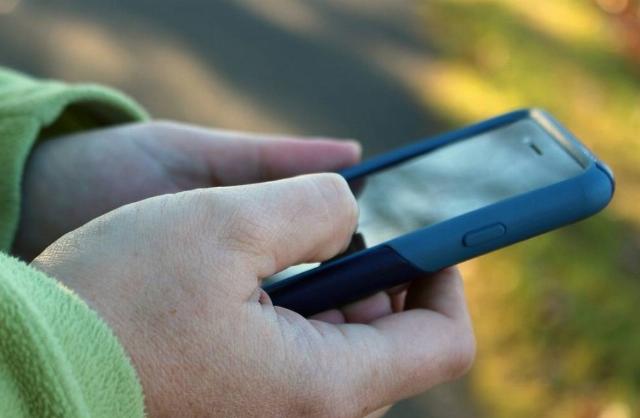
Image via Picryl.