
President Ursula von der Leyen’s European Commission (E.C.), the administrative arm of the European Union, just fined Google an additional $1 billion on top of the $12 billion that it had already fined Google. Google’s crimes include such infamies as ranking its own (free!) flight search services above similar competitors on its search pages.
Read more Stylin,’ stylin,’ stylin,’: Get a load of the new conservative president of Peru
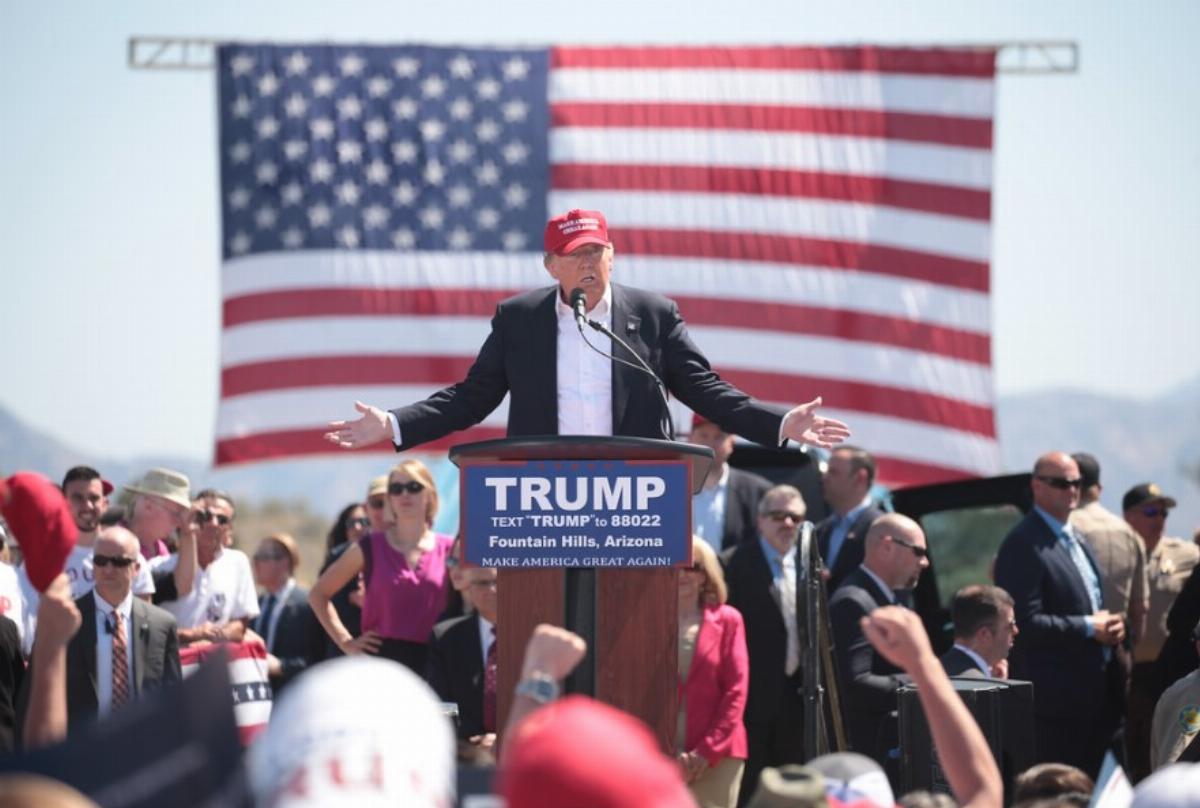
In response, on July 24, President Trump tweeted on Truth Social:
The European Union is at it again and, as usual, taking direct aim at GREAT American Companies! … [W]e have just been informed that Google, a truly advanced and amazing group, has been fined yet another 1 Billion Dollars. … [W]e will immediately initiate a 301 Investigation into the practice of “ROBBING” American Companies and, in turn, the American Taxpayer …
Next, the office of U.S. trade representative Jamieson Greer will determine, under Section 301 of the U.S. Trade Act of 1974, whether the European Union is acting in a way that “is unjustifiable and burdens or restricts United States commerce.”
As shown in the chart below, of the 15 companies that have been fined the most by the E.C., 6 are headquartered in the European Union. Four American companies have been fined $2.5 billion or more by the E.C., which is actually more than twice the highest total amount that it has leveled against any European company.
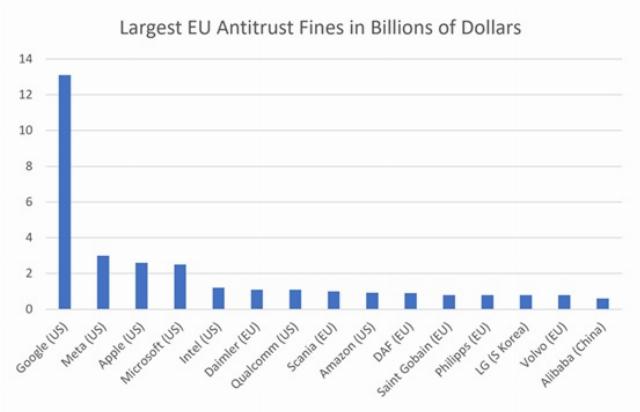
The E.C.’s looting of American companies has continued ever since President Obama did nothing after the E.C. looted Intel in 2009. From 1978 until 2008, Intel had been the most dynamic computer chip company in the world, doubling desktop computer speed about every two years. After fining Intel $1.2 billion, the E.U.’s antitrust chief Neelie Kroes made her motivation clear. She bragged:
I would like to draw your attention to Intel’s latest global advertising campaign which proposes Intel as the sponsors of tomorrow. Well, now they are sponsors of the European taxpayers of today.
Since then, Intel has had to devote much of its attention to avoiding future government looting. It has become a shadow of the dynamic company that it was back then. In 2025, its revenues were less than its 2011 revenues.
When Are Antitrust Prosecutions Legitimate?
Some antitrust prosecutions are economically legitimate. When Congress passed the Sherman Antitrust Act in 1890, some American deal-makers were combining all of the large competing companies in an industry so they could gain the monopoly power needed to raise the prices of their products. Breaking up such trusts was economically justified in order to reduce prices for the consumer.
But there is no economic justification for looting technological leaders in order to prevent them from profiting from the monopolies that their leadership earned. These companies make enormous profits, and they invest a large part of those profits into the research that drives economic growth, according to economist J.A. Schumpeter, whose work led to the Endogenous Growth Theory, the dominant modern theory of long-term economic growth.
Companies with technological leads invest enormous amounts of money into research in order to stay ahead of their competition while expanding markets for their products. Google on capital expenditures in 2025, almost a quarter of its total revenue.
Read more Mamdani launches his government groceries: What could go wrong?
Schumpeter’s favorite example was the Aluminum Corporation of America. Even though its patent protection expired in 1909, it continued to engage in “cost-reducing research, in the economic development of the productive apparatus, [and] in teaching new uses for the product” (note 20, pp. 101–102). It maintained its near monopoly for decades while it simultaneously reduced aluminum prices and expanded aluminum output.
Schumpeter wrote about ALCOA way back in 1943. The intervening years have shown again and again that he was correct. Since World War II, companies that have had technological monopolies have continued to propel economic growth through their research. These innovative companies have included AT&T, IBM, Intel, Microsoft, Amazon, Meta, Apple, and Google. As the winners of the 2025 Nobel Prize in Economics reaffirmed, “innovation provides the impetus” for sustained economic growth.
Harm to the U.S. Economic Future
The E.C. has been bleeding American technological leaders of the profits that they could otherwise have devoted to innovation. By doing so, it is suppressing future U.S. and global economic growth and is making future Americans less rich than they would otherwise be.
It has also begun to use its fining power to suppress U.S. free speech. On December 4, 2025, it announced that it had fined X $136 million for three trivial reasons:
- “X’s use of the ‘blue checkmark’ for ‘verified accounts’ deceives users.”
- “X’s advertisement repository fails to meet … transparency and accessibility requirements.”
- “X fails … to provide researchers with access to the platform’s public data.”
Elon Musk responded in a tweet:
The European Commission offered X an illegal secret deal: if we quietly censored speech without telling anyone, they would not fine us. The other platforms accepted that deal. X did not.
Fortunately, President Trump is going to stop the E.C. At the end of his tweet, he wrote,
The European Union will pay a very big price for this illegal and highly unethical conduct, which I have consistently warned them about. The penalties will be entirely reversed and, we anticipate, a substantial TARIFF to be placed on them at the earliest possible moment. Stay tuned!
The European Union’s economy is only growing at a 0.8% rate this year, as compared to the 2.1% rate in the United States. The E.U. and U.S. economies were the same size in 2010, but the U.S. economy is currently about ten trillion dollars larger. Having failed to produce European growth through excessive regulation, the E.C. is now trying to make money for the European taxpayer at the expense of U.S. economic growth.
The Richmans co-authored the 2014 book Balanced Trade, published by Lexington Books, and the 2008 book Trading Away Our Future, published by Ideal Taxes Association.
Read more Somali cultural enrichment
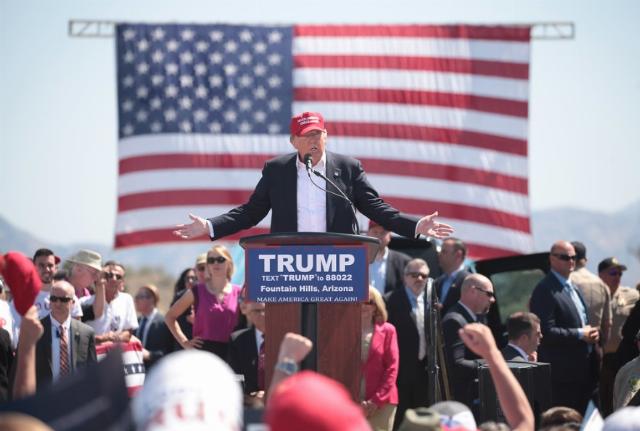
Image: Gage Skidmore via Flickr, CC BY-SA 2.0.