
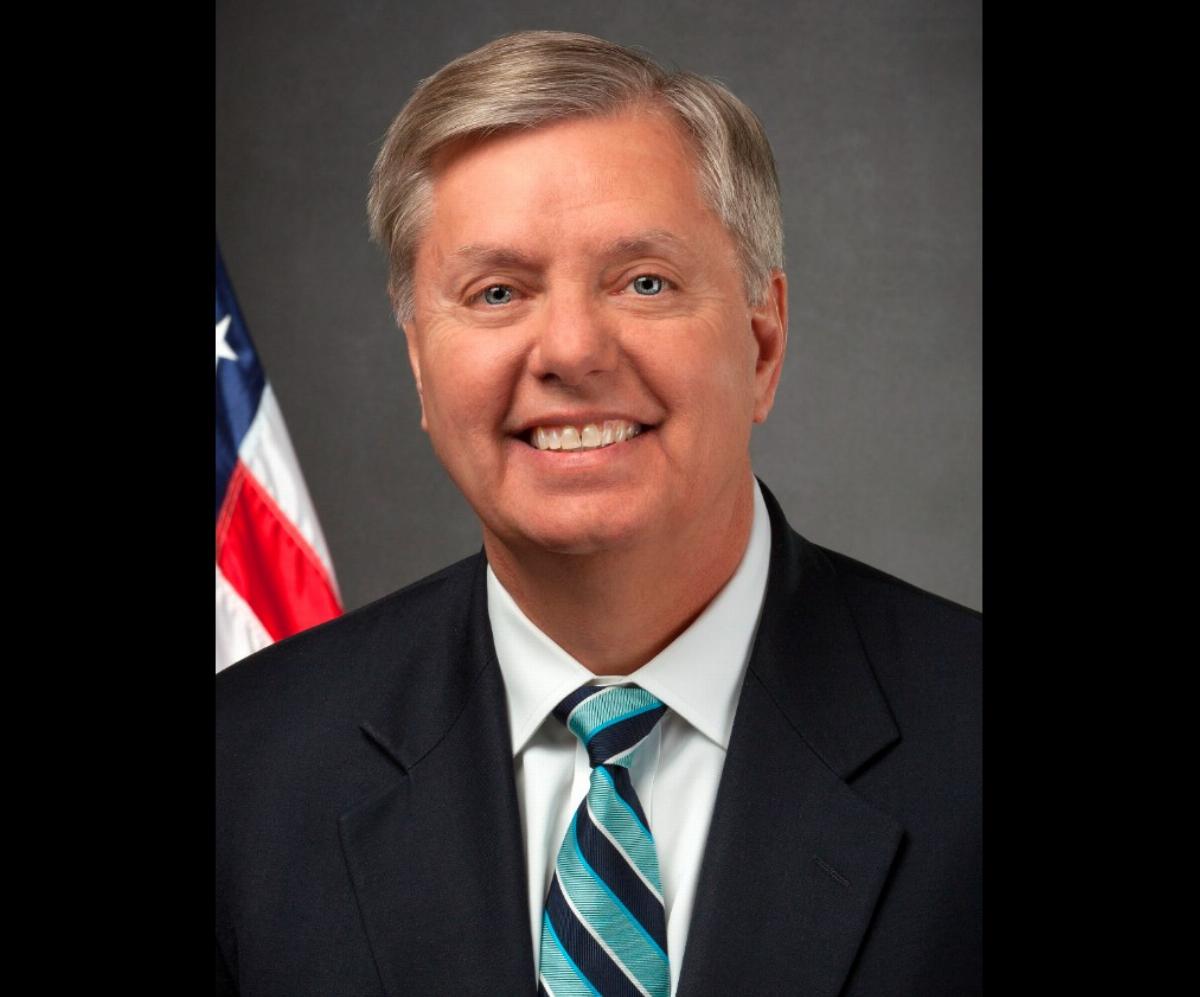
Lindsey Graham’s sudden, unexpected, death from an aortic dissection on July 11 left Washington reeling.
Read more Corporate Journalists Have Earned Our Mockery
One day the senator was pressing hard on priority legislation. The next, D.C. confronted an empty desk and a sudden gap in its ranks.
The loss hit hard because Graham was never a background player. Love him or hate him (indifference toward his boldness was scarce), the man forced attention, demanded results, and refused to soften his core convictions for comfort.
Born in 1955 in small-town Central, South Carolina, Graham grew up in the tight quarters behind his parents’ Sanitary Cafe, a working-class bar and pool hall that defined the family’s daily grind. His mother died of Hodgkin’s lymphoma in 1976. His father followed 15 months later from a heart attack.
At 21, the orphaned young man took legal guardianship of his 13-year-old sister Darline. He kept her on track through school and into college while finishing his own degrees. That early burden built the self-reliance and plain sense of duty that never left him. He understood hard work, loss, and responsibility long before ever entering politics.
After earning his law degree, Graham joined the Air Force as a judge advocate. Active duty from 1982 to 1988 included a posting in Germany. He would stay in the reserves and National Guard for a total of 33 years. Graham retired as a colonel in 2015. He volunteered for legal work in Iraq and Afghanistan, earning a Bronze Star for service in Operation Enduring Freedom.
Military service, which he made time for despite an incredibly demanding second career, was not a talking point for Graham. It was the core of his belief that American strength is the only reliable shield against worldwide chaos.
Graham, an ancestral Democrat, switched parties in 1992. Even then, the blue party was lurching too far leftward for many of its multi-generational supporters. After one term in the South Carolina House, he became a congressman in the 1994 Republican wave and moved to the Senate in 2003. There, his defense hawkishness made him a close ally of Arizona Sen. John McCain. They championed the notorious neoconservative foreign policy of President George W. Bush.
Among other things, Graham backed free-trade agreements, and more infamously, mass immigration, and illegal alien amnesty. Those positions matched the Bush-era GOP establishment. They later became the precise policies the Republican base rejected as abhorrent.
Graham’s rationale for overseas interventionism never shifted. He viewed American leadership as the difference between order and the advance of predators like Tehran’s theocrats, Moscow’s tanks, Beijing’s ambitions. He supported sustained operations in Afghanistan, Iraq, Syria, and against the Islamic State. Graham believed half-measures invite greater bloodshed later.
Even as large parts of the GOP grew hostile to neoconservatism, Graham held the line. He judged isolation a luxury the free world could not afford.
In 2015, he ran against Donald J. Trump in the presidential primary and attacked him with profound hostility, calling him unfit and dangerous. After Trump won the 2016 general election, Graham began working with Republicans’ new reality. The decisive shift came after McCain’s death two years later. From that point, he evolved into a vital ally.
Brett Kavanaugh’s 2018 Supreme Court confirmation hearings marked the sea change. Graham launched an emphatic defense of Trump’s nominee against a coordinated Democratic smear campaign. He exposed the blue weaponization of the confirmation process. This earned him accelerating respect from voters who had intensely disliked him.
Graham faltered after the 2020 election, particularly the events of Jan. 6. He accepted Joe Biden’s purported victory and condemned Trump for violence at the Capitol. The backlash from Republican voters was sharp and deserved. Yet Graham recovered swiftly. In Trump’s second term, he emerged as one of the most effective Senate partners for the presidential agenda.
Read more As Government Grows, Our Freedom Shrinks
As Budget Committee chairman, he helped drive Trump’s major tax cut-and-border security package known as the One Big Beautiful Bill, keeping particularly acute pressure on election integrity. He became a tireless advocate for the SAVE America Act, the measure requiring proof of citizenship for federal voter registration, among other pivotal reforms.
On the day Graham died, he told Trump that the path for the SAVE Act was clear and the bill could be secured. That was Graham at his most characteristic: focused on results until the final conversation.
No senator defended Israel more consistently or confronted the Iranian Islamist terror regime more directly. Graham rightfully treated the theocracy in Tehran as a direct threat to Western civilization itself. He backed Israeli self-defense without apology. He rejected any nuclear deal that left the mullahs with enrichment capacity. He called for the removal of the ayatollahs so the Iranian people could be free, after generations of unfathomable systematic abuses.
For him these were not optional causes. They were tests of whether the West still had the will to defend its own existence against a rising tide of Islamism that plants a black flag against free societies.
Graham’s record is complex and cannot be sanitized. Early on, he embodied much of the pre-Trump Republican establishment the base came to despise. Yet from the Kavanaugh fight forward, he reinvented himself as a growing Trump ally without abandoning his central principles.
Graham never fully discarded his Bush-era stances, which today’s Republican voters overwhelmingly despise. That tension makes him a twilight figure to most of the GOP electorate. Still, his later record is unmistakable: on judges, border security, tax relief, election integrity, and confronting the enemies of the West, he delivered for the priorities that got Trump elected.
Beyond Republican, or even American, politics, Graham was a warrior for the reality of Western civilization, not its distorted woke caricature. His defense of Israel and his demand that Iran be freed from Islamist rule flowed directly from that commitment. As did so many other noble things.
In the Senate, Graham was remembered as a happy warrior of boundless energy who put service first and never lost his drive. His relentless work for South Carolina was lauded, and his role in delivering major tax relief that reached ordinary families did not get memory-holed. He was described a patriot who understood the difference between good and evil on the world stage and refused to blur it.
Graham was deemed a larger-than-life force on national security whose absence leaves an empty desk that cannot be filled.
Graham could have remained a destructive influence of the President Bush mold. Instead he adapted, fought for President Trump’s core issues, and proved useful when the stakes were highest. Standing at the bar of history, Republicans should judge Lindsey Graham to be a protagonist. He was flawed, and sometimes infuriating, yet ultimately on the side of the strength and clarity the country requires.
Remember the full life. The orphaned young man who raised his sister. The colonel who stayed in the reserves, earning far less than a fast-food restaurant manager. The Western loyalist who refused to abandon allies. The senator who, late in the day, helped secure the gains of a political realignment he once reviled.
The lessons of that complicated career, and the man who led it, will shape the GOP, the United States, and the contests still ahead. Including the midterms.
Dr. Joseph Ford Cotto is the creator, host, and producer of News Sight, delivering sharp insights on the key events that shape our lives. He publishes Dr. Cotto’s Digest, sharing how business and the economy really impact us all. During the 2024 presidential race, he developed the Five-Point Forecast, which accurately predicted Donald Trump’s national victory and correctly called every swing state. Cotto holds a doctorate in business administration and is a Lean Six Sigma Certified Black Belt.
Read more The More They Said ‘Trust Us,’ the Less America Did
Image: Official portrait, via Wikipedia // public domain