
There is a very direct and profound leadership lesson taught at the United States Naval Academy: bad news does not get better with age. Critical information must be passed on early and accurately. One should never be the last person holding information that would enable leadership to make informed decisions and take timely action.
Read more Rutgers Law podcast puts university oversight of affiliated centers under scrutiny UPDATED
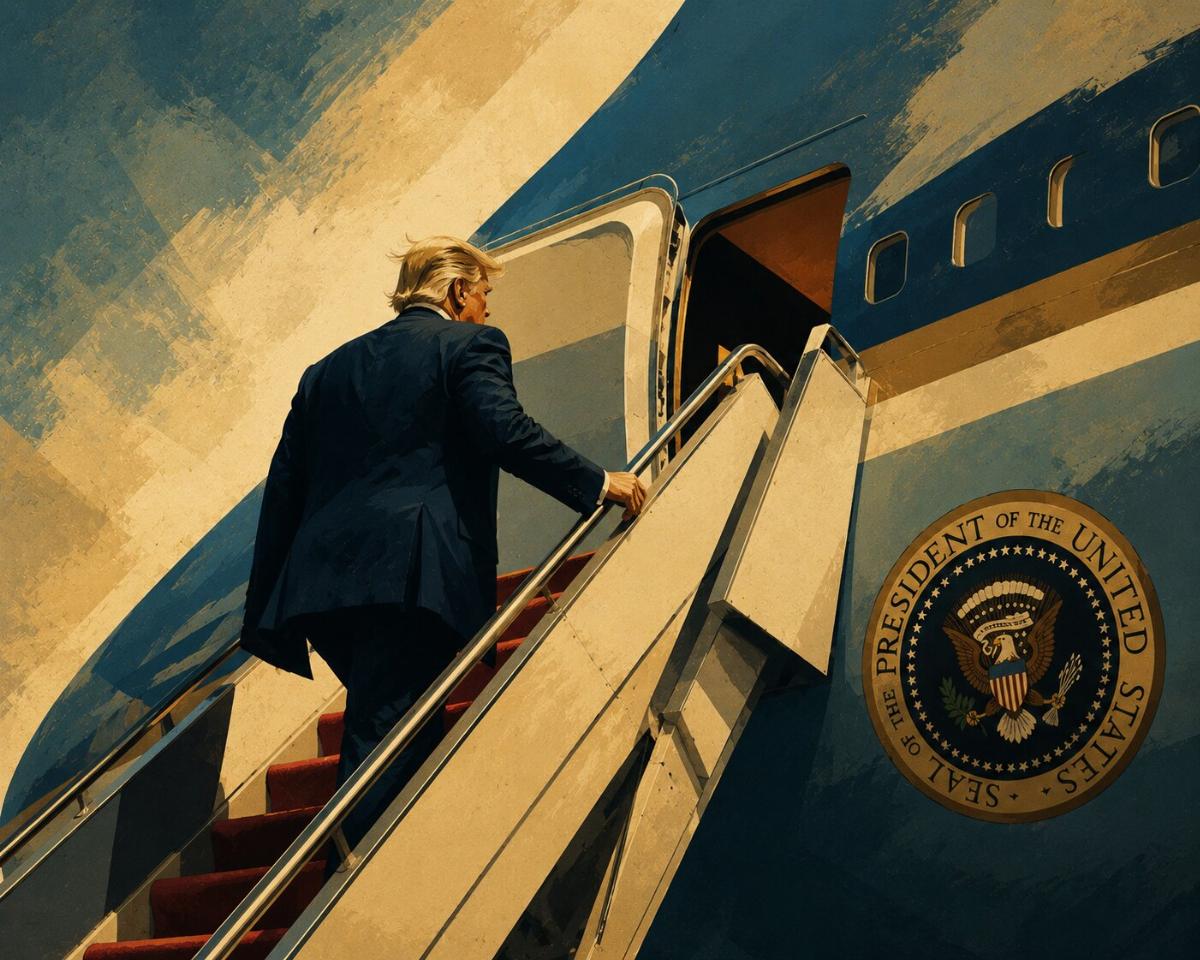
That was the issue addressed by the New York Times when they reported that the new Air Force One was vulnerable to modern threats that could have put the aircraft in mortal danger while carrying the president of the United States.
New Air Force One Lacks Defensive Countermeasures of Previous Model, Officials Say
Experts said the lack of such capabilities poses a potential risk when the president travels overseas. The White House defended the aircraft’s safety.
This is neither a partisan point nor a press-bashing issue.
It is the responsibility of government officials to keep extremely sensitive information securely contained, and they’re equally responsible to do something about it in classified channels—but that doesn’t always happen.
When such volatile information leaks, two considerations come into play: the morality and responsibility of our First Amendment-protected free press to publish while concurrently holding accountable those with security clearances who leaked significant security information.
In this case, both happened. The NYT decided to run the story, forcing the president to fly in a safer aircraft with much better classified systems to defend against state of the art offensive capabilities in the hands of death-loving fanatics, and a leak investigation was immediately launched.
Investigators Seek Information From Government Officials as Part of Air Force One Leak Investigation
After The New York Times reported on security concerns related to the Qatari-donated jet, the F.B.I. sought to speak with several people who flew aboard the plane with President Trump last week and asked for their phones.
The question of the NYT’s decision to publish, which forced the president to fly in a safer aircraft, was validated by the Administration. In essence, the NYT was essentially channeling the leadership lesson taught by the Navy: the bad news was an unsafe aircraft, and that bad news was made known immediately. As pointed out to me by Kate Woodsome, a Pulitzer-winning journalist, if something tragic had happened and the NYT could have reported on it to stop it and held the story, the NYT would have been accountable and in eternal contempt for making a horrifically bad journalist move. This is why our First Amendment protects all of us.
Consequently as events moved forward, two important questions were ultimately resolved. First, the news reporting was accurate:
Read more A US tariff that Beijing will love
U.S. President Donald Trump said on Sunday that the Qatari-donated jet that serves as an Air Force One plane will soon be sent away for upgrades, following questions about the plane’s security features.
Trump started flying aboard the jumbo jet on July 1 after accepting the plane as a gift last year, when an accelerated effort to renovate the Boeing 747 for presidential use began.
Second, the First Amendment was yet again validated, and the leak investigation is appropriately going after the leakers:
U.S. Withdraws Subpoenas Issued to New York Times Journalists
A federal judge raised questions about the government’s handling of the subpoenas, which The Times called an attempt to intimidate the free press.
But a much more important and hugely significant accountability issue must not be overlooked. The question on who was responsible, and then who signed off on a plane that put the president in danger has to be resolved.
This entire ugly episode is a glaring failure of the Pentagon acquisition process.
If an acquisition program has a significant failure, then someone is ultimately accountable. Credible evidence now in the public domain reveals a massive failure, which allowed a presidential aircraft to enter service with inadequate safety designs, and this too demands an investigation be opened.
Questions should be first asked of the Undersecretary of Defense (still legal title) who oversees major acquisition programs. If mistakes were made at some point during the entire process of certifying the aircraft to carry the president, such security failure(s) should be identified and significant corrections immediately initiated such that a significant potential dangerous history altering possibility should never happen again.
Ed Timperlake was Director Technology Assessment, International Technology Security, in OSD, during the President George W. Bush Administration.
Read more Commiecrats once enthusiastically supported paper ballots
Image generated by ChatGPT.