
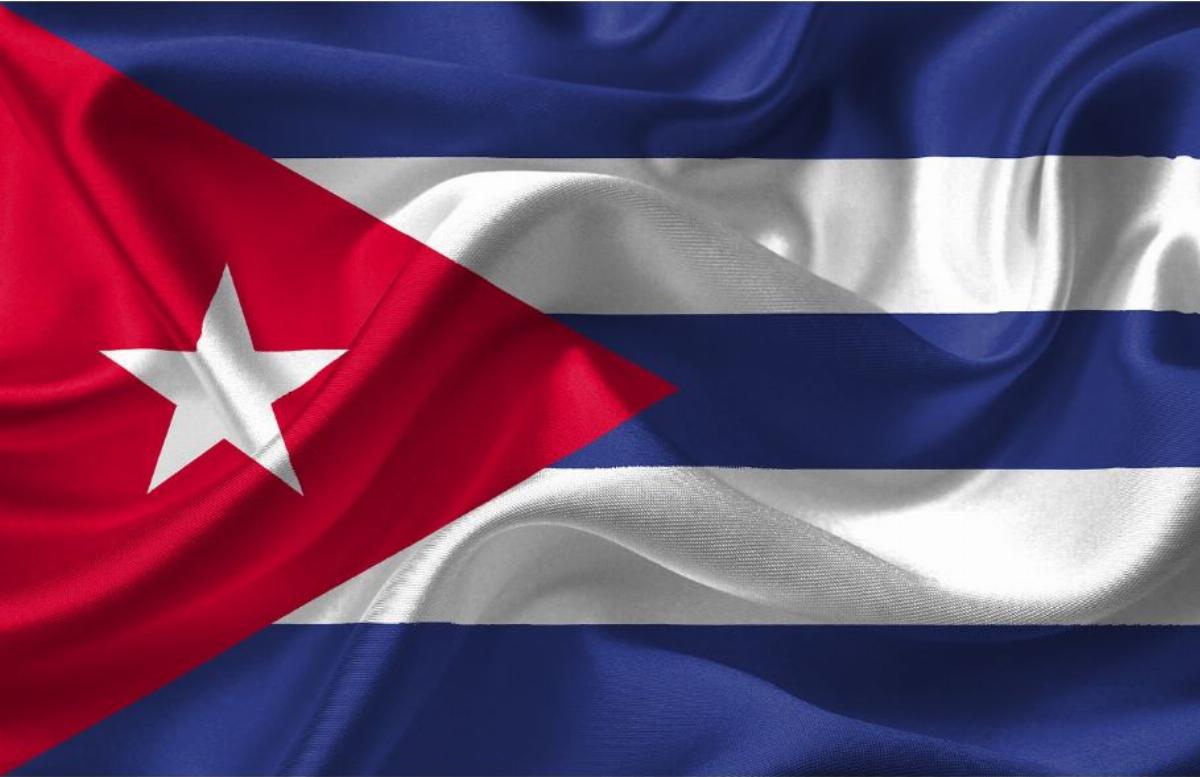
For decades, Cuba has been treated as a fading Cold War relic — a small, impoverished island whose strategic importance ended with the collapse of the Soviet Union. A new State Department report argues that that view is dangerously wrong.
Read more Remembering on the Ninth of Av (or Tisha B’Av)
Released in July 2026, the 100-page report, titled “,” portrays Havana as the enduring ideological and intelligence hub of revolutionary movements throughout the Western Hemisphere. Cuba’s power, the report argues, does not come from its economy or military. It comes from espionage, political influence, propaganda, front groups, and patient cultivation of activists and officials. In other words, Cuba’s most successful export has been revolution.
Why issue such a report now, when many of the historical episodes it describes — the Ana Belén Montes espionage case, the Wasp Network, Cuba’s support for Latin American insurgencies, and Havana’s ties to Venezuela — have been public for years?
The significance lies less in new revelations than in the State Department’s updated assessment. Rather than treating these as disconnected Cold War episodes, the report argues they are part of a single, continuous strategy that has evolved over decades. In the department’s view, Cuba did not abandon its revolutionary project after the Soviet Union collapsed. It shifted from armed insurgencies to influence operations conducted through intelligence partnerships; political activism; academic exchanges; and alliances with China, Russia, Iran, and Venezuela.
One section describes Castro’s influence on the shift from the Old Left to the New Left as follows:
As this report will show, it is nearly impossible to overstate the influence that the Cuban Revolution had on this shift, both in the United States and across the world. As the New Left student activist Allen Young was quoted as remarking in 1970: “Fidel, Che Guevara, and Regis Debray are really THE influence on our movements … the thing that was exciting about the Cuban Revolution was that it first made the break with the Old Left. Castro was one of the fathers of the New Left.”
Many of the specific New Left organizations of the 1960s–70s have disappeared. But Cuba’s influence went on to burrow much further into American institutions. Through its cultivation of American activists, its infiltration of American universities, its sprawling influence and espionage networks, and its position as the spiritual hub of the Third World revolution — becoming a pilgrimage destination for generations of New Left activists and intellectuals — Cuba has played an instrumental role in shaping America’s radical left from the 1960s through to today.
Cuba’s Directorate of Intelligence, or D.I., has been at the center of this campaign. Despite the country’s limited resources, the report describes it as one of the world’s most sophisticated intelligence services. Its officers rely on patience, ideological loyalty, personal relationships, and long-term penetration of foreign governments.
The case of Ana Belén Montes shows how effective that strategy can be.
A senior Defense Intelligence Agency analyst and leading U.S. government expert on Cuba, Montes secretly passed classified information to Havana for more than 16 years and helped shape official assessments of the Cuban threat.
The Wasp Network provides another example. During the 1990s, Cuban operatives infiltrated South Florida and monitored military installations, exile organizations, and political groups. Members gathered intelligence and reported to Havana. According to the Center for a Free Cuba, it was “the largest Cuban terror spy ring ever discovered in the U.S.” Uncovered in September 1998, the operation led the FBI to charge ten suspects with spying for Cuba.
The report suggests that these cases may represent only the visible portion of a wider campaign to foment division and unrest in America. Another section reads:
In a July 1980 meeting with Central American revolutionaries, one Senate testimonial later recounted, Castro himself reportedly “boasted that his agents in the United States were so industrious and wellplaced that they had the capacity to create race riots at a moment of his choosing — race riots on a scale that he said would make the Miami troubles look like a sunshower.” There was reason to believe it wasn’t all bluster: Two years later, Florida law enforcement testified to catching Cuban intelligence affiliates teaching black youth in Miami to firebomb schools.
The report documents support for guerrilla movements; revolutionary insurgencies; Marxist governments; intelligence training; military advisers; and propaganda organizations in Nicaragua, Venezuela, Bolivia, Colombia, El Salvador, Angola, and Ethiopia. It contends that Cuba became Latin America’s principal exporter of revolutionary strategy as Soviet priorities shifted.
Read more Potential Graham Platner replacement talks about his ‘cycle’ which includes leaking mucus from….?
Most relevant to current U.S. affairs is the report’s contention that Cuba deliberately cultivated American activists through decades of exchange programs, conferences, solidarity organizations, and ideological training. Havana built influence among university groups, anti-war and labor activists, racial justice and socialist organizations, and anti-sanctions campaigns. The report distinguishes among Cuban agents, organizations coordinated with Havana, “front groups,” and ideological “fellow travelers,” noting that some participants unwittingly advanced Cuban objectives while others knowingly cooperated.
The report also examines alleged influence operations, including the Cuban Institute of Friendship with the Peoples (ICAP), Cuba solidarity organizations, exchange programs, and activist delegations. It argues that these groups often function less as cultural exchanges than as vehicles for recruitment and influence.
Through conferences, study programs, visiting scholars, and ideological partnerships, Cuba seeks to cultivate future political leaders and activists. The report also contends that Cuba viewed racial conflict in the United States as an opportunity to weaken American institutions.
Though stopping short of calling these organizations Cuban-controlled, the report describes CODEPINK, the People’s Forum, the National Lawyers Guild, and the National Network on Cuba (NNOC) as being “intimately connected” with the Cuban Communist regime.
For example, the report notes that “ICAP has described NNOC and its affiliates as ‘the voice of Cuba in the United States.’” It also states that in June 2026, NNOC began distributing a
National Rapid Response Plan outlining a detailed strategy for activating and launching ‘coordinated nationwide actions’ against federal institutions, U.S. military bases, and ICE detention centers and field offices in the United States within 24 hours of U.S. military action (or the imminent threat of it) against Cuba. … NNOC’s materials reveal the continuing reach, coordination and sophistication of Cuba’s subversive capabilities on American territory.
The report identifies information warfare as another tool Havana increasingly employs through these networks, social media, and various NGOs.
The report also portrays Cuba as an increasingly valuable strategic partner for China, alleging cooperation in signals intelligence, electronic surveillance, military affairs, technology sharing, and intelligence collection directed at the United States. That relationship gives China an “intelligence platform only 90 miles from Florida.”
In a July 16, 2026 speech, secretary of State Marco Rubio echoed the report. Recalling “the tens of thousands of Marxist guerrillas trained to kill in Castro’s terrorist camps,” he added that Cuba’s revolutionary legacy includes a “sprawling intelligence and ideological network [that] helped to build the far-left in our country and in our hemisphere, and it remains inextricably linked to the far-left groups and movements across and beyond the West.”
The report states that “the Cubans have always seen revolution in America as an end unto itself. … Since its founding in 1959, the raison d’être of the regime in Havana has been the violent export of communism abroad. But its true target — above any other momentary enemy — has always been the United States.”
As with so many modern threats, the effort to advance communism in the United States is no longer primarily kinetic. The State Department report demonstrates how a small, economically weak nation can project political power far beyond its borders by shaping political movements, patiently cultivating allies, and exploiting divisions within its adversaries.
Read more Iran’s version of whack-a-mole
Image via Pixabay.