
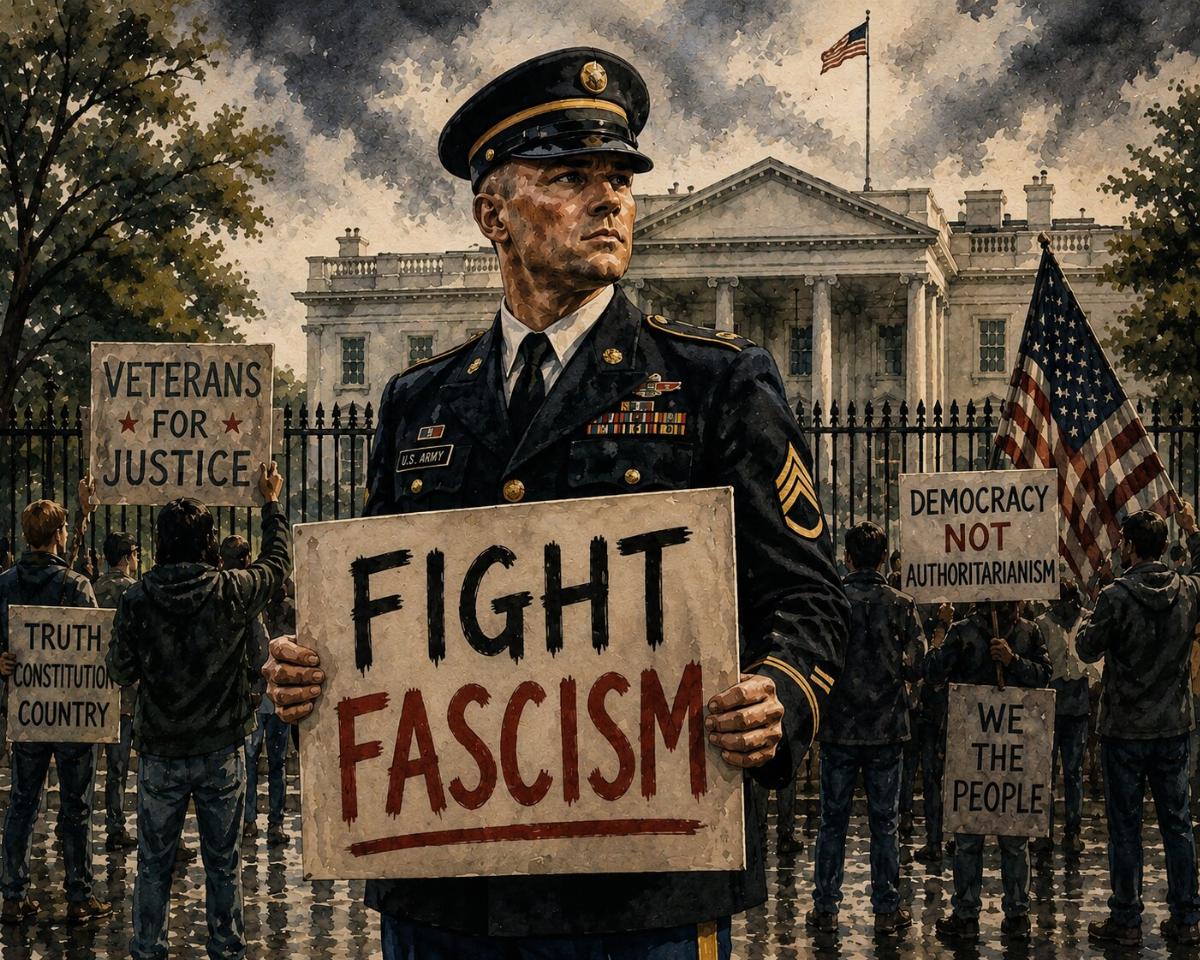
The image of a commissioned officer in the uniform of the United States Armed Forces standing on a picket line or shouting political slogans is a jarring sight—and for good reason. It is not merely a breach of protocol; it is an assault on the foundational principle of civilian control of the military. For those who understand the oath of office, such displays are not just “unprofessional”—they are a profound betrayal of the nonpartisan ethic that has sustained our republic for nearly 250 years.
Read more American experimentation with importing immigrant labor
In recent years, when officers have been challenged for taking overtly political stances or protesting against the commander-in-chief, the common defense offered by their supporters—and often by the officers themselves—is that they are merely “upholding their oath to the Constitution.” They argue that because their oath is to the document, not the man, they have a constitutional duty to dissent when they believe the president is acting against their interpretation of the nation’s best interests.
This is a dangerous, shallow reading of their service. These individuals demonstrate a profound ignorance of the very document that grants them their authority: their commissioning certificate.
While they love to cite the constitutional oath, they conveniently ignore the explicit legal mandate signed by the president of the United States. That certificate does not merely appoint them to office; it demands that they “observe and follow such orders and directions as from time to time may be given by the President of the United States of America.” The commission is not a suggestion; it is the fundamental legal instrument of their employment. By treating their personal political interpretation of the Constitution as superior to the legal chain of command, they are not acting as patriots; they are in direct violation of the conditions under which their commission was granted.
When an officer dons the uniform to protest the commander-in-chief, they are effectively weaponizing the state’s monopoly on force for partisan purposes. It suggests that the military establishment is a political actor capable of choosing sides. Once the military is viewed as a faction, the entire premise of democratic governance collapses. If the military is partisan, it is no longer the protector of the state; it becomes an instrument of political power, a shift that history shows inevitably leads to the erosion of liberty.
The Uniform Code of Military Justice (UCMJ) is clear: active-duty members must avoid any activity that suggests the military supports a partisan cause. This is not about silencing citizens; it is about preserving the military as a neutral, professional institution. By protesting in uniform, an officer signals that their political opinion is the military’s opinion, thereby disenfranchising every other service member who may disagree.
Why is this happening now? We are witnessing a confluence of three dangerous trends: the slow death of military institutional humility, the encroaching politicization of the officer corps, and a fundamental misunderstanding of what the “commission” actually entails.
Read more US men’s soccer team and what sports should be
For decades, the military lived by the creed that George Marshall once embodied: an officer’s personal political views were irrelevant to their duty. Today, however, we see a rise in sentiments of institutional superiority—an alarming belief among some in the officer corps that they possess a special, enlightened understanding of the nation’s interests that transcends civilian leadership. When officers begin to view themselves as the “adults in the room” or the guardians of morality against their own elected leaders, they cease to be the humble servants of the Constitution and start acting like political commissars.
Furthermore, the lines between personal identity and professional duty have blurred. Surveys of senior officers over the last half-century show a stark increase in partisan self-identification. When officers enter the military already tethered to a partisan camp, they bring those battle lines with them. The result is a military leadership that increasingly mirrors the polarized, fractured culture of the broader civilian world, rather than standing as a bastion of professional, nonpartisan stability.
This trend is not inevitable, but it is corrosive. Every time an officer uses their status to advocate for a political position, they chip away at the public’s trust. If the American people stop believing that the military is neutral, they will stop viewing it as their own.
The remedy is to return to the rigid discipline of the past. Officers must remember that their authority is a trust granted by the people through their elected representatives. They serve at the pleasure of the president, and they are bound to follow orders, even those they personally dislike.
The uniform is not a platform for dissent; it is a shroud of duty. To use it to protest is to burn the very bridge that connects the warrior to the citizen. If we do not demand that our officer corps return to the quiet, apolitical professionalism of the past, we risk losing the essential separation between the men with guns and the people who govern them. And in that, the republic dies.
M. Ray Evans, a U.S. Navy veteran who served his time, lives in Florida, with his wife, Grace. Recently retired after decades as a senior executive in international real estate development, working across more than ten countries, mostly in East Asia, where he built a solid track record over the years. A conservative and patriot by conviction.
Read more Containing Socialism at Home
Image generated by ChatGPT.