
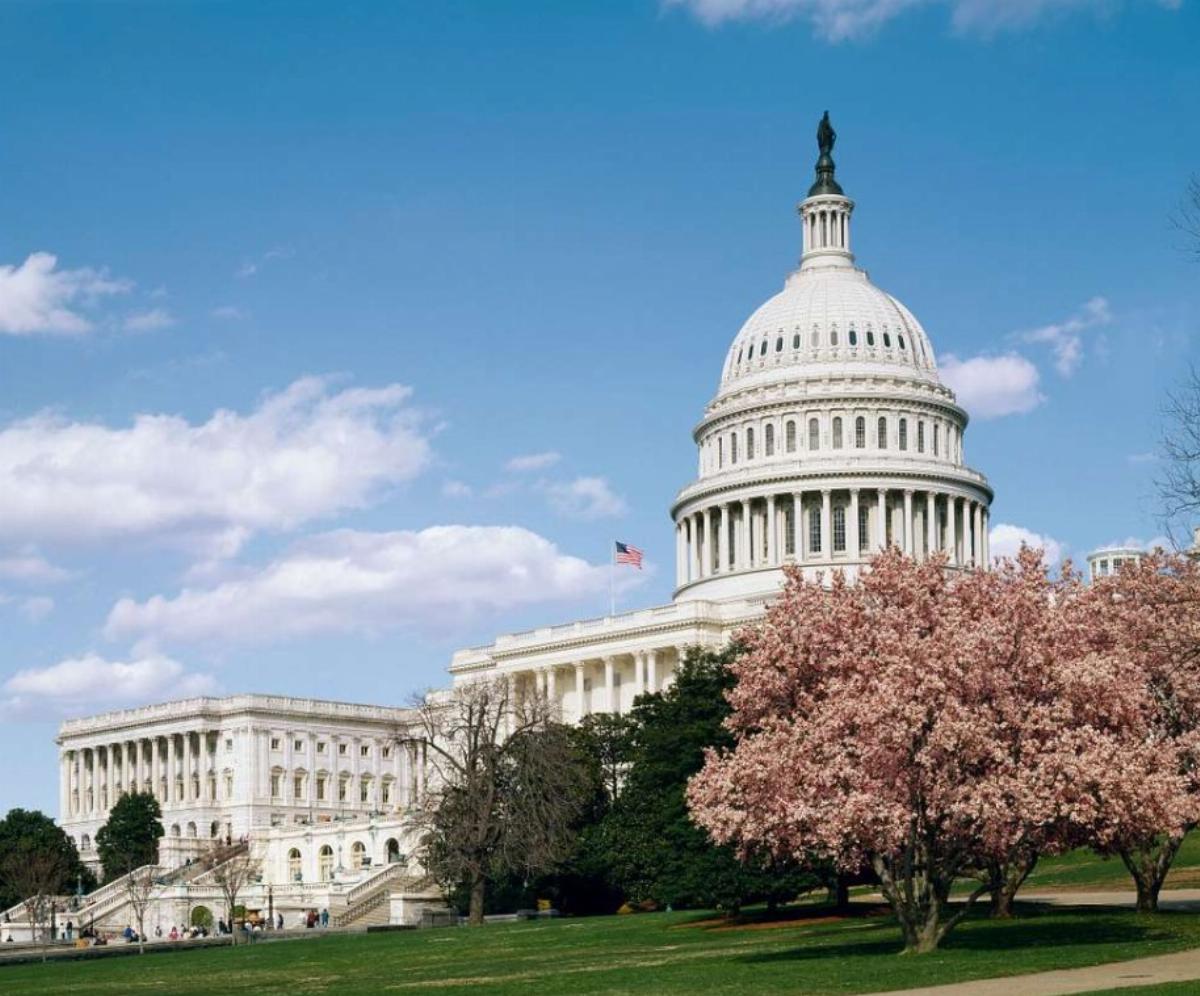
The federal government spent $7 trillion last year — roughly $222,000 per second. It borrowed nearly $2 trillion of that, adding to a national debt that now exceeds the size of the entire U.S. economy. And the interest bill alone, the tab just for past borrowing, consumed nearly $1 trillion last year. That is more than triple what CBO projected just four years earlier.
Read more Mamdani sets his sights on Colorado
This happened by design — the design of a federal budget process that systematically rewards spending and punishes restraint.
The framework governing how Congress spends your money was designed in 1974, the era of ABBA, bell-bottoms, and rotary phones. It was Congress’s answer to perceived executive overreach. In stripping the president of impoundment authority, the ability to refuse to spend money Congress appropriated, it removed one of the few practical brakes on runaway expenditure.
Budget resolutions are routinely delayed or abandoned. Appropriations bills get crammed into massive, last-minute omnibus packages negotiated in the dark. Continuing resolutions, once a last resort, have become standard operating procedure.
Federal spending last year was nearly 58 percent higher than in fiscal year 2019. That is a structural failure, one baked into the process itself.
This is not a new problem. When I worked on Capitol Hill in the late 1990s, federal revenues were the highest share of GDP since World War II. Real GDP growth hit four percent or better five times in six years, and a dot-com boom filled federal coffers. A Republican Congress shaped by the Gingrich revolution deserves real credit for holding the line on spending. We had surpluses. But James Miller, President Reagan’s OMB director, and I argued at the time that the budget process itself deserved little credit. It had not become disciplined; it had simply gotten lucky. When the luck ran out, the process had no structural brakes to slow what came next.
To understand just how broken things are, recall what then–House Budget chairman John Yarmouth was caught on tape saying in 2021: “We don’t have to balance our checkbook. We are like the banker in Monopoly. We create the money. We hand out the money everyone else plays the game with.”
Sadly, this is not a fringe view. It is the operating philosophy that produced $9.1 trillion in cumulative deficits over the last five years.
Against that backdrop, bipartisan legislation introduced by Representatives Steve Womack (R-Ark.), Ed Case (D-Hawaii), Bill Huizenga (R-Mich.), and Scott Peters (D-Calif.) deserves serious attention.
would shift Congress to a biennial budget framework, establish a bipartisan fiscal commission tasked with reducing the annual deficit to 3 percent of GDP within ten years, require budget resolutions to include debt and deficit metrics, and mandate a televised Comptroller General hearing on the nation’s long-term fiscal outlook.
Maya MacGuineas, president of the Committee for a Responsible Federal Budget, called it: “Process reform alone can’t solve these problems, but it can make the hard choices just a little bit easier.”
Read more A Deplorable attends the birth of DEI racism
She is right. But the emphasis belongs on “alone.”
Commissions recommend. Congress decides. And Congress has a long history of deciding to do nothing.
The Super Committee of 2011 is instructive: serious people, serious proposals, serious failure.
A commission is only as good as the enforcement mechanism behind it. This bill’s commission needs real triggers, real consequences, and a mandate that cannot be shelved when the politics gets uncomfortable.
The harder problem remains mandatory spending and interest costs — the fastest-growing parts of the budget, and the ones this bill largely delegates to the commission. Any reform that ultimately sidesteps mandatory spending is not a complete reform.
What the bill does well is create architecture for honest deliberation. It treats fiscal resources as scarce rather than infinite. It forces some transparency on the true costs of what Congress decides. That is more than Washington has managed in fifty years.
But process reform, however well designed, has limits. Rules that one Congress enacts, another can waive. Caps without constitutional backing are suggestions. The ultimate constraint on federal spending may require something more durable than statute, and Congress should be honest with the American people about that.
CBO director Phillip Swagel warns that the country is caught in “a slow spiral of rising debt and rising payments on the debt.” The word “slow” should not be mistaken for “manageable.” And spirals do not stop on their own.
The 1974 budget process had a long run. Fifty years is long enough. The Budgeting for a Better America Act is a credible first step. But a first step is valuable only if the next ones follow, with enforcement, with mandatory spending on the table, and with the candor to tell Americans that the money their government spends is not Monopoly money.
The longer Washington pretends otherwise, the worse the spiral gets.
James Carter is principal and policy director at Navigators Global. He served as deputy assistant secretary of the Treasury under President George W. Bush and chief economist of the Senate Budget Committee and headed President Trump’s tax transition team in 2016–17.
Read more The economics behind Mamdani’s rent freeze fantasy
 Picryl.” class=”wp-image-339″ width=”640″ height=”531″ />
Image via Picryl.