
There was a time when the word millionaire carried an almost mythic weight. In 1973, when George Steinbrenner bought the New York Yankees for $10 million, it was an incredible sum to a paper boy and his buddies whose only millionaire they knew was Bruce Wayne, and he was a comic book character.
Read more China discovers electric vehicles aren’t the future
Millionaires were rare, unknown, and unquestionably elite.
The financial landscape has shifted so dramatically that millionaire barely registers anymore. Today, they are the folks in those retirement commercials asking if you have saved “your first million” like it’s one of life’s routine benchmarks.
The millionaire has become middle class mythology.
The Federal Reserve’s Survey of Consumer Finances says 9.4% of Americans are millionaires, thanks largely to home values, decades of inflation, and the institution of the various retirement accounts now available.
Then along came the billionaire era of Bezos, Buffett, and Gates, a tier so distant from everyday life that their wealth felt almost abstract.
Last week that was surpassed as we entered the rise of the trillionaire, a term once unimaginable.
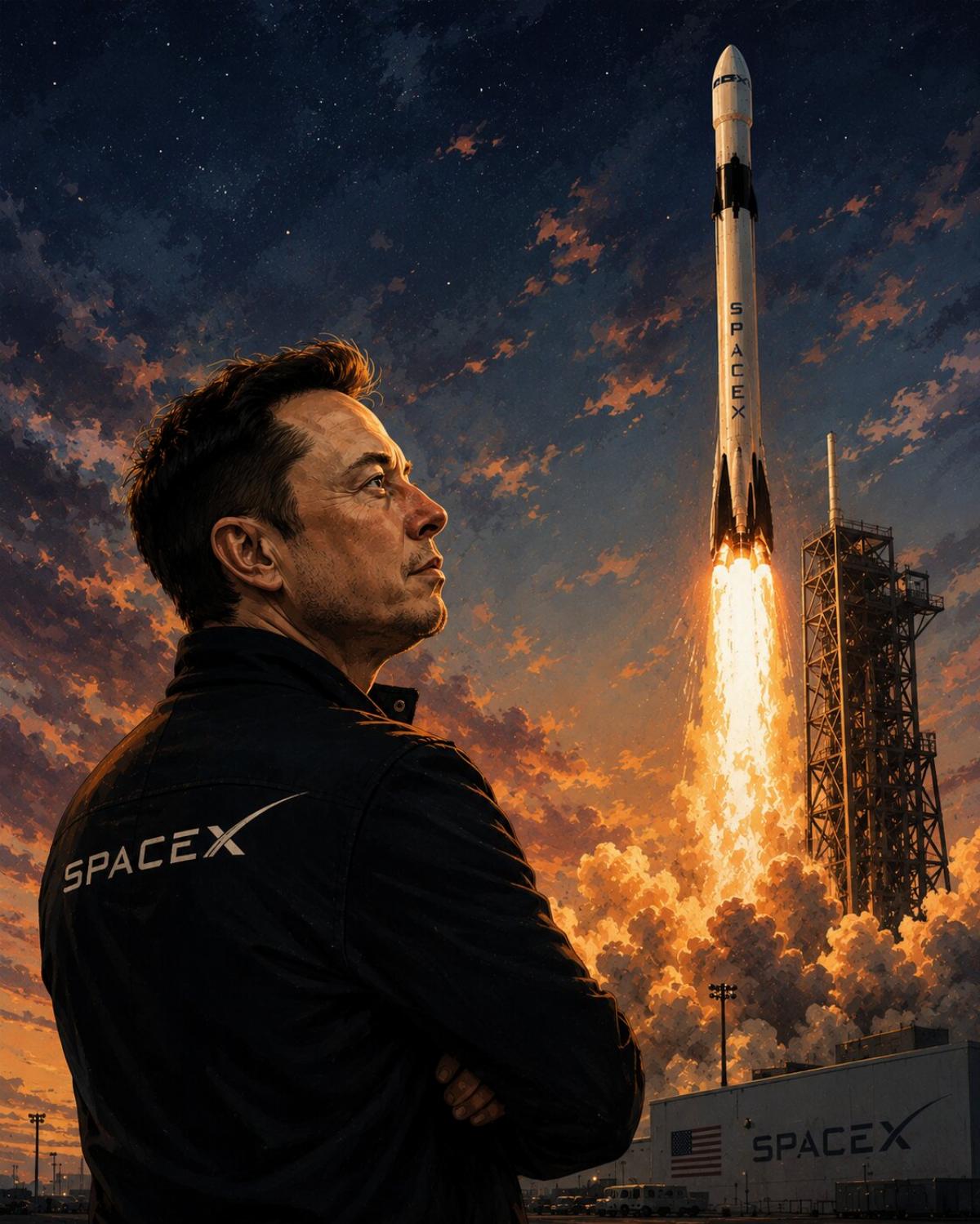
With SpaceX’s recent record shattering $75 billion IPO pushed its valuation to $2.1 trillion, Elon Musk became the first to cross that new frontier.
The numbers have grown so vast they take on a Monopoly game feel that is impressive on paper, but detached from reality.
This economic excursion from millionaire to trillionaire shows how fiscal benchmarks inflate, expectations shift and envy always adapts. What once symbolized extraordinary success is now just the starting line in an inflated era of wealth.
While many are fixated on Musk’s wealth, the real story is how innovation, risk taking and economic growth can stimulate broader prosperity, job creation and opportunities that ripple across entire communities.
Read more 6 choices that build value and wealth
SpaceX’s IPO has created thousands of worker shareholder millionaires across the company through stock options that challenge the narrative that billionaires thrive by exploiting labor.
With employees and investors able to share in future gains, they enable venture capitalists to reinvest their returns into new technologies that grow the innovation ecosystem. Musk’s wealth reflects the rewards of American entrepreneurship underscoring how financial incentives are essential for the risks that ultimately benefit the common good.
Musk’s critics are motivated by envy and often by hostility toward capitalism itself. They resent entrepreneurs because they misunderstand the free market while seeking government control over private enterprise.
Many lament how the system is “rigged.”
They are correct.
It is rigged in favor of unyielding work, risk taking, and vision. Musk embodies the entrepreneurial ideal of what is possible in a free market system: a visionary who built world-changing companies and shared the rewards with employees and investors.
The foundation of financial freedom is discipline: spending less than you earn. Americans struggle with this because to prioritize immediacy over long term goals is the creed of contemporary society.
Wealth is not just about personal finance.
It is tied to the broader engine of progress that is innovation, entrepreneurship and the freedom to turn ideas into reality. Concentrated capital, for all its controversy, has historically underwritten advances in science, medicine, and our living standards.
Attempts to centrally manage or confiscate that capital often does more than redistribute wealth, it withers the very system that creates it.
None of this guarantees happiness.
Wealth never has.
Wealth’s real power isn’t status; it’s space — the margin to choose, to make, to imagine and to follow what truly matters.
Read more What will SCOTUS make of Trump’s birthright citizenship stance?
Even Bruce Wayne understood that.
Image generated by ChatGPT.