
I’ve been writing about electric vehicles since 2011, not because I have any objection to them or those that buy them. I just don’t want to pay for others’ greenie virtue signaling.
Read more 6 choices that build value and wealth
Fortunately, with the end of the Biden Administration, the EV death spiral has nearly reached its inevitable, final crash. EVs were never ready for prime time. They were never sufficiently flexible to replace conventionally powered vehicles, particularly for single-car families. They’ve always been a niche product, purchased mostly by the top 7% of households in income, particularly because they were far more expensive than conventional vehicles in the same classes. Those folks had all the conventional vehicles they wanted and could afford expensive, rolling virtue signals.
Cajoled and threatened by the Bidenites, American and foreign manufacturers built loads of EVs, and parroted the “EVs are the future” mantra of the Climate Change sect. And they lost truckloads of money on every EV they built, a fact known since the short-lived Chevy Volt, which lost tens of thousands on every unit. With the exception of Tesla, no American manufacturer made a dime of profit on EVs. Even in February 2026, carmakers were writing off at least $55 billion on failed EVs, and the real number is doubtless higher.
Since the federal tax credits are no more and EV demand has all but totally collapsed, some makers like Ford are still trying to make new, less expensive EVs. This despite admitting they expect to lose billions on EVs well into the future. My wife and I drive Fords, but were I a Ford stockholder, I’d be screaming: “Sell! Sell! at my broker.
Now, we’re getting an unsurprising revelation:
For years, the Chinese auto industry has employed a hostile price war to kneecap global competitors. Armed with massive state subsidies, cheap raw materials, and an aggressive “scale-first” business model, Chinese automakers flooded the market with electric vehicles priced so low that legacy manufacturers stood no chance to compete. How did they do it? Simple, they couldn’t. They did it anyway. Reports from CarNewsChina show that Chinese automakers have been selling vehicles at a loss until a recent law passed by the Chinese government banned below-cost sales of new vehicles.
Their EV battery ventures haven’t been so hot—except when they spontaneously combust– either:
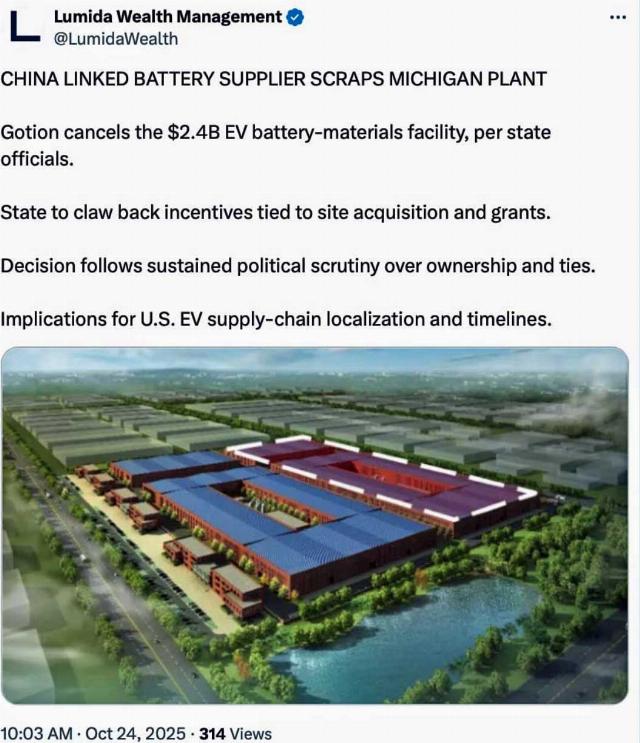
Graphic: X Post
This is a lesson in economics. A corrupt, socialist-trending, anti-American government was able to force manufacturers to make EVs at a bankrupting loss for years, but market forces eventually forced them to recognize reality. True, it was the reimposition of Republican—constitutional, not the Party—government under Donald Trump that hastened the process, but manufacturers were admitting losing billions making vehicles no one wanted to buy for years before his second election. It took the Chinese Communist Party, which controls every aspect of life including all media, much longer to admit the EV economic reality American manufacturers had long been shamed into admitting.
In China, the Communist Party rules. Chinese car makers don’t make decisions; the Party does. For many years, the Chinese supplied inexpensive electric scooters to their fraternal ally, Cuba. That worked, until the recent collapse of Cuba’s economy, and with it, their electric grid. All those Chinese scooters are now expensive paper weights and China can’t afford to export Communism.
Read more What will SCOTUS make of Trump’s birthright citizenship stance?
With Trump II came America-first policies, including tariffs that, for the first time in decades, addressed our horrific trade imbalance with China. Suddenly, Chinese EVs that were already losing a lot of money in our marketplace were losing unconscionable amounts of money, and that was simply on the manufacturing end. Even for communist dictatorships, economic reality must inevitably dictate policy, so reluctantly, the Party passed a law pretending to bow to the economic gods.
For the Chinese, and California, laws are window dressing. What the Party says goes regardless of any law. Obviously, the Party has decided its previous attempts to use cheap EVs to wipe out competition and fill the Party’s coffers were not only a failure but had brought Trump down on them. No profits, no military buildup. No military buildup, no chance of seizing Taiwan and dominating the Pacific first and the world later.
If even the Chicoms can learn that economic lesson, why can’t Ford? They’re planning to build low-cost—reportedly around $30,000–small electric trucks. They’ll still have all the features Americans learned to hate: short range, long charging times, near-uselessness in cold weather and only somewhat better performance in hot climates, a tendency to spontaneously combust, and so much more.
Ford is doing this while admitting this brilliant plan will cost them billions for many more years. Who knows how many? Ford doesn’t, nor do the Chinese, but hey: EVs are the future.
Become a subscriber and get our weekly Friday newsletter with unique content from our editors. These essays alone are worth the cost of the subscription.
Mike McDaniel is a USAF veteran, classically trained musician, Japanese and European fencer, lifelong athlete, firearm instructor, retired police officer, and high school and college English teacher. He is a published author and blogger. His home blog is Stately McDaniel Manor.
Read more The US-Iran MOU is worse than we thought