
Some novice marathoners find themselves at a point in a race where they decide to slow their pace or even walk. The speed change is an effort to regain energy, hoping it will ultimately provide them with enough to make the final push across the finish line. However, there is also a potential danger in taking such a “breather.” Doing it once lays the groundwork for doing it again, possibly even dulling the runner’s motivation to finish.
Read more Trump’s deal a lot better than Obama’s
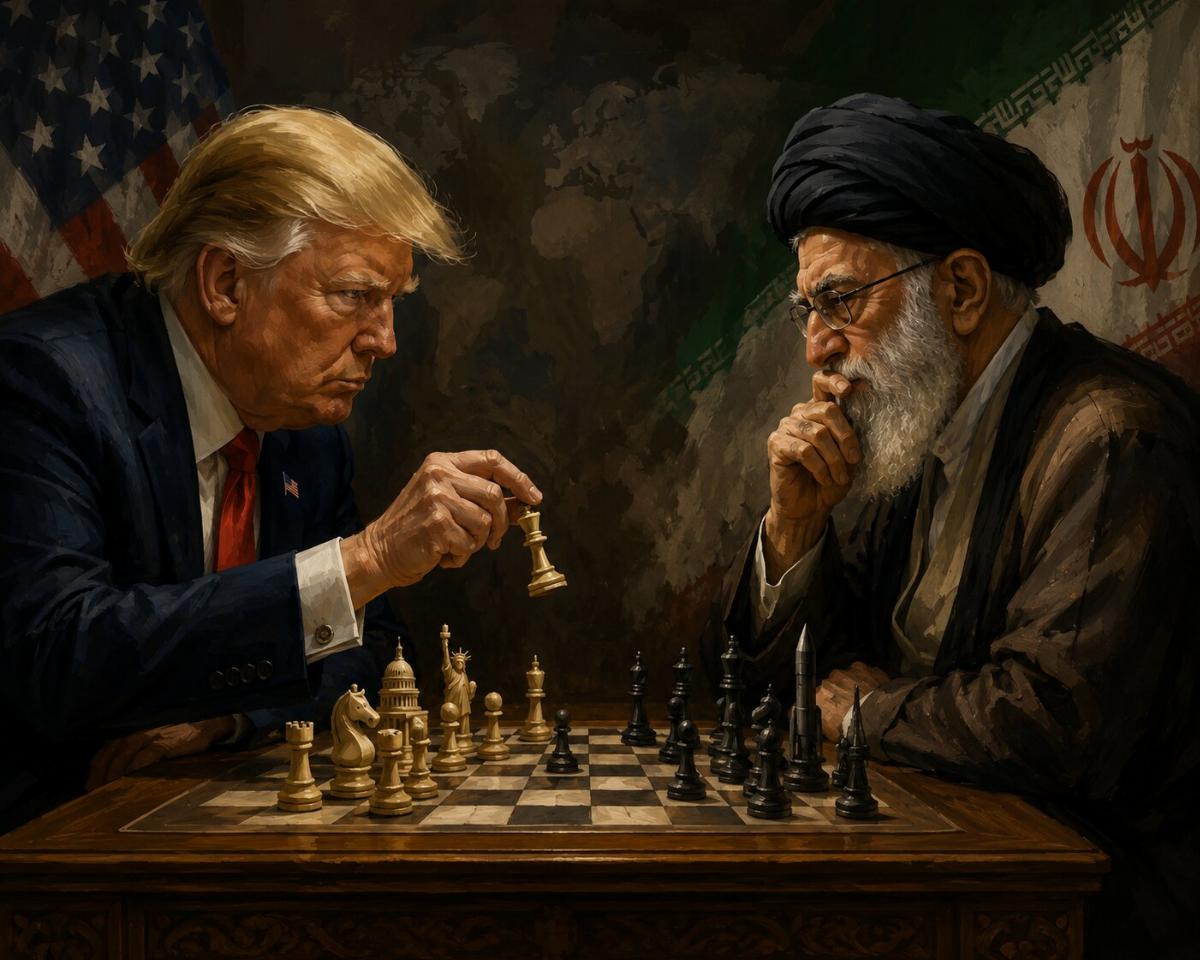
President Donald Trump’s Memorandum of Understanding (MOU) with Iran suggests we have now taken a breather in our conflict with the mullahs. As per the MOU, we will find out what details both sides are accepting as they are hammered out during the next two months.
Clearly, the MOU lacks specificity. This is especially so when it comes to the main reason for fighting the war—i.e., ending both Tehran’s effort and ability to develop a nuclear weapon. And, while an MOU may reflect what the parties have agreed to in principle—suggesting a serious commitment of sorts exists—it lacks legal binding. Thus, this “deal” is anything but one that is “done.”
We do know that Iran continues to refuse to transfer its enriched uranium stockpile out of the country. The mullahs have tentatively indicated their willingness to down-blend (dilute) it under the supervision of the UN’s International Atomic Energy Agency—but insists it must remain on its own soil.
Why would we take a breather now on the heels of the enemy suffering such a devastating ass-kicking?
It must be recognized that a leader’s effort to take military action with the intention of concluding it with an accord implementing a favorable national strategy is severely hampered whenever a domestic opposition party prioritizes politics over national unity.
Thus, much of the reason for this breather with Iran lies squarely upon anti-Trumpers whose hatred for the president cuts so deep, they defy what is in America’s best interests. While the impact on global trade was undoubtedly a contributing factor leading to outside pressure as well, Trump assures us a positive non-nuclear Iran lies ahead. We will have to see the ultimate outcome of negotiations, but this is not the first time we have been given such an assurance. Ten years ago, President Barack Obama made a similar claim.
These opposition party leaders have done something never seen before. In an unconscionable act, they have demonstrated it is not America, but our enemy with whom they stand. Astonishingly, as we fight an enemy more evil than Adolf Hitler, there are those in our government who—by their political actions to curtail presidential authority to wage war—not only encourage Tehran to not submit but even cheer it on for its battlefield successes. A case in point is Senator Chris Murphy (D-CT) who cheered the release of a report that Iranian tankers had evaded U.S. Navy patrols.
Read more The Iran MOU is leverage, not retreat
During the Vietnam war, Hanoi came to realize the importance of “buying” time. While the U.S. fought a war of attrition—devastating North Vietnamese forces in the process—American anti-war sentiment gained momentum, turning a likely Hanoi defeat into victory. Similarly, appreciating the fact America’s opposition party suffers from Trump Derangement Syndrome (TDS), Iran’s mullahs today recognize the importance of buying time as well as waiting America out. Realizing they are unable to defeat us, they rely on TDS to do it for them.
In the two-month period ahead, there will be a new Iranian A-team in place with whom we shall be negotiating. Ever since the mullahs came to power in 1979, Iran has been ruled by just two Supreme Leaders. The second, Ayatollah Ali Khamenei, was killed in a February 28, 2026 Israeli airstrike. His son, Mojtaba Khamenei, was selected to replace him although—obviously seeking to avoid his father’s fate—he is rarely seen in public.
But there are questions as to whether Mojtaba has the same level of authority his two predecessors had. His father relied heavily on the Islamic Revolutionary Guard Corps—a military branch created after the mullahs came to power to protect the regime and its values—giving it significant responsibility in Iranian affairs. That group is headed by Brigadier General Ahmad Vahidi, who very well may be making decisions that normally fall within the purview of the Supreme Leader. Thus, it is difficult to predict how the upcoming negotiations will play out. However, one thing is certain—it really does not matter.
Why?
Despite various international agreements made by the mullahs, we have yet to see one with which they have complied. This should not come as a surprise as Islam allows believers to make agreements with infidels with which they have no intention to comply—using it solely to allow time for an improved position to evolve later. We should take no comfort in what they promise as such promises are made with but one purpose—to pursue indirectly that which they have been prevented from accomplishing directly. For the mullahs, war against the infidels is eternal.
Nonetheless, in deciding whether to support the MOU and any subsequent deal that may evolve, Americans would do well to heed their history. There is an important lesson to be learned from the 1972–1979 negotiations for SALT II—a series of talks between the U.S. and Soviet Union to curtail the manufacture of nuclear weapons.
Initial polls at the time revealed a majority of Americans supported the SALT II agreement as it placed a cap on the number of nuclear weapons each side could have. However, it was only after Americans understood that the deal locked in a higher cap for the USSR than it did for the U.S. that majority support faded. It demonstrated the importance in fully understanding the real terms of an international agreement. Accordingly, while SALT II was eventually signed by President Jimmy Carter and Soviet leader Leonid Brezhnev, it was never approved by the U.S. Senate.
As is always the case in negotiating international deals, “the devil is in the details.” And, in the case of Iran, we are negotiating with the devil. It will be imperative, therefore, that, whatever those negotiations may yield, we embrace President Ronald Reagan’s sage advice to “trust but verify.”
Read more FTC sues WPATH, the key propagandist on transgenderism
Image generated by ChatGPT.