
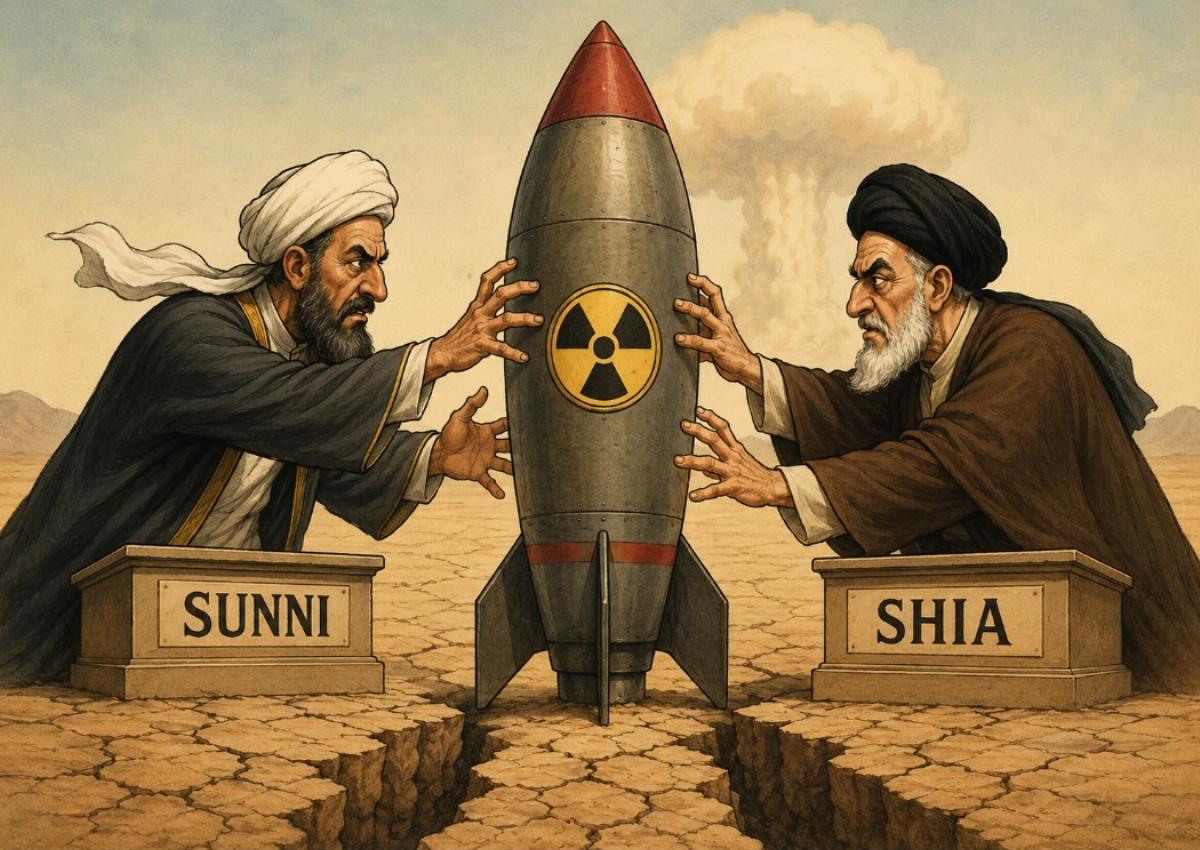
To many Americans, the people of the Middle East appear culturally and ethnically similar. Yet those outward similarities mask profound religious, historical, and political divisions that have shaped the region for more than fourteen centuries. These divisions are rooted in the birthplace of Judaism, Christianity, and Islam.
Read more How Europe Grows Gas Tax Revenues
For decades, much of the world’s attention has focused on conflict between Israel and its Arab neighbors or between Islam and the West. In recent weeks, however, the center of gravity has shifted back toward one of the region’s oldest rivalries—the struggle between Sunni and Shia Islam.
I believe there are two reasons for this shift.
First, Iran’s military capabilities have been significantly degraded. Second, Iran’s leadership must now decide which adversaries pose the greatest long-term threat to its revolutionary ambitions.
A Fourteen-Century Divide
The Sunni-Shia split began after the death of the Prophet Muhammad in A.D. 632 over who should lead the Muslim community.
Sunni Muslims, who represent approximately 85 to 90 percent of the world’s Muslims, believe the leader, or Caliph, should be selected by consensus among the Muslim community and should follow the traditions (Sunnah) established by Muhammad and his earliest companions.
Shia Muslims, who represent roughly 10 to 15 percent of Muslims worldwide, believe leadership belonged exclusively to Ali ibn Abi Talib—the Prophet’s cousin and son-in-law—and his descendants through divinely appointed Imams.
The division deepened after the Battle of Karbala in A.D. 680, where the death of Hussein ibn Ali became the defining event in Shia history. The battle cemented the split that continues to influence Middle Eastern politics today.
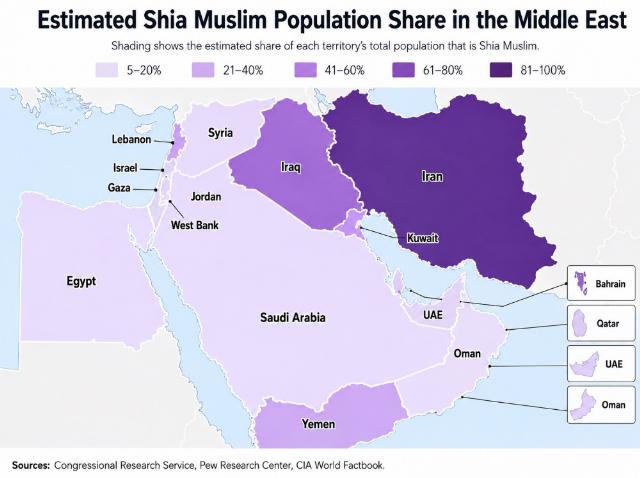
Image created using AI.
A Lesson Learned in Engineering School
I first became aware of these differences almost by accident during an engineering materials science class. One day, a foreign student was standing in front of the concrete compression testing machine, blocking the class’s view. The professor asked him to step aside so everyone could observe the concrete cylinder test. My lab partner from Lebanon quietly muttered, “Stinking Persians. Surprised, I asked, Aren’t you Persian?” He immediately replied, “No. I’m an Arab. He’s Persian.”
That brief exchange revealed a distinction I had never known. Generally speaking, most Arabs are Sunni Muslims, while Persians are overwhelmingly Shia Muslims. Although there are many important exceptions, this religious and ethnic divide has shaped regional alliances and rivalries for centuries.
One notable exception was Iraq. Although Iraq’s population was majority Shia, Saddam Hussein ruled through a Sunni-led government.
Iran’s Revolutionary Vision
When Ayatollah Ruhollah Khomeini overthrew the Shah in 1979, Iran transformed from a monarchy into an Islamic Republic governed by Shia clerics. That same year, Khomeini called for the overthrow of Saddam Hussein’s government in Iraq.
The Iran-Iraq War soon followed, lasting from 1980 to 1988, resulting in a million deaths. Although neither side achieved a decisive victory, Iraq prevented Iran from exporting its Islamic Revolution throughout the Arab world.
Read more The False Promise Of Political Angels: Why Individual Freedom Outperforms Central Planning
Everything changed in 2003. When the United States removed Saddam Hussein from power, Iraq’s Shia majority assumed political control. Iran subsequently expanded its influence across the region by supporting Shia political movements and armed groups, including Hezbollah in Lebanon, Shia militias in Iraq, the Houthis in Yemen, and Hamas as a strategic partner in its confrontation with Israel.
During the same period, Iran continued expanding both its missile capabilities and its nuclear program.
Winning the War of the Hereafter
Most country leaders focus on preventing or winning wars in the present.
Iran’s religious leadership thinks on a much longer timeline—one measured not only in decades but in generations and religious history. Ultimately, it aims to win wars of the hereafter.
It became apparent to me years ago that if Iran successfully developed nuclear weapons, other major regional powers would eventually feel compelled to do the same. A nuclear-armed Iran would almost certainly encourage Saudi Arabia, Egypt, and perhaps Turkey to pursue their own nuclear deterrents, dramatically increasing the risk of nuclear proliferation throughout the Middle East.
During my 2018 National Republican Senatorial Committee foreign affairs briefing for candidates, I asked whether that was the likely outcome if Iran acquired nuclear weapons. The foreign policy expert conducting the briefing agreed with that assessment.
President Trump Changes the Strategic Equation
Iran’s leadership has consistently demonstrated that it is unwilling to abandon its nuclear ambitions voluntarily.
That raises an important question. Are nuclear weapons the ultimate objective, or are they simply a means to achieving broader geopolitical and ideological goals? Is Iran’s confrontation with Israel its primary objective, or does that conflict also serve to unify Muslims while advancing Iran’s long-term competition with Sunni powers?
President Trump has pursued a different strategy. Following U.S. military strikes against Iran’s nuclear facilities, his administration has also explored expanding civilian nuclear cooperation with Saudi Arabia under strict international safeguards. If implemented, such an agreement introduces a new strategic variable.
Would Iran’s leadership be willing to continue pursuing nuclear weapons if doing so accelerated civilian nuclear cooperation between the United States and Saudi Arabia?
Would the Iranian people question policies that ultimately strengthened the technological capabilities of their principal Sunni rival?
Whether or not such a strategy succeeds remains to be seen, but it changes the strategic calculation in ways previous negotiations did not. By introducing Saudi Arabia’s civilian nuclear future into the broader strategic equation, the Iranian leadership must question whether they are now risking losing the war for the hereafter.
Read more The Danger of Treating All Force as Immoral
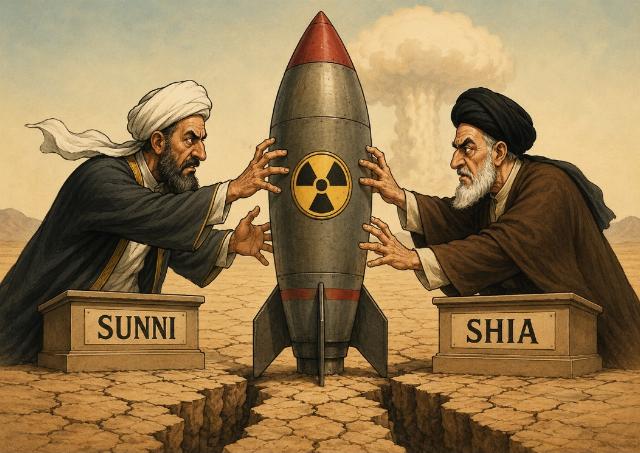
Image created using AI (which struggles with hands).