
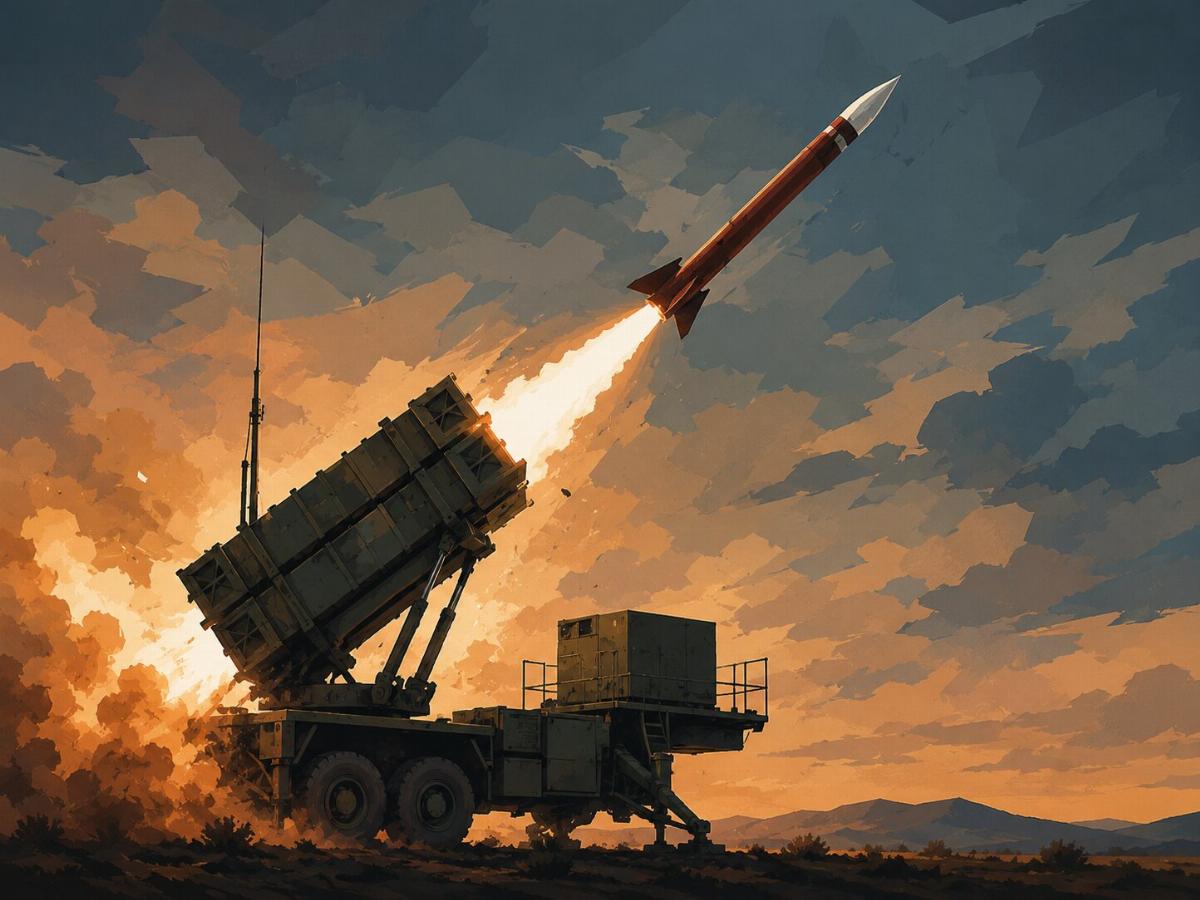
In the closing days of July, President Trump told interviewers he was still considering a license for Ukraine to manufacture the sophisticated PAC-3 interceptor missiles used by the Patriot air-defense system. No technology, he emphasized, had been transferred.
Read more Fighting with the FDA, or Why young people are rejecting sunscreens
That statement landed like a bucket of cold water on the breathless mid-July reports flooding Ukrainian and European media. Those outlets insisted the license process had not only begun, but was racing ahead at impressive speed. When the president of the United States and the legacy media machine describe two mutually exclusive realities, Americans are entitled to ask a simple question: What is actually happening with this critical piece of American technology?
The demand itself is straightforward. Since Russia’s full-scale invasion in February 2022, Volodymyr Zelensky has made layered air defense against ballistic missiles his highest priority. Russia has long excelled at that class of weapon. Almost no existing system can reliably stop them, except the highly advanced American PAC-3 munitions for the Patriot and, in limited cases, THAAD. The United States has already supplied Ukraine with Patriot batteries and interceptors. Russian strikes on Kyiv and other cities, combined with American operations against Iran that drew heavily on the same stockpile, have left Ukraine’s inventory critically thin.
So Kyiv and its European backers settled on a new ask: give us the production license so we can build PAC-3s ourselves, either in Ukraine or somewhere in Europe. Note the reality check: PAC-3 interceptors are currently produced only in the United States and Japan. Facilities elsewhere, including Germany, can turn out the older PAC-2 generation, but they cannot reliably defeat ballistic missiles. At the NATO summit in Ankara in early July, Zelensky asked Trump for the license on camera and received an encouraging public answer.
Then the fog machines started. Mid-July Ukrainian and European reports claimed the transfer was already moving at high speed. American defense experts immediately pushed back: standing up a certified production line for a system this complex takes years, not weeks or months. One should never forget that Ukraine and its European cheerleaders are practiced at information warfare. Statements that treat wishful thinking as accomplished fact are a familiar tactic, aimed both at rattling Moscow and at pressuring American manufacturers to accelerate. The reported reluctance of key U.S. contractors, including Boeing’s reported unwillingness to license the critical seeker technology and Lockheed Martin’s cautious stance, only reinforces the point. Ukraine has a long record of conflating what it wants with what has already happened.
Skepticism quickly spread beyond the factory floor. Think tanks such as Responsible Statecraft and Defense Priorities warned that transferring this technology risks compromise. American and European systems have already found their way into Russian research centers during this war, captured on the battlefield or, in some cases, reportedly sold by Ukrainian elements. Storm Shadow cruise missiles, M1 Abrams tanks, and Leopard 2 tanks have all appeared in Russian hands. Handing over the crown jewels of ballistic-missile defense raises obvious proliferation dangers involving China, Iran, or Russia itself.
There is also the economic argument that the America First administration cannot ignore. Weapons production is not merely a few defense-contractor assembly lines. It is a vast supply-chain ecosystem supporting hundreds of thousands of American workers, engineers, machinists, component suppliers, and the communities that depend on them. Shipping the license offshore would simply export those high-value jobs and profits.
Read more Iran strikes water systems — media strikes Trump
The real issue vanishes the moment we return to a proper client-customer relationship. Ukraine needs missiles? Fine, buy them. Full stop.
This is not some abstract “sophisticated technology” that can be casually licensed offshore like a software app. This is a U.S.-born product, designed, refined, and manufactured by Americans workers and suppliers who work day and night to keep the production lines running. Those interceptors represent high-skill American jobs, American intellectual property, and American profits that should stay inside the United States, not be handed over so someone else can replicate them and cut our own workers out of the deal.
Selling the finished product keeps the money, the expertise, and the security advantages right here where they belong. Giving away the license does the opposite.
President Trump’s late-July clarification that no license has been transferred, and that the matter remains under careful review, suggests the White House has heard the manufacturers, the think tanks, and ordinary Americans who prefer not to gift advanced military technology. In the Schrödinger’s box of competing narratives, the American interest is finally being treated as the decisive variable.
Mike Robertson is a contributor to American Thinker. Follow him on X at @Mike_for_MAGA and Reddit.
Read more Identity formation and predestination
Image generated by ChatGPT.