
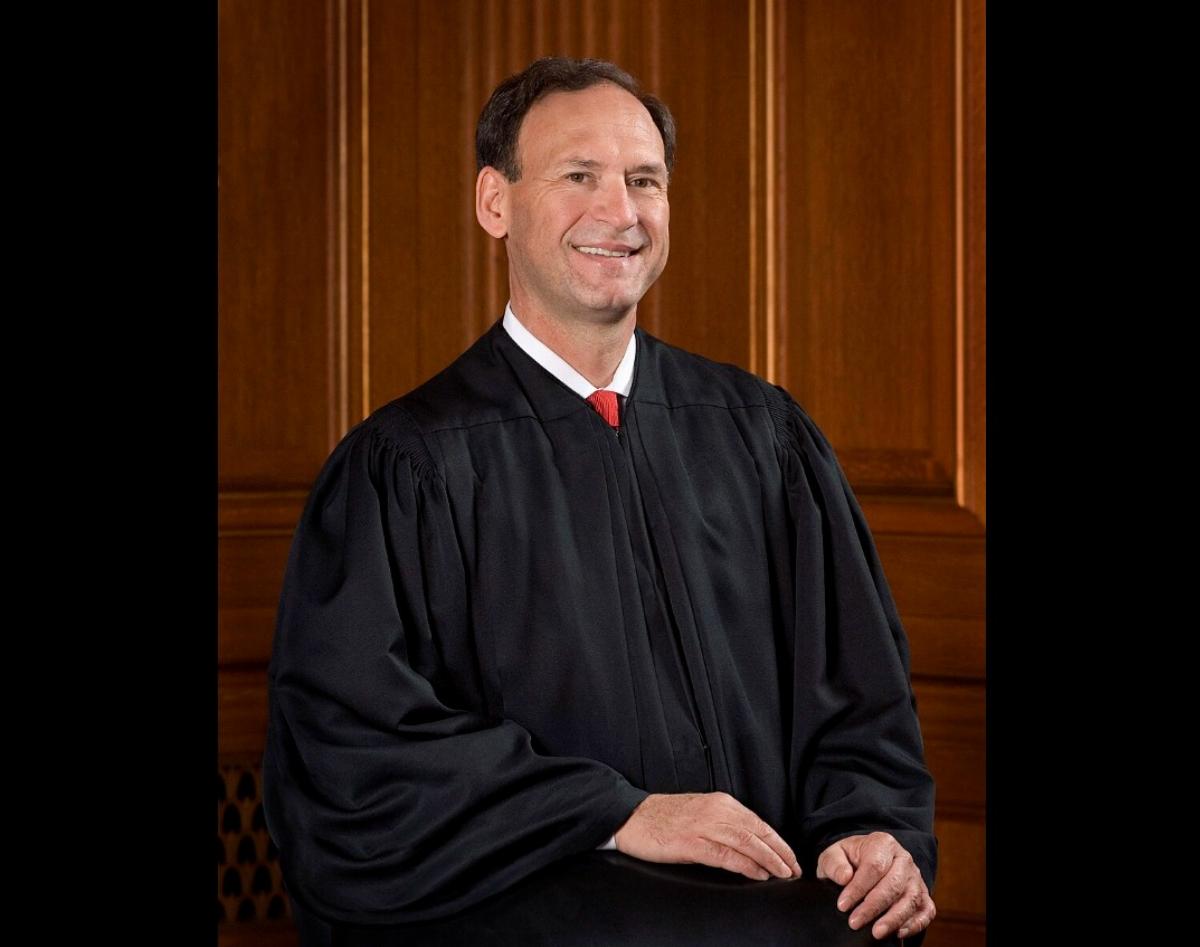
Being a good judge is very different than being a good lawyer: Unlike opposing counsel in a dispute, a judge has to choose.
Read more Is this the truth about Abdul El-Sayed?
How a judge chooses is the subject of many books and articles.
Federal appellate judge Richard Posner wrote “How Judges Think.” Other judges have authored explanations about their particular brand of jurisprudence, or legal philosophy. Justice Antonin Scalia is one. Justice William Rehnquist, and Robert Bork are others. But none are as good as one member of the current SCOTUS at explaining conservative legal reasoning.
Justice Samuel Alito recently wrote in the WSJ about the concept of originalism. It is one of the finest, helpful, and most honest interpretations I have read.
Originalism stands typically as an alternative to a “living Constitution” approach, which is favored by progressives. They like the latitude of “living” jurisprudence because it lets them indulge personal preference and political ideology, even if facts, or the law, stand in their way. Some have taken this to an extreme by claiming that the Constitution should be thrown out, and a new one created to reflect what they consider modern circumstances that an originalist, or classically liberal interpretation, would block. The Constitution can’t provide a path to their preferences.
What Justice Alito did by writing in the major media for general readers, is bridge that gap between both schools of constitutional reading: he effectively argued for a “living originalism.” But he did so by referring to the one key thing that ironically trips up so many judges: the use of perceptive judgment. Many don’t have it. But what is it?
Human judgment is subject to many fallibilities and errors such as wishful thinking, but one, discussed by behavioral psychologist Hillel Einhorn, involves how we react when something is wrong, or just doesn’t seem right; that is, a judgment should come from being curious, and suspicious, and a determination to make a judgment about its cause.
Most judges don’t bother: they see the task before them as a legal one only, without the slightest instinct that something may be amiss, or willing to admit it. Philosopher Paul Ricouer called this the “hermeneutics of suspicion” which is a fancy way of saying that things don’t always seem as they appear, and that one party may have a motive for concealing their actual intentions: surface language may mask deeper meaning. Law is especially good at doing this because of its deliberately vague or complex language. It even trips up most judges, especially when constitutional arguments are before them, and their ideology relaxes their suspicions.
Not Justice Alito.
He is good at recognizing when an argument doesn’t look right. In birthright and mail voting cases he called it like it is: special interest politics were threatening national sovereignty. Most of his peers went along with the charade, and hid behind labored reasoning over history and the 14th Amendment.
Our SCOTUS is often a case study for failures in judgment, and few members have bothered to explain exactly how they go about thinking. Indeed, during a March 2022 Senate confirmation hearing, Ketanji Brown Jackson, when asked about legal reasoning indicated that she has her own method, and when deciding a case, said “I try to stay in my lane.” What that may mean, and where it leads, only she seems to know.
Judgment may otherwise seem obvious, as judges “judge,” but Alito references something else: the use of common sense (and the “public” meaning of the Constitution, as he wonderfully put it), combined with a willingness to lift ones head up from the maze of legalism, and draw on experience and mature perception. Too many judges don’t have either. Oliver Wendell Holmes made a similar argument, declaring law itself to be defined by experience.
Justice Alito did something more, however, in his op-ed, adapted from his larger work. He took the trouble to say in plain English how he thinks, and how originalism works under specific categories that reference the actual text that makes the Supreme Court, the Supreme Court. He artfully blends case rulings and discusses their limitations.
I think he may be a bit too reverential toward the concept of precedent, which if overturned can, as he states, create “unsettling consequences.” Perhaps. But as a general rule, a careful review of case law indicates that the majority of cases — trial or appellate — are flawed in some important way, and should be selectively rejected.
Read more Don’t Wait For Another Pearl Harbor
Alito, however, is willing to manage that legal tradition with the “manly virtues” of intellectual leadership when confronted with controversy, or in the face of pressure from consensus. His dissents are evidence of that, when his liberal colleagues otherwise get lost in progressive ideology, and “groupthink.” Chief Justice Roberts is also notorious for “splitting the difference” on important national matters, which can be an inappropriate holdover tradition from civil dispute resolution.
Alito also delivers effective writing, and such writing — especially in law — is not a universal talent. What makes effective writing? As Texas emeritus professor John Trimble put it in his celebrated “Writing With Style,” it starts with honesty. It is tempting for judges to hide behind arcane legal language, and in the process, deceive themselves, and the public.
Justice Alito refers to honest public policy discourse as another key responsibility that judges must be aware of. Many are not. By that I mean, the public policy ramifications to the rule of law itself, when a legal ruling can actually violate it. Recent cases involving birthright citizenship and mail ballot voting are examples where Alito kept policy at the forefront of his judgment. His dissents are a master class in how to do it.
His legal and policy insights bear the hallmarks of good writing, and I’d like to make one final point about that, and why it is one of the current weaknesses in our political and legal realms. Bad thinking flourishes in bad writing, and bad writing reflects dishonesty, a hidden agenda, or a larger weakness of mind. It all starts in how we educate our youth, including in college, and even law school.
A professor at Williams College recently penned an essay in the New York Times titled, “Why writing isn’t as important as we think’ (9.29.26). He was drawn to the current debate over the use of AI, and trying to make, it seemed, an apology for ill-prepared students who come into college with such poor writing skills, that little can be done other than accommodate them. Colleges are prone to do that, as the crop of students is increasingly limited. Ask employers about the biggest problem with college hires: their writing, and in turn their thinking. This has implications for what kind of lawyers and judges we may see in the future. Judges like Alito may become a fond memory.
Excellent writing is not only more important than we think, it is how we think well. Justice Alito makes that case in his legal output, and in his public communication, as does Justice Thomas. They use the language of law, but with the natural voice, maturity, and backbone of an individual. As Pascal put it about good writing, “When we encounter a natural style, we are astonished and delighted; for we expected to see an author, and we find a man.”
Why is Justice Alito a model judge? Because he has that rare gift of a superior legal mind, housed in a man: a man who knows who he is, who the public is, what the Constitution says, and most of all, what constitutional law means as a force of American governance.
He is a pillar of justice. That is the title of a well-known book by Yale Law professor Owen Fiss, but to him it means being a social justice warrior. When judges follow that seductive indulgence, they become pillows of justice, and the public coddled, and weakened.
When I read Judge Alito, I sense instead a man talking directly to me, squarely by the firm rule of law, and in American national interest. When we look back at how the law was allowed to undermine that interest, he may go down as one of the greatest justices of the U.S. Supreme Court, and defender of constitutional order.
Matthew G. Andersson is a former CEO and law and policy author. He has testified before the US Senate and is a graduate of the University of Chicago and University of Texas at Austin. His forthcoming book “Legally Blind” discusses law education and legal reform.
Read more Decades Of Refinery Mismanagement Are Behind $6 Per Gallon Diesel