
Much has been written lately about the risks of artificial intelligence (AI). The CEOs of the three leading AI companies, Dario Amodei (Anthropic), Sam Altman (OpenAI), and Elon Musk (xAI), have all warned about the dangers of pursuing rapid development of autonomous super-intelligent AI models without “guardrails.” Most of those writings deal with the concern that as AI models evolve in capability and autonomy, they will have the capacity to cause physical harm to humans by attacking critical infrastructure such as water or electricity distribution systems, creating and proliferating deadly new virus strains, or deploying robots to attack humans.
Read more Would you be surprised that another leftist ‘academic’ allegedly made up facts?
Over the last several years, high-level researchers in AI have resigned from their companies, citing their concerns about the risks to humanity from AI models as the reason for their departure. The most recent example is Joseph Coxon, a training researcher who resigned from Anthropic on September 8, 2026, two months before his stock grants vested and before the planned Anthropic IPO. One would assume that Coxon forfeited a substantial sum of money to prove the courage of his convictions.
A training researcher is typically responsible for improving how a model is trained — and that often includes increasing some capabilities — while sharing responsibility for evaluation, reliability, and how those capabilities are constrained. Coxon had worked for Anthropic for four months and OpenAI for more than two years before he resigned. He said the reason for his departure was that Anthropic and its chief rival, OpenAI, “are racing straight to self-improving super-intelligence and gambling with our lives.” He warned that unregulated AI development could threaten human life by the end of the decade.
AI is the field of computer science and engineering concerned with building machines and software that can perform tasks typically associated with human intelligence. These include learning from data or experience, recognizing patterns, reasoning, solving problems, understanding language, perceiving the environment, and making decisions. Generative AI (GAI) refers to systems that create added content such as text, images, audio, code, etc. based on patterns learned from training data. Current AI models like ChatGPT (OpenAI), Claude (Anthropic), and Grok (xAI) fall in this category and are known as large language models (LLMs).
Artificial General Intelligence (AGI) is a subset of AI and is a different, still theoretical concept. AGI capabilities include reasoning, learning new skills, and adapting without being trained by a human for each one. A super-intelligent AI system is envisioned as one or more AI models working in concert that can match or exceed human-level cognitive abilities across a wide range of tasks. It is expected that AGI models will have a high degree of autonomy and independence from their creators and evolve without outside input.
It is this characteristic of AGI models that concerns AGI developers. The concern is that AGI models with a high degree of autonomy will either intentionally or unintentionally take actions to physically harm humans. However, I believe that there is a hidden danger to mankind from super-intelligent AGI systems that has not been discussed: ceding the cognitive and intellectual abilities of humans to AGI models.
Dr. Igor Chirikov, a senior researcher at the Center for Studies in Higher Education at UC Berkeley, published a research paper in May 2026 where he analyzed more than 500,000 grades given to students at Berkeley from 2018 to 2025. He published his findings in a paper titled “Artificial Intelligence and Grade Inflation.” He found that “more AI-exposed tasks, such as writing and coding, saw substantial grade increases after ChatGPT’s release: The share of “A” grades rose by 13 percentage points, or about 30 percent compared to the 2022 baseline. These increases were larger where homework carried greater weight, consistent with AI substituting for student work rather than broad learning gains from AI.” AI-exposed tasks are defined to include statistics, data science, English, mathematics, economics, and certain fields in engineering such as computer science.
I studied mechanical engineering and physics in undergraduate school. My textbooks were written by professors at leading universities and represented the state of the art in their fields. At present, I use Grok 4.6, a xAI LLM, for research in theoretical physics.
Read more Litigiousness has ruined America
Sound knowledge and the understanding built on it are the foundations of any field. They rest on first principles and on the field’s proper evidence.They are durable and transferable; that is, they survive the test of time, and one can apply the knowledge to other situations or circumstances to reason an outcome.
The phrase “first map of a topic” infers the broad outline with which a problem may be viewed. If a student is solving homework problems on a given night and time is of the essence, immediately receiving an answer to a question is desirable. Assuming little knowledge on the subject, having an LLM define the scope of a problem is useful. However, how can one test the “working explanation” if one has limited knowledge of the field? The answer is that one cannot. One must assume that the LLM is correct. That might not always be the case, especially if the LLM has a bias.
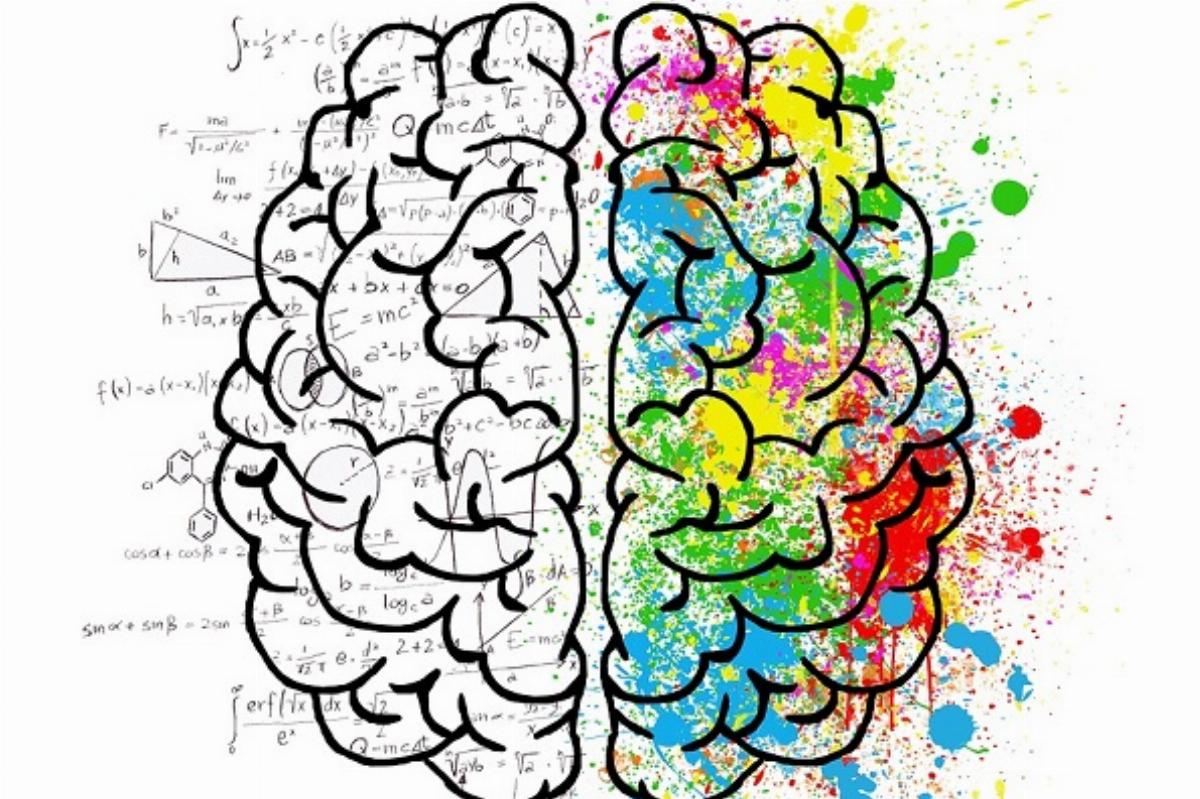
The hidden danger in using an AI model is that one cedes his cognitive abilities to the model. The model does the thinking for the user. The interaction does not build a durable, transferable understanding of the subject matter.
Let’s examine the work of some famous scientists in history to demonstrate this crucial point.
Famous breakthroughs in science usually involve a new synthesis, a missing mechanism, or a better theory built on work that was already in place. Isaac Newton famously said, “I have seen farther by standing on the shoulders of giants.” Newton’s magnum opus, Principia, used Kepler’s three laws of planetary motion to develop the theory and mathematics for his universal law of gravity. Galileo’s work on motion and inertia was based on the work of Aristotle and Archimedes. He rejected Aristotle’s theory of motion and accepted Archimedes’s model as the model for treating physical problems geometrically — centers of gravity, floating bodies, and mathematical demonstration. Einstein modified Newton’s theory of gravity to develop the “Theory of General Relativity,” using Riemann’s geometry and the tensor calculus of Ricci and Levi-Civita, plus the equivalence principle.
In each of these examples, the scientists used their own understanding of the fundamental principles of the fields to advance the state of knowledge about the subject matter to a higher level. If a student uses an LLM to answer questions about a subject instead of developing a fundamental understanding of the subject, that knowledge is not transferable. Would Einstein have gotten special relativity by telling a model, “Write a theory of space and time”? He did not start with the finished postulates; those were the theory. Still less would “make gravity geometric” have returned general relativity. The work was seeing that those were the right demands.
The worst-case scenario for advanced AGI run amok would be the destruction of humanity. A close second would be the improper use of AGI that leads to the neutering of the human mind.
Read more Urgent! Republicans vs. Democrats 2026
 Pixabay, Pixabay License.” class=”wp-image-698″ width=”640″ height=”426″ />
Image: ElisaRiva via Pixabay, Pixabay License.